
Lieferung heute & morgen

Qualitätsgarantie

Willkommens-Angebote freischalten: KOSTENLOSE Lieferung | Bis zu 80 % RABATT | Kostenlose 30-Tage-JoyPlus-Testphase
App herunterladen
A new ceramic cooktop is a pivotal decision for any kitchen. But the market is flooded with models whose differences are barely noticeable at first glance. Often, overlooked details or common misconceptions lead to a purchase that brings more frustration than joy in daily life. Before you make a decision, it's crucial to understand the typical pitfalls to avoid a poor investment.
This guide focuses on the objective criteria that truly matter, helping you find a model that precisely fits your requirements.
Many buyers focus on marketing promises instead of practical necessities. Three mistakes are particularly costly and frustrating.
Pitfall 1: Choosing the Wrong Size and Zone Layout A standard four-zone built-in cooktop isn't the right choice for everyone. In single-person households or small kitchens, an oversized cooktop leads to wasted space and unnecessary energy consumption. Conversely, a family can hit the limits of an inflexible cooktop when a large roasting pan doesn't fit on a small, round cooking zone. The result is inefficient heat transfer and unevenly cooked food.
Pitfall 2: Confusing Ceramic with Induction The terms ceramic cooktop and induction cooktop are often used interchangeably, but they describe fundamentally different heating technologies. A classic ceramic cooktop heats the cooking zone via underlying heating coils. An induction cooktop uses an electromagnetic field to generate heat directly in the base of the pot. This confusion leads to buyers being disappointed by the slower heat-up time of a ceramic model or discovering their existing cookware isn't compatible with induction.
Pitfall 3: Underestimating the Cleaning Effort The smooth surface of a ceramic cooktop appears easy to maintain, but the devil is in the details. Models with a raised frame collect dirt and liquids at the edges, which are difficult to remove. Burnt-on food residue can lead to permanent stains or scratches without the right tools. Neglecting maintenance from the start risks rapid wear and tear of the surface.
To avoid these pitfalls, you should focus on three core technical aspects. These determine the functionality, safety, and longevity of your cooktop.
The power of a cooking zone, measured in watts, determines how quickly it heats up. For rapidly boiling water, zones with over 2,000 watts are advantageous. However, don't just look at the maximum power; consider flexibility as well:
Modern ceramic cooktops are operated almost exclusively via touch controls. This simplifies cleaning, as there are no protruding knobs in the way. However, two safety standards are essential:
The quality of the glass-ceramic is crucial for its scratch resistance. Proper care is just as important. To protect the surface long-term, two things are essential:
Here are some product recommendations tailored to specific user profiles and their requirements.

Why This Fits Their Persona: Ideal for those who rarely use more than two pots at once and value a clean, modern countertop. The compact 29 cm format saves valuable workspace.
This model avoids the 'wrong size' pitfall by offering a solution tailored to smaller households, preventing wasted space and energy.
Combines a powerful 1800W zone for rapid heating with a 1200W zone for everyday use. Includes a timer, child lock, and residual heat indicator.
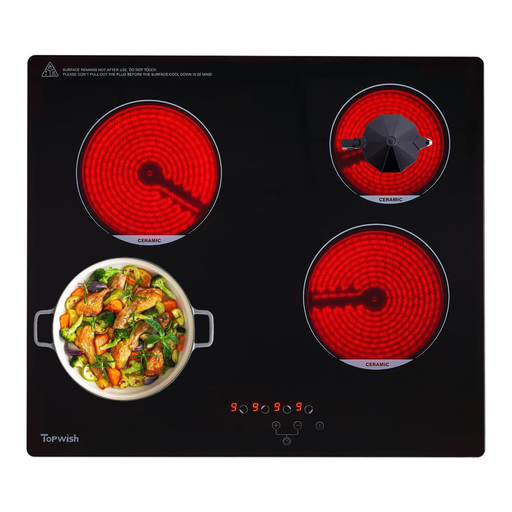
Why This Fits Their Persona: Perfect for anyone who regularly cooks for multiple people and needs flexibility. The four zones, including two with expandable rings, accommodate pots and pans of various sizes.
The flexible dual-ring zones solve the problem of mismatched pot sizes, ensuring efficient heat distribution whether you're using a small saucepan or a large roaster.
With 6600W of total power, it offers high performance reserves. The 99-minute timer and touch controls allow for precise cooking.
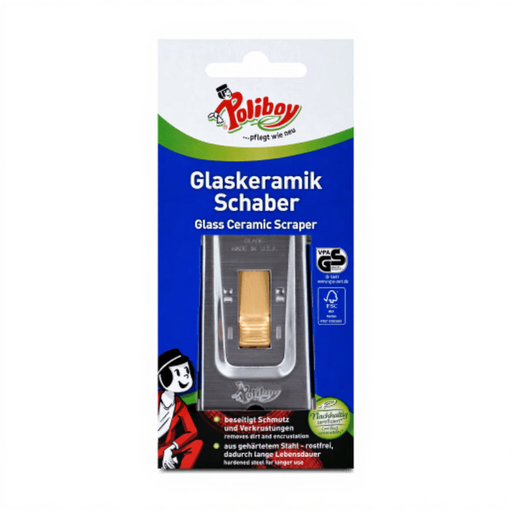
Why This Fits Their Persona: For any ceramic cooktop owner who wants to protect their investment. This tool isn't a luxury; it's a necessity for proper maintenance.
Directly addresses the pitfall of underestimating cleaning effort. This scraper removes stubborn, burnt-on residue before it can cause permanent damage.
The hardened stainless steel blade efficiently removes burnt-on food without scratching the delicate glass-ceramic surface. It's the perfect complement to specialised cleaners like the Heitmann Glass Ceramic Cleaner.
We have compiled a complete, up-to-date list of products that fully meet these strict selection criteria and German safety regulations.
1. What is the difference between a glass-ceramic cooktop and a "Ceran" cooktop? There is no technological difference. "Ceran" is a brand name owned by Schott AG for a specific type of glass-ceramic. In common German usage, the term Ceran cooktop has become a generic name for all cooktops with a glass-ceramic surface, regardless of the manufacturer.
2. Can I use any pot on a glass-ceramic cooktop? No. The crucial factor is that the pot's base must be perfectly flat to ensure complete contact for efficient heat transfer. Unlike with an induction cooktop, the pot's material (e.g., aluminium, copper, stainless steel) doesn't matter as long as the base is flat. A suitable example is the LocknLock Décor IH Induction Frying Pan, which is designed for all hob types, including ceramic.
3. How do I clean a ceramic cooktop correctly without scratching it? Let the cooktop cool down completely. Carefully remove coarse, burnt-on spills with a ceramic cooktop scraper. Then, apply a few drops of a special ceramic cooktop cleaner to the surface and rub it in with a soft cloth or paper towel. Finally, wipe with a clean, damp cloth and dry the surface. Be sure to avoid abrasive sponges, steel wool, or aggressive all-purpose cleaners.