
Lieferung heute & morgen

Qualitätsgarantie

Willkommens-Angebote freischalten: KOSTENLOSE Lieferung | Bis zu 80 % RABATT | Kostenlose 30-Tage-JoyPlus-Testphase
App herunterladen
As a Joybuy Product Recommendation Officer, I see daily how many well-intentioned cookware purchasing decisions end in disappointment. With ceramic cookware in particular, marketing promises often lead to products that lose their functionality after just a few months. This guide will help you identify the crucial features and avoid common pitfalls, ensuring your investment pays off in the long run.
Before we turn to the important quality features, it's crucial to understand the most common problems that lead to bad purchases.
To make an informed decision, you should focus on three core technical aspects rather than relying on marketing buzzwords.
The term ceramic cookware covers two main types: solid ceramic items (like stoneware casserole dishes) and metal-based cookware (usually aluminium or stainless steel) with a ceramic coating. For daily use on the hob, the coated version is the most common.
Look for clear information about the absence of harmful substances. A high-quality non-toxic pan should be explicitly declared as PFOA-free and PTFE-free. This ensures that no potentially harmful chemicals are released when heated, which is essential for healthy cooking. Multi-layer ceramic coatings, sometimes reinforced with particles like titanium or diamond, generally offer greater durability.
The quality of the base is crucial for performance and longevity. A solid, forged aluminium core or a multi-layer base (sandwich base) ensures fast and, above all, even heat conduction.
Good cookware adapts to your daily cooking routine. Consider which features are essential for you.
Based on the objective criteria mentioned above, we have identified some products that represent a considered choice for different user profiles.
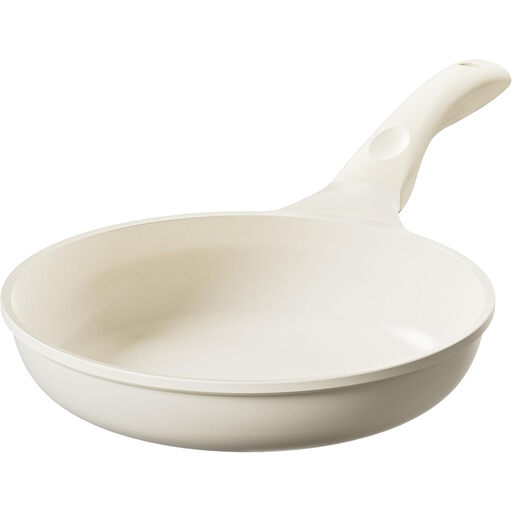
Why This Fits Their Persona: Ideal for individuals or small households looking for a reliable, non-toxic pan for daily use without having to invest in a complete set. The 24 cm size is versatile for eggs, vegetables, or a piece of fish.
The solid aluminium core ensures a stable, flat base construction that won't warp on induction hobs. The coating is explicitly declared as PTFE/PFOA/PFAS-free, thus avoiding the trap of ill-defined materials.
Even and rapid heat distribution. Compatible with all hob types, including induction. The heat-resistant Bakelite handle stays cool during cooking.

Why This Fits Their Persona: This ceramic cookware set is designed for families or ambitious home cooks who need a complete, space-saving, and versatile solution. The detachable handle allows for use from the hob to the oven and directly to the table.
Its high oven-safe temperature (up to 450°C without the handle, according to the manufacturer) and triple ceramic coating address the issues of heat resistance and rapid wear. The stackability also solves a practical problem in many kitchens.
Extremely space-saving due to stackable design and detachable handles. A comprehensive set for various cooking applications. Explicitly PFOA-free and suitable for all hob types.
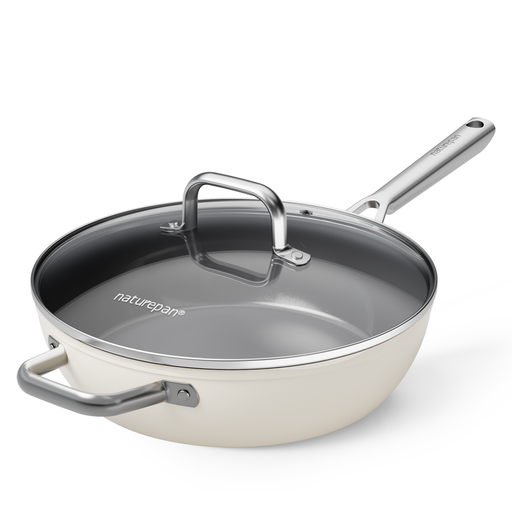
Why This Fits Their Persona: Perfect for anyone looking for a single, yet extremely robust and versatile pan. The high sides and included lid make it ideal for braises, sauces, and larger portions. An investment in durability.
The ceramic coating, reinforced with diamond and titanium particles, aims for higher durability than simple coatings. The fully encapsulated base ensures maximum stability and prevents warping.
Very high oven-safe temperature (up to 260°C). The stainless steel handle stays cool on the hob. The deep shape with a lid increases its versatility compared to a standard frying pan.
We have compiled a complete, up-to-date list of products that fully meet these strict selection criteria and German safety regulations.
Proper care is crucial. Avoid using metal utensils; opt for wood, silicone, or plastic instead. Allow the pan to cool completely after use before cleaning it with warm water and a soft sponge. Although many models are listed as dishwasher-safe, hand washing significantly extends the life of the non-stick surface. Use medium heat for cooking; extreme temperatures can damage the coating over time.
High-quality ceramic cookware is manufactured without PTFE (polytetrafluoroethylene) and PFOA (perfluorooctanoic acid). PFOA, in particular, was historically used in the production of PTFE coatings and is suspected of being harmful to health. Modern PTFE pans labelled as PFOA-free are also considered safe when used correctly (not overheated). The main advantage of ceramic is that the coating is based on a different chemical composition from the start, without fluoropolymers, which gives many health-conscious consumers greater peace of mind.
It is strongly advised against it. In this context, the term scratch-resistant means that the surface is more resistant to abrasion from cooking and cleaning with non-metallic tools. Sharp or hard metal objects like knives, forks, or metal whisks can scratch the ceramic surface. Such scratches not only affect the appearance but also destroy the non-stick properties and can shorten the product's lifespan.