The selection of a cookware set is based on an analysis of material properties, functionality, and compatibility with existing kitchen equipment. Ceramic cookware, whether solid ceramic or ceramic-coated, presents an alternative to traditional non-stick coatings. Choosing the right set depends on individual cooking habits and the household's technical requirements. This article highlights the essential criteria to consider when selecting a ceramic cookware set.
What to Look for in a Ceramic Cookware Set
The evaluation of a cookware set should be based on objective parameters. The following aspects are relevant for making an informed decision.
Material and Coating
A distinction is made between two main types: solid ceramic cookware and items with a ceramic coating.
- Ceramic-Coated Cookware: This type features a metal core, typically aluminium or stainless steel, covered with one or more layers of a ceramic non-stick seal. Aluminium provides fast, even heat conduction, while stainless steel is known for its durability and corrosion resistance. A key aspect is the coating's composition. Many users specifically seek out products declared as PFAS-free, which includes the absence of per- and polyfluoroalkyl substances. The lack of PFOA, lead, and cadmium are also frequently cited product features.
- Solid Ceramic Cookware: This is made entirely from ceramic material. It is characterised by high heat retention but reacts more slowly to temperature changes. It is chemically inert and does not leach any substances into food.
Compatibility and Versatility
The functionality of a set is defined by its range of potential uses.
- Hob Compatibility: Not all cookware is suitable for every type of hob. For use on an induction cooktop, a ferromagnetic base is required. Manufacturers explicitly state suitability for induction cookware. Sets with an aluminium or copper core need a special base plate made of magnetisable stainless steel.
- Oven Safety: Being oven-safe significantly expands the range of applications, such as for preparing gratins or keeping dishes warm. The crucial factors are the temperature resistance of the cookware itself, as well as that of the handles and lids. Detachable handles often provide a flexible solution here.
- Dishwasher Safety: Whether a set is dishwasher-safe affects cleaning convenience. Although many ceramic coatings are rated as dishwasher-safe, hand washing can extend the lifespan of the non-stick surface.
Design and Functionality
Practical design features enhance everyday usability.
- Space-Saving Storage: In kitchens with limited storage, sets designed to be space-saving are advantageous. Stackable pots and pans, along with detachable handles, can significantly reduce the required cupboard space.
- Set Composition: A set should match individual cooking needs. Common sets include pots and pans in various sizes. Specialised sets may also contain a casserole dish set or steamer inserts.
Our Selection of Ceramic Cookware Sets for 2026
Based on the criteria mentioned, we present a selection of products distinguished by their specific technical features and applications.
Redchef 5-Piece Ceramic Cookware Set
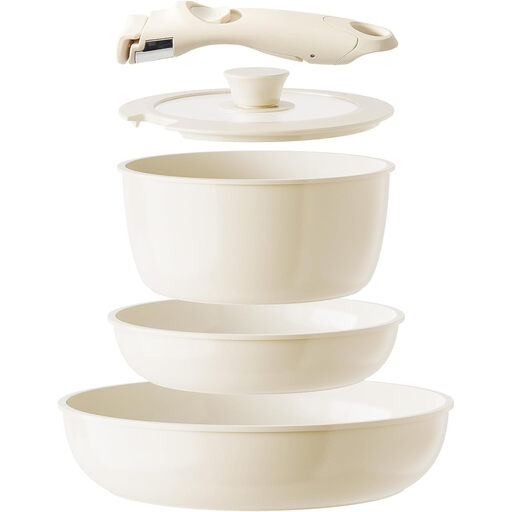
- Why we recommend this product: This set directly addresses the need for versatility and space-saving storage. The detachable handle allows for a seamless transition from the hob to the oven and then to the dining table. The manufacturer-stated PFAS-, PTFE-, and PFOA-free ceramic coating meets the demand for healthy cookware.
- Pros:
- Natural ceramic coating, free of PFAS, PTFE, PFOA, lead, and cadmium, according to the manufacturer.
- Stackable design with a detachable handle for up to 75% space savings.
- Universal use on all hob types (including induction), in the oven (up to 450°C without handle), refrigerator, and on the dining table.
- Double-sided ceramic coating for simplified cleaning.
- Who it's for: Individuals with limited kitchen space, such as in city apartments or RVs, as well as users looking for a flexible all-in-one solution for cooking, baking, and serving.
Staub Ceramic Baking Dish Set, 3-Piece
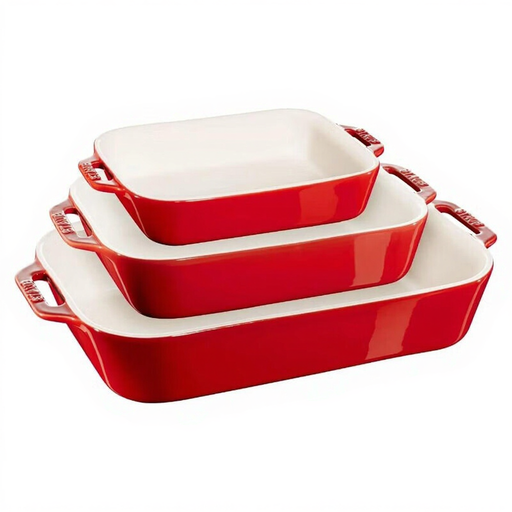
- Why we recommend this product: The Staub set focuses on baking, gratinating, and serving. It is made of high-quality solid ceramic, renowned for its excellent heat retention and even heat distribution. The handcrafted enamel finish provides a scratch-resistant and easy-to-clean surface.
- Pros:
- Set of three rectangular gratin dishes in various sizes (20×16 cm, 20×27 cm, 24×34 cm).
- Crafted from high-quality ceramic for optimal thermal properties.
- Scratch-resistant, enamelled surface and ergonomic handles for safe handling.
- Stackable design for space-saving storage.
- Dishwasher-safe and oven-safe.
- Who it's for: Home cooks and hosts who value an aesthetic presentation of food and are looking for a specialised baking dish set for oven-to-table use.
PURECOOK 4-Piece Stainless Steel Cookware Set with Ceramic Coating
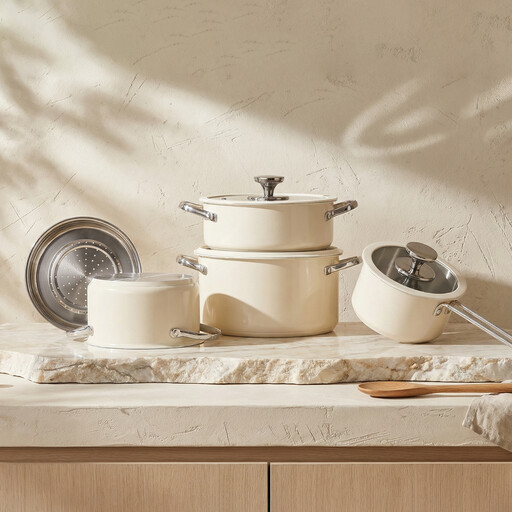
- Why we recommend this product: This ceramic pot set combines the durability of a stainless steel interior with the benefits of an exterior ceramic coating. The 304 stainless steel interior is robust and high-temperature resistant, while the outer ceramic layer facilitates easy cleaning. The comprehensive composition covers a wide range of cooking needs.
- Pros:
- Hybrid construction: 304 stainless steel interior, ceramic-coated exterior.
- Comprehensive set: Includes a milk pan (1.5 L), stockpot with steamer insert (2 L), saucepan (2.5 L), and a large stockpot (5 L).
- Suitable for gas, electric, and induction hobs.
- High temperature resistance of the interior material (up to 870°C according to the manufacturer).
- Includes matching glass lids with heat-conductive silicone rims.
- Who it's for: Families and ambitious cooks who need a durable and versatile cookware set for daily tasks like boiling, steaming, and braising, and who appreciate the material combination of stainless steel and ceramic.
Discover More Options and Alternatives
The selection presented here represents various use cases and material concepts. However, the market offers a much wider variety of configurations and designs. For a more comprehensive overview of different models and brands, we recommend exploring our Ceramic Pots category. There you will find other specialised products tailored to different requirements.
Frequently Asked Questions (FAQ)
1. Is ceramic-coated cookware a healthier alternative? Ceramic-coated cookware is often promoted as an alternative to traditional non-stick coatings, which may contain per- and polyfluoroalkyl substances (PFAS). Many manufacturers of ceramic cookware declare their products to be PFAS-free, PFOA-free, lead-free, and cadmium-free. From a technical standpoint, the inert ceramic surface provides a barrier between the food and the underlying metal core.
2. How should a ceramic coating be cared for to maximise its lifespan? To protect the ceramic surface, it is recommended to avoid metal utensils and use those made of wood, silicone, or plastic instead. Heating empty cookware should be avoided. Likewise, abrupt temperature changes (thermal shock), such as plunging a hot pot into cold water, can lead to material damage. Although many products are rated as dishwasher-safe, gentle hand washing is often more beneficial for the coating's longevity.
3. Is every ceramic cookware set suitable for induction? No, induction suitability does not depend on the ceramic coating but on the material of the pot's base. A ferromagnetic base is required for energy transfer via an alternating magnetic field. Cookware made of aluminium or copper must therefore have a special base plate made of magnetic stainless steel. Solid ceramic cookware is generally not induction-compatible. It is essential to check the manufacturer's specifications regarding hob compatibility.

