
Lieferung heute & morgen

Qualitätsgarantie

Willkommens-Angebote freischalten: KOSTENLOSE Lieferung | Bis zu 80 % RABATT | Kostenlose 30-Tage-JoyPlus-Testphase
App herunterladen
A well-chosen dinnerware set should work in everyday life, not just look appealing in product photos. However, when it comes to ceramic cup and bowl sets, a few common buying misconceptions can lead to unnecessary expense: a large cup is not automatically suitable for cappuccino, a decorative glaze may require special care, and the statement ‘dishwasher safe’ says little about how well a product copes with knocks or temperature changes in everyday use.
As a Joybuy Product Recommendation Officer, I filter product information according to clear, practical criteria. Capacity, material, set size, care instructions and the intended use are the key considerations.
A mug with a capacity of 340 ml is rarely filled right to the brim. When choosing cups for coffee drinks, it is therefore important to distinguish between maximum capacity and a practical fill level:
A small cup may be ideal for espresso or dessert portions, but can quickly become impractical for filter coffee.
With handmade tableware and a reactive glaze, the colour, pattern, rim and shape may vary slightly. These differences are often part of the design, but should be taken into account before buying. If you prefer a completely uniform dinner service, a consistently applied glaze is usually the better choice.
A reactive glaze may also have a textured surface. This does not automatically make it easier to clean. Check whether the specific set is described as dishwasher safe and whether abrasive sponges should be avoided.
Ceramic, stoneware and porcelain respond differently to heat, glaze and sudden changes in temperature. Decorated designs containing metal are often not suitable for microwave use. According to the product description, the Wedgwood Kit Kemp Sailor's Farewell Set with a 22-carat gold rim is not intended for microwave use, although it is dishwasher safe.
Look for specific information about the individual product:
Ceramic cups is a broad term covering various ceramic materials. Stoneware cups are often slightly heavier and have a rustic, handcrafted appearance. Porcelain cups generally look finer and feel lighter. Fine Bone China, as used for the Wedgwood set, is a specific type of porcelain with a distinctive appearance.
When buying, specific details matter more than general marketing claims:
For espresso or small desserts, 100 to 120 ml is sufficient. A coffee cup set with a capacity of around 370 to 400 ml is better suited to large hot drinks. For cappuccino, it is not just the 270 ml capacity that matters; a suitable saucer and a wide shape are also important.
When choosing bowls, consider the diameter and height together. The Richmount cereal bowl set, for example, contains six bowls with a capacity of around 600 ml each. According to the product description, they are suitable for cereal, rice, fruit, ice cream and desserts. Larger pasta bowls measuring around 22 cm in diameter are more suitable for main courses, salads or soups.
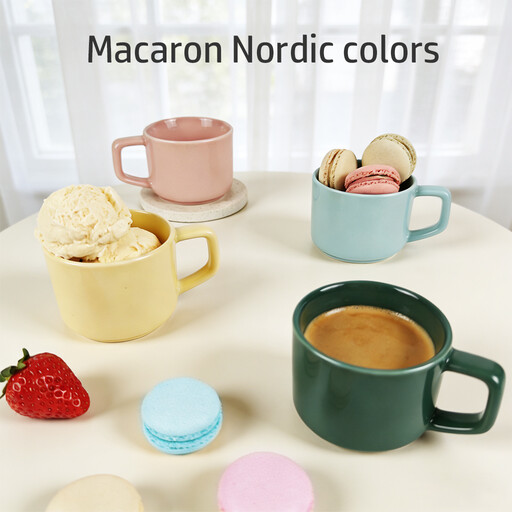
Why this product suits this profile: Four small ceramic cups in yellow, blue, green and pink offer flexible uses for espresso, tea, desserts or sauces. Their compact size takes up little storage space.
The stated 120 ml capacity makes the intended use clear. These are small portion cups, not oversized coffee mugs.
Four colours, a 120 ml capacity and a simple ceramic construction. Hand washing is recommended.
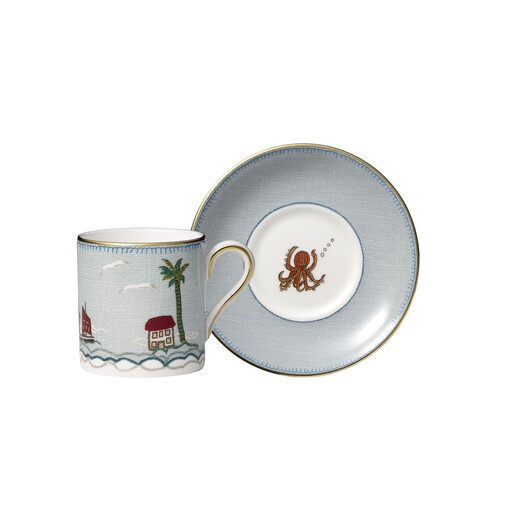
Why this product suits this profile: This 100 ml Fine Bone China espresso cup set combines an illustrated design with a 22-carat gold rim and a gift box.
The combination of cup and saucer is clearly specified. It is also explicitly stated that the set is not microwave safe.
Fine Bone China, 100 ml capacity, saucer, gold rim and gift packaging. Dishwasher safe according to the product description.
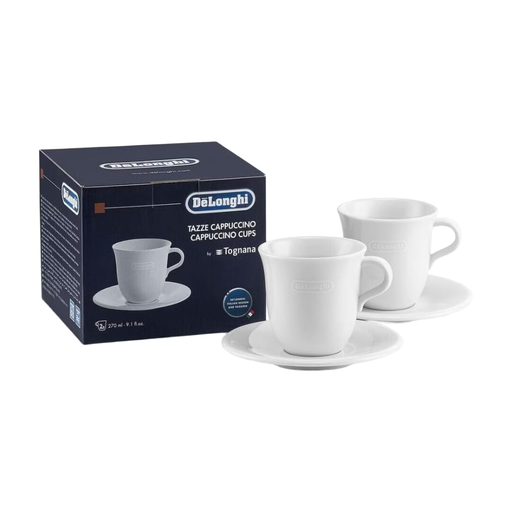
Why this product suits this profile: Two cappuccino cups with two saucers and a capacity of 270 ml each are well suited to milk-based coffee drinks and regular use at home or in the office.
The set is described not simply as a pair of cups, but as including matching saucers. The capacity and saucer diameter are specified.
270 ml per cup, two saucers, porcelain, and confirmed suitability for microwave and dishwasher use.
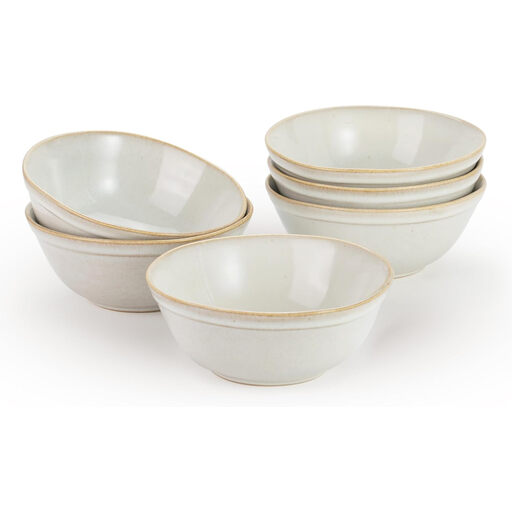
Why this product suits this profile: Six bowls with a capacity of around 600 ml each are suitable for cereal, fruit, rice, ice cream and desserts. The reactive cappuccino-white glaze gives each piece subtle variations.
The set size and capacity are clearly stated. The slight colour variation caused by the reactive glaze is described as a natural characteristic, so it will not come as a surprise.
Six bowls, stoneware, a stackable design, and confirmed suitability for microwave and dishwasher use.
Even a set that looks robust is still fragile. To help it last as long as possible, follow these recommendations:
For a gift set, you should also consider the packaging, set size and the occasion. A single tea cup set with saucer is better suited to a stylish individual gift; a four- or six-piece set is a better choice for a new home, wedding, family household or office.
We have put together a complete, regularly updated list of products that fully meet these strict selection criteria and the safety regulations applicable in the EU.
Around 240 to 340 ml is practical for standard coffee. Cappuccino cups are often between 200 and 300 ml. For espresso, around 80 to 120 ml is generally enough. The amount of drink you want matters more than the shape or size of the outside.
No. Suitability depends on the material, glaze and decoration. Metallic colours or gold rims may make a product unsuitable for microwave use. Always check the care instructions for the specific set.
There is no reliable way to give a fixed lifespan. It depends on the material, glaze, usage, dishwasher programme and how the items are handled during temperature changes. Damaged pieces should be replaced for safety reasons.