
Lieferung heute & morgen

Qualitätsgarantie

Willkommens-Angebote freischalten: KOSTENLOSE Lieferung | Bis zu 80 % RABATT | Kostenlose 30-Tage-JoyPlus-Testphase
App herunterladen
A ceramic cup set needs to serve several purposes around the home: morning coffee, afternoon tea, weekend guests or drinks at the office. In practice, poor purchases are often caused not by the material itself, but by unclear information about capacity, set size and care. If you choose based only on colour or price, you may end up with cups that are too small for their intended use, take up too much cupboard space or are not suitable for the dishwasher or microwave.
A figure such as 245 ml may refer to the recommended serving capacity, while the cup’s total capacity is greater. For a cappuccino, filter coffee or tea, check whether the cup has been measured to the brim or to a practical everyday fill level.
Several product options are available as single items. So, a coffee cup set for a family or office should clearly state how many cups are included. Four matching cups, or a deliberately coordinated mix, are a good choice for four people; a set of cups for 6 people may be more practical for larger households.
A glossy glaze does not automatically mean a product is dishwasher-safe. Nor should you put a ceramic mug in the microwave unless the manufacturer says it is suitable. Look for clear information such as dishwasher-safe and microwave-safe. Hand-washing handmade cups or those with textured glazes can help preserve their appearance for longer, even if they are technically dishwasher-safe.
A teacup set with a capacity of 200 ml is suited to smaller servings, while a ceramic coffee mug of 325 ml or more gives you extra room for milk and froth.
Ceramic and stoneware differ in density, weight and firing temperature, among other things. For choosing the right product, these details are particularly relevant:
Ceramic can break if knocked. Do not continue using cups with cracks or chips for drinks.
A dishwasher-safe label makes everyday cleaning easier. For microwave use, check that the specific model is labelled as microwave-safe. Avoid sudden changes in temperature, such as pouring boiling water into a frozen vessel. Cups labelled as microwave-safe can still become hot when heated.
Stackable cups save space in small kitchens. For tall or unusually shaped models, check beforehand that they can be stacked securely.
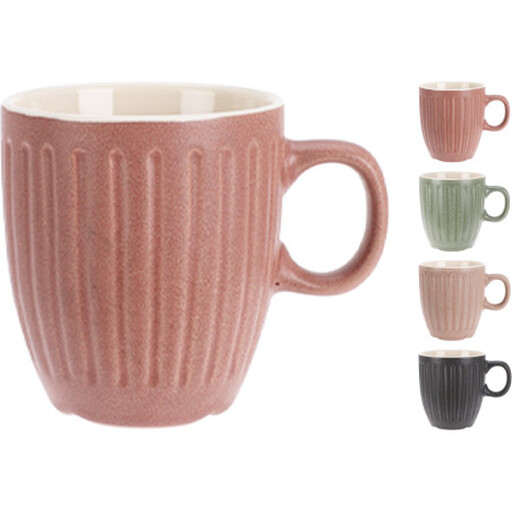
Why it suits this profile: This set of four cups, each with a 150 ml capacity, is suited to smaller servings and households looking for several matching cups in a compact set.
The product listing clearly states that four cups are included. This reduces the risk of mistaking a single cup for a set.
Four cups, each with a 150 ml capacity; compact serving size for smaller hot drinks.
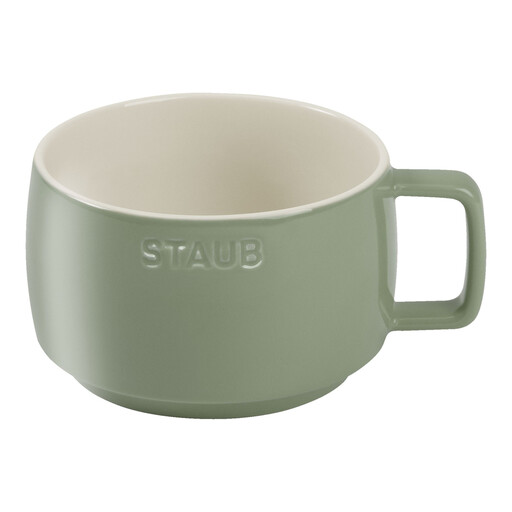
Why it suits this profile: This large ceramic cup combines a 500 ml capacity with a handle and stackable design. It is also listed as suitable for the dishwasher and microwave.
The product details specify its capacity, care requirements and oven temperature limit. This makes its main usage limits clear.
500 ml capacity; stackable and, according to the product description, suitable for the microwave, dishwasher and oven up to 300 °C.
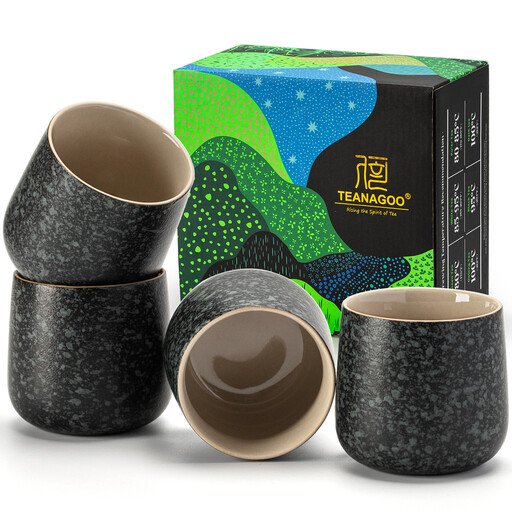
Why it suits this profile: This set of four 205 ml cups is ideal for tea drinkers and households looking to serve small to medium portions in a coordinated set.
The set size and capacity of each cup are clearly stated. The care instructions cover the dishwasher, microwave, oven and freezer, while recommending hand-washing to protect the texture.
Four 205 ml cups; textured exterior and smooth, transparent inner glaze.
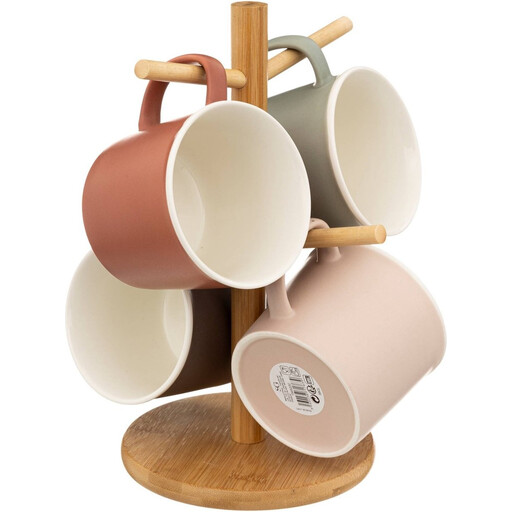
Why it suits this profile: The four 380 ml cups are stored on the supplied stand. This can make it easier to stay organised in small kitchens or offices.
The set contents and stand are specified in the product listing. This means you won’t need to plan for a separate storage solution.
Four 380 ml cups; stored on the stand and listed as suitable for the dishwasher and microwave.
We’ve put together a complete, regularly updated list of products that meet these strict selection criteria and fully comply with the safety regulations in force in the EU.
Four cups are often enough for two people, especially if you regularly have visitors or use several cups at once. For families, offices and shared homes, a set of cups for 6 people can help you avoid buying replacements individually. Storage space and whether you want a matching set are also important considerations.
It depends on the model. Only use a cup in the microwave if the manufacturer explicitly says it is suitable. Metal decorations, damaged glazes and sudden temperature changes can cause problems. Even suitable cups should not be heated when empty.
Their lifespan depends on the material, glaze, how often they are used and how they are cleaned. With normal use, ceramic cups can last a long time. However, knocks, abrasive cleaners and repeated thermal shocks increase the risk of cracks or chips. Careful handling can help keep a coffee cup set or teacup set complete for longer.