
Lieferung heute & morgen

Qualitätsgarantie

Willkommens-Angebote freischalten: KOSTENLOSE Lieferung | Bis zu 80 % RABATT | Kostenlose 30-Tage-JoyPlus-Testphase
App herunterladen
A ceramic decorative vase can act as a standalone home accessory on the dining table, shelf or console. When buying one, however, colour isn't the only thing that matters. A neck that's too narrow, an unsuitable height or a delicate surface can make the ceramic vase barely usable in everyday life.
Typical buying decisions often fail for three reasons:
Ceramic and porcelain are dimensionally stable materials, but they differ depending on how they're made. A glazed interior can make cleaning easier and is practical for fresh flowers. If a vase is described in the product details as decorative only, you should not fill it with water.
For care, a soft, slightly damp cloth is usually sufficient. Rough or ribbed surfaces can attract more dust. Dishwasher, microwave or oven suitability should not be assumed. For the models mentioned here, hand cleaning is mostly recommended.
The size should suit the surface area and the arrangement you have in mind:
For a vase intended for dried flowers, water resistance is less important. For fresh flowers, however, the interior coating should be explicitly suitable.
A modern vase with clean lines suits minimalist, Scandinavian or contemporary spaces. A boho vase with ridges, a matte surface or warm beige and terracotta tones works better with natural materials and textiles. Rustic models can be combined with wood, linen and neutral colours.
A vase set can also be a smart choice: three vessels of different sizes create a stepped arrangement on a sideboard. Individual vases, on the other hand, look tidier when you only have limited surface space.

Why this product fits the profile: At around 17.8 cm tall and in a warm terracotta tone, this ceramic vase is suitable for shelves, consoles, tables or the mantelpiece. It works with farmhouse, boho and rustic interior styles.
The product details mention the material, approximate dimensions and simple cleaning. The interior coating should be checked before use with water.
Ceramic body, neutral terracotta tone and a compact width of around 11.7 cm.
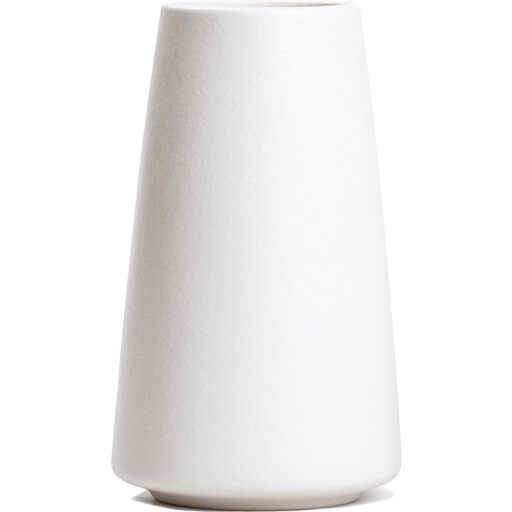
Why this product fits the profile: The roughly 15 cm tall vase with a matte surface and simple white design fits into modern, Scandinavian and pared-back living concepts.
The product description mentions a frosted glaze, water use and hand washing. This makes it easier to check before using with fresh flowers.
Minimalist silhouette, matte surface and, according to the product details, suitable for water.

Why this product fits the profile: The height of around 21 cm, ribbed texture and matte black glaze are designed for pampas grass, dried flowers and individual stems on a table or desk.
The details mention a water-resistant finish, allowing use with fresh or dried arrangements. The surface it stands on should still be level.
Water-resistant ceramic, ribbed surface and matte black for boho or modern interiors.
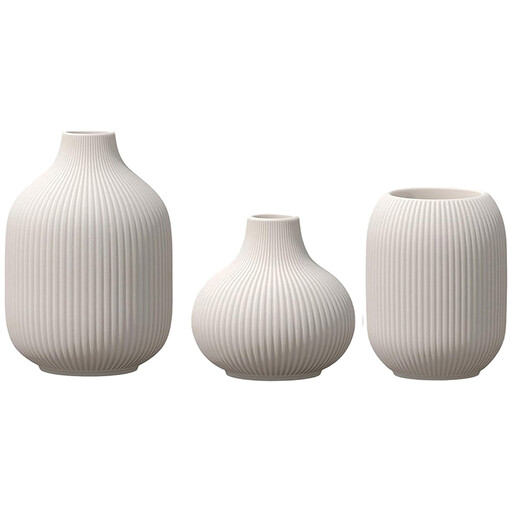
Why this product fits the profile: Three beige vases with a ribbed surface can be used together on a sideboard or separately in the living room, bedroom and office.
The set offers multiple placement options without having to combine different colours individually. The interior coating should be checked for water use.
Three vases, neutral beige and a ribbed texture for flexible table decoration.
A living room vase should not sit right at the edge of a table. For tall arrangements, a broad, heavy base is recommended. On a shelf, a small vase with just a few stems often looks more balanced than an overcrowded bouquet.
For pampas grass and dried flowers, a dry vessel is sufficient. Fresh flowers, on the other hand, need a stable stand and a demonstrably suitable interior surface. Water should be changed regularly; any drips on delicate wooden surfaces should be wiped up immediately.
We've put together a full, regularly updated list of products that fully meet these strict selection criteria and the safety regulations in force in the EU.
That depends on the interior coating and the product details. A sealed or glazed interior may be intended for water. For purely decorative models, you should avoid using water unless the relevant information is provided.
Generally, a soft, damp cloth is enough. For heavier soiling, a mild soap solution can be used. Abrasive cleaners, hard brushes and the dishwasher should only be used if the manufacturer explicitly allows it.
With normal use, ceramic can remain decorative for many years. Its lifespan depends mainly on the glaze, workmanship, cleaning and stable placement. Knocks, frost and extreme temperature fluctuations can lead to cracks or chipping.