
Lieferung heute & morgen

Qualitätsgarantie

Willkommens-Angebote freischalten: KOSTENLOSE Lieferung | Bis zu 80 % RABATT | Kostenlose 30-Tage-JoyPlus-Testphase
App herunterladen
By a Joybuy Product Recommendation Officer, August 28, 2026
Choosing the right ceramic dinner plate goes far beyond mere aesthetics. A plate is an everyday essential that must be robust, practical, and safe. But the market is flooded with products whose appealing looks often mask functional shortcomings. Many buyers only discover after a few weeks that their new plates have scratches, the glaze is chipping, or they can't withstand the daily demands of the dishwasher and microwave.
This guide will help you avoid common purchasing pitfalls and identify the crucial quality markers. This ensures your new dinnerware isn't just beautiful, but a long-lasting addition to your dining table.
Before you make a decision, you should be aware of three common problems that often lead to disappointment:
To make an informed decision, focus on three core technical parameters. These determine the longevity, safety, and functionality of your dinner plates.
Ceramic is an umbrella term for various materials. The two most relevant for dinnerware are:
Pro Tip: Look for information on the firing temperature. Values above 1200°C are an indicator of high density and material durability.
The glaze is not only responsible for the colour and finish but also seals the ceramic body. A high-quality glaze is crucial for everyday usability.
Pro Tip: Explicitly check for dishwasher-safe and microwave-safe labels. If this information is missing, proceed with caution.
The shape of the plate should suit your eating habits.
Here are some recommendations tailored to different needs that meet the quality criteria mentioned above.
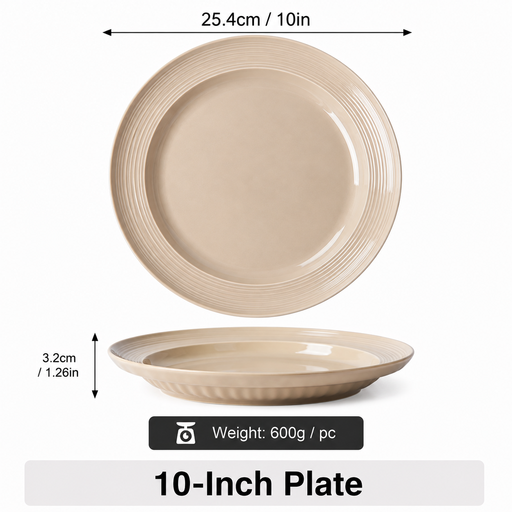
Why it's a great fit: Ideal for anyone seeking a robust and versatile plate for daily main courses. The 10-inch size (approx. 25.4 cm) offers ample space, and the simple, modern design complements many interior styles.
The product description explicitly states that the plate is fired at over 1200°C. This confirms its high material density, avoiding the trap of unclear material claims. It is also designated as microwave and dishwasher-safe.
The combination of a generous size, high firing temperature, and a food-safe glaze makes it a reliable companion for everyday use.
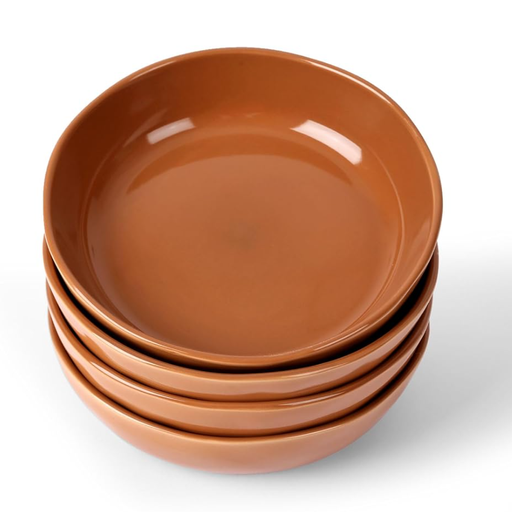
Why it's a great fit: This set of four deep bowls (approx. 1.24 L capacity) is perfect for anyone who loves to eat pasta, salads, curries, or soups. The shape combines the function of a plate and a bowl.
Although the set has an artisanal feel with its irregular rim and reactive glaze, it is described as scratch-resistant, dishwasher-safe, and microwave-safe. It combines an appealing aesthetic with the robustness needed for everyday life.
The generous capacity and deep shape are ideal for dishes with plenty of sauce. The set provides a uniform and stylish look for the dining table.
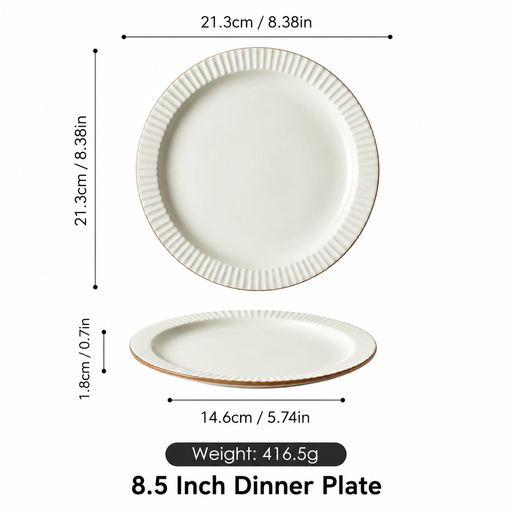
Why it's a great fit: For hosts who value an elegant table setting. The fluted rim and classic beige colour scheme with a brown edge give the plate a special, timeless aesthetic.
This product avoids the "design over function" trap. The description confirms the plate is made from high-fired ceramic and is suitable for the microwave and dishwasher. Elegance and practicality are not mutually exclusive here.
The sophisticated design with its fluted rim sets this plate apart from standard dinnerware, visually enhancing any meal. It's ideal for special occasions or as a stylish breakfast plate.
If you're looking for more plates selected based on these criteria, you'll find a wide range of durable and stylish dinnerware in our curated collection.
1. What is the difference between stoneware and porcelain? The main difference lies in the raw materials and firing temperature. Porcelain is made from kaolin clay and fired at very high temperatures (over 1300°C), which makes it extremely hard, dense, and translucent. Stoneware is fired at slightly lower temperatures, making it generally thicker and more opaque, but when high-quality, it is also very robust and durable.
2. How can I tell if ceramic plates are truly dishwasher-safe? Rely on the manufacturer's explicit labelling. Symbols on the bottom of the plate or clear statements in the product description are the most reliable sources. If such a label is missing, it is safer to wash the plate by hand to avoid damage to the glaze or decoration.
3. How do I care for plates with a reactive glaze to maintain their appearance? Although many plates with a reactive glaze are dishwasher-safe, hand washing with a soft sponge and mild detergent can extend the life of the unique surface. Avoid abrasive cleaners or steel wool, as they can scratch the glaze. When stacking, using felt plate dividers can help prevent scratches.