
Lieferung heute & morgen

Qualitätsgarantie

Willkommens-Angebote freischalten: KOSTENLOSE Lieferung | Bis zu 80 % RABATT | Kostenlose 30-Tage-JoyPlus-Testphase
App herunterladen
A ceramic dinnerware set should look good, work well in everyday life and require as little effort as possible. When choosing one, it is not just the colour and pattern that matter. The set contents, material, care instructions and suitable dimensions all determine whether the plates and bowls can be used practically in the long term.
Terms such as ‘dinner service’ or ‘tableware set’ do not say much on their own. A dinner service for 4 people, for example, may contain only dinner and dessert plates, while other sets also include bowls and cups. You should therefore check the item list before buying:
A 12-piece stoneware dinnerware set with four dinner plates, four dessert plates and four cereal bowls is different from a 16-piece set with additional cups.
Ceramic is a general term. Earthenware is usually fired at lower temperatures and can be heavier and more porous. Stoneware is generally denser and fired at higher temperatures. Porcelain is also ceramic, but differs in its material composition and manufacturing process.
A closer look is also important with coated cookware: a ceramic non-stick coating on aluminium or stainless steel is not a vessel made entirely from ceramic. If you are looking for a ceramic plate set, you should therefore distinguish between dinnerware and ceramic-coated cookware.
‘Dishwasher-safe dinnerware’ and ‘microwave-safe dinnerware’ should be stated explicitly in the product details. With hand-painted surfaces, abrasive cleaners or hard sponges can damage the decorative layer. In addition, a rapid change from the fridge to the microwave, or from hot to cold, can cause thermal shock.
Even if a product is suitable for the dishwasher, we recommend:
A smooth glaze designed for contact with food makes cleaning easier. With decorative products, you should also check whether the pattern has been applied to the surface or integrated into the glaze. Information such as ‘lead-free and cadmium-free’ is product-specific and should be verified in the relevant product description.
For everyday use, stackable shapes and sufficiently wide bases are practical. A ceramic bowl set with a capacity of around 500 to 650 ml, for example, is suitable for cereal, soup, salad or pasta. Deeper bowls are more suitable for ramen or larger portions.
You should measure the available cupboard compartments before buying. Important factors include:
Especially in small flats, shared homes or motorhomes, a compact ceramic breakfast set with a few versatile pieces may be more practical than an extensive dinner service.
Japanese dinnerware often focuses on minimalist shapes and bowls for rice, noodles or soup. Boho dinnerware, on the other hand, often features colourful glazes or hand-painted patterns. Both styles can be suitable for everyday use, provided the care and temperature instructions match how you intend to use them.
For snacks, dips and tapas, a separate snack serving set is more practical than a large dinner service. It allows you to add to the table without buying a complete dinnerware set.
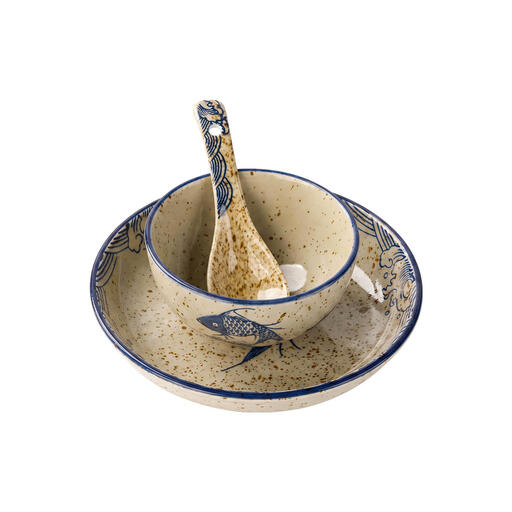
Why this product suits this profile: This 3-piece set consists of a bowl, a plate and a spoon. Its Japanese-inspired design is suitable for singles, couples, small flats or use as a starter set.
The manageable contents are clearly stated, preventing a small combination set from being mistaken for a complete dinner service. The microwave and dishwasher information should be checked again on the product page before buying.
Three combinable pieces, a food-safe glazed surface according to the product details, and flexible use for rice, pasta, salad or drinks.
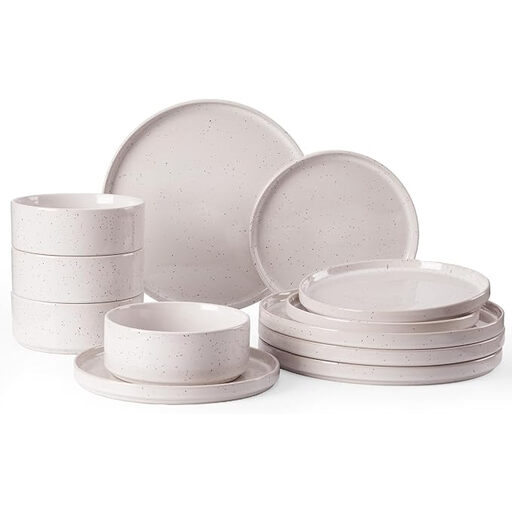
Why this product suits this profile: This 12-piece stoneware dinnerware set contains four dinner plates, four dessert plates and four cereal bowls. The cream-white, speckled glaze complements a range of table settings.
The item list and dimensions are clearly specified. It is also expressly stated that the set is not suitable for use in the oven.
Microwave- and dishwasher-safe according to the product details, stackable shapes and bowls with a stated capacity of 650 ml.
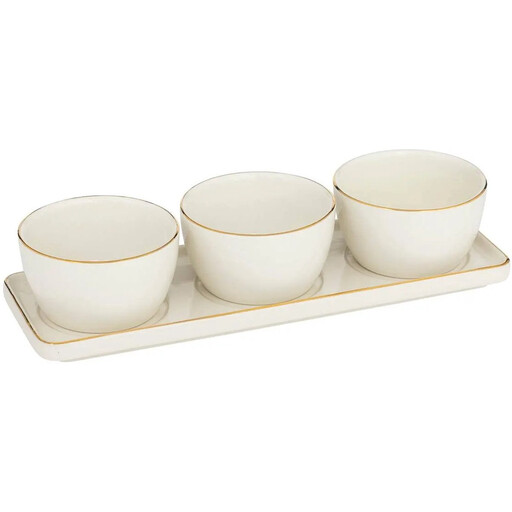
Why this product suits this profile: A board with three matching bowls makes it easy to serve olives, nuts, dips and tapas. It complements an existing dinnerware set when guests come over or for smaller meals.
Its purpose is clearly defined: this is a serving set, not a complete dinner service. According to the product description, it can be cleaned in the dishwasher.
Four pieces consisting of a board and three bowls, a rectangular shape, and a stated individual bowl measurement of approximately 9.5 cm.
We have put together a complete, regularly updated list of products that fully meet these strict selection criteria and the safety regulations applicable in the EU.
That depends on the individual product. A corresponding statement must be included explicitly in the product details. Decorative metal rims, damaged glazes and significant temperature changes can cause problems. Before heating, check the dinnerware for cracks or chips.
There is no single standard lifespan. It depends on the material, glaze, impact, cleaning and temperature changes. Gentle handling, suitable stacking and avoiding abrasive sponges can help protect the surface. Damaged pieces should no longer be used for food.
Ceramic is the general material term, while earthenware refers to a specific type of ceramic. When deciding, the key factors are not so much the name as the specific details concerning the glaze, weight, stackability, dishwasher, microwave and oven. If you are looking for a complete dinner service, you should also compare the number of pieces and whether additional items are available.