
Lieferung heute & morgen

Qualitätsgarantie

Willkommens-Angebote freischalten: KOSTENLOSE Lieferung | Bis zu 80 % RABATT | Kostenlose 30-Tage-JoyPlus-Testphase
App herunterladen
When the temperatures drop, the desire for quick and easy warmth in your own home rises. A ceramic fan heater promises just that: targeted heat at the push of a button, without having to turn up the central heating for a single room. But the market is flooded with devices whose marketing claims often suggest more than the technology can deliver. Many buyers invest in a unit that later turns out to be a noisy power hog or an inadequate heat source.
As your Joybuy Product Recommendation Officer, I'll help you recognise the common pitfalls and make an informed decision. We'll focus on the facts that truly matter.
The 3 most common pitfalls when buying a fan heater:
To avoid a bad purchase, you should focus on objective technical parameters. These three criteria are crucial for the performance, safety, and efficiency of your device.
Modern fan heaters use PTC (Positive Temperature Coefficient) heating elements. Unlike traditional heating wires, these consist of self-regulating ceramic plates.
Heating power is specified in watts. A 2000W fan heater delivers more heat than a 1500W model but also consumes more electricity. However, the wattage alone is only half the story.
Electric heaters should never be operated without basic safety mechanisms. Two functions are indispensable here:
Based on the criteria mentioned above, we have identified a few models that represent a considered choice for specific user profiles.

Why This Fits Their Persona: Ideal for users seeking a heat source for a home office or bedroom where low noise is the top priority. Its compact design fits discreetly under a desk or in a corner.
Directly addresses the noise trap with a manufacturer-specified sound pressure level of just 34 dB. The ECO mode and precise thermostat (5–35°C) prevent unnecessary continuous operation and high electricity costs.
Ultra-Quiet Operation: According to the manufacturer, the brushless DC motor is designed for a low noise level. Comprehensive Safety Features: Includes tip-over and overheat protection, as well as flame-retardant materials.
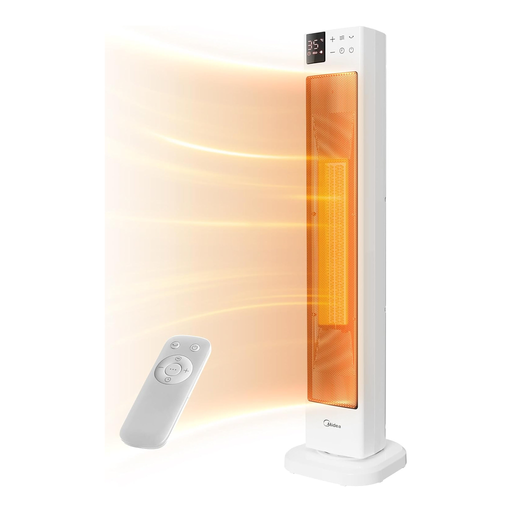
Why This Fits Their Persona: Suitable for users who need supplemental heating for medium to large rooms. As a tower fan heater with a remote control and wide oscillation, it distributes heat evenly, which is ideal for living rooms or larger offices.
Avoids the trap of unrealistic heating claims through a combination of 2000W power and 75° oscillation, designed for broad heat distribution. The ECO mode helps control energy consumption despite its high output.
Wide Heat Distribution: The tall design and wide oscillation ensure effective heating even in the corners of the room. Convenient Operation: All functions can be controlled via the included remote and a digital display.

Why This Fits Their Persona: A great choice for users who want a versatile device for different rooms and value energy efficiency. The integrated carrying handle and various modes make it highly adaptable.
Actively counters the 'power hog' trap. According to the manufacturer, the intelligent ECO mode automatically adjusts the heat output based on the ambient temperature to optimise energy consumption and reduce costs.
Energy Efficiency: The ECO mode is designed to lower heating costs without sacrificing comfort. Precise Control: An adjustable thermostat and a 24-hour timer allow for fully automated, on-demand heat regulation.
We've compiled a complete, up-to-date list of products that fully meet these strict selection criteria and safety regulations.
1. How much electricity does a ceramic fan heater use? Power consumption depends on the wattage and duration of use. A 2000-watt fan heater running for one hour at its highest setting consumes 2 kilowatt-hours (kWh). To control costs, a device with a precise thermostat and an ECO mode is essential. These features ensure the heater doesn't run continuously at full power, but only when needed to maintain the desired temperature.
2. Are ceramic fan heaters safe for unattended operation? As a general rule, no electric heating appliance should be left completely unattended for long periods. However, modern ceramic fan heaters with certified tip-over protection and overheat protection offer a high level of safety. A programmable timer, which automatically switches the device off after a preset time, further enhances safety, for example, when used overnight.
3. What is the advantage of a PTC fan heater over a model with a heating wire? A PTC fan heater uses ceramic elements that decrease their electrical conductivity as their temperature rises. This physical effect results in self-regulating heat output and prevents overheating. Compared to devices with glowing heating wires, they are more durable, safer, and do not burn household dust, which contributes to better indoor air quality.