
Lieferung heute & morgen

Qualitätsgarantie

Willkommens-Angebote freischalten: KOSTENLOSE Lieferung | Bis zu 80 % RABATT | Kostenlose 30-Tage-JoyPlus-Testphase
App herunterladen
A ceramic fan heater can warm rooms quickly and can be moved flexibly between the bedroom, home office and living room. When choosing one, however, it is not just the wattage and modern casing that matter. Some specifications may sound convincing but reveal little about how useful the appliance will be in practice.
Typical buying and marketing pitfalls include:
A 2000 W fan heater is useful for providing quick supplementary heat, but at full power it uses 2 kWh of electricity per hour of operation. A 1500 W appliance uses 1.5 kWh per hour. Calculate the actual cost using:
Power in kW × operating time in hours × electricity price per kWh
A 2000 W appliance should not automatically be viewed as a solution for heating an entire home. For a small home office or seating area, 750 W or 1500 W may be sufficient. Look for a clear manufacturer recommendation regarding room size and compare it with your room’s insulation and how you use the space.
A PTC ceramic fan heater uses a ceramic heating element with temperature-dependent resistance. When choosing one, the key factors are the available heat settings, an adjustable thermostat and automatic shut-off.
A fan heater with a thermostat can monitor the target temperature and pause or adjust the heat output. This is more practical in everyday use than an appliance that simply runs continuously at full power. Also check whether the display shows the set temperature or merely indicates the operating level.
A fan heater with remote control is particularly convenient beside the bed or at a desk. A fan heater with a timer can limit the operating time. Depending on the model, timers may offer settings ranging from 1 to 12 hours or up to 24 hours.
Oscillation distributes the airflow across a set angle. A specification of 45°, 70°, 90° or 120° is therefore more informative than a general claim of “even heat”. If the heater will be used in a noise-sensitive environment, look for a stated decibel rating. Some models specify levels of around 50 to 51 dB, although the perceived noise can vary depending on the distance and operating setting.
The basic safety features of a portable fan heater should ideally include:
A fan heater must not be placed beneath a socket, covered or operated via multi-way adaptors or unsuitable extension leads. For damp rooms, the specific IP rating and the instruction manual are decisive. An IP rating alone should not be interpreted as approval for use in every environment.
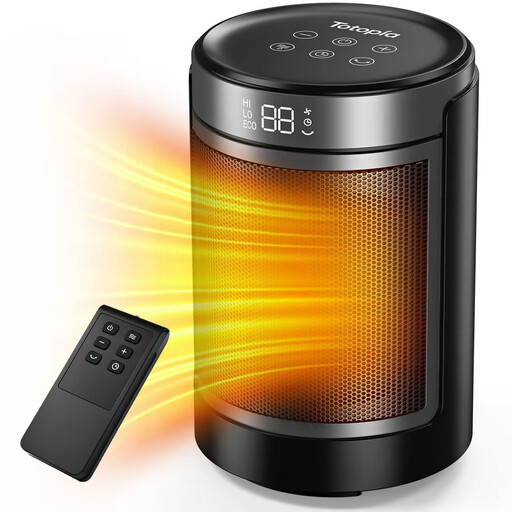
Why this product suits this profile: Four operating modes, including fan-only, 750 W, 1500 W and ECO mode, allow for adjustable use in smaller indoor spaces. The remote control and LED display make operation easier.
The different power settings mean that 1500 W is not required continuously for every use. A timer from 1 to 12 hours limits the operating time.
PTC heating element, tip-over protection, overheat protection, oscillation and a 12-hour timer, according to the product description.
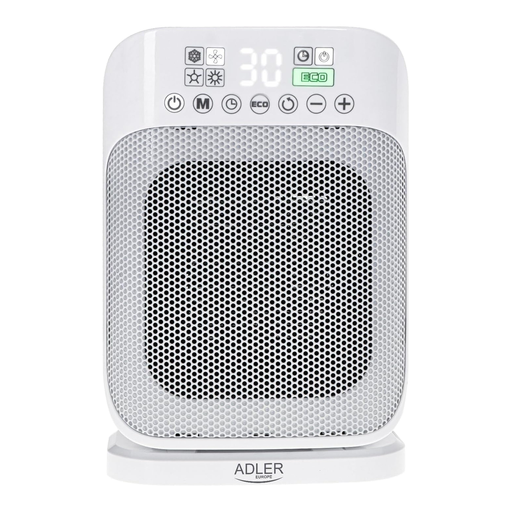
Why this product suits this profile: The appliance offers a temperature selection from 10 to 35 °C, an anti-frost function from 7 °C and automatic 45° oscillation. According to the product description, the stated noise level is below 51 dB.
The precise temperature range is more specific than simply claiming “quick heat”. The anti-frost function is intended for unheated indoor areas, not as a replacement for a regular room heater.
1500 W power, remote control, LED display, 45° oscillation and a stated noise level below 51 dB.
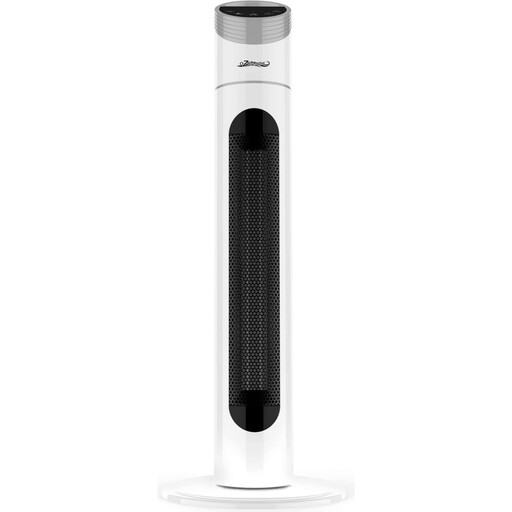
Why this product suits this profile: Two heat settings up to 2000 W and 120° oscillation are suitable for users who need wider air distribution in a living area or home office.
The power settings and specific oscillation angle make it easier to assess the appliance’s limitations. Overheat and tip-over protection are explicitly listed.
2000 W PTC technology, 120° oscillation, portable design and stated overheat and tip-over protection.
For a portable fan heater, a handle or low weight is recommended if you regularly move the appliance between rooms. Before using it for the first time, make sure the air intake and outlet are clear. Dust around the openings can restrict air circulation; only clean the appliance when it is switched off and has cooled down.
We have put together a complete, regularly updated list of products that fully meet these strict selection criteria and the safety regulations applicable in the EU.
A 2000 W appliance uses 2 kWh per hour at full power, while a 1500 W model uses 1.5 kWh. A thermostat and ECO mode can reduce the operating time or power setting. Actual consumption depends on the room temperature, insulation, selected settings and operating time.
This depends on the instruction manual and the appliance’s features. Place the heater securely, with sufficient clearance from bedding, curtains and furniture. A timer, thermostat, overheat protection and tip-over protection are useful, but they do not replace supervision. When leaving the room, the fan heater should be switched off and disconnected from the mains.
It is not possible to give a reliable general lifespan. Among other factors, it is affected by operating time, dust exposure, storage conditions and the quality of the cable, switches and heating element. Dry storage, unobstructed ventilation openings and use in accordance with the instructions can help extend its service life. If the appliance is damaged, develops an unusual smell or switches off repeatedly, do not continue using it.