A ceramic fan heater may be suitable as a temporary source of supplementary heat in a dry conservatory that you only use occasionally. Choose the heat settings and controls to suit how you use the space, rather than focusing on wattage alone. If you plan to heat it regularly, take heat loss and electricity costs into account. If the location may be damp, check the operating instructions to see whether the specific appliance is approved for use there.
Who is a ceramic fan heater suitable for?
Occasional conservatory users
If you want to warm up a chilly seating area only when you’re spending time there, a portable appliance may work as a temporary source of supplementary heat. The consumer advice organisation Verbraucherzentrale recommends using conventional fan heaters only in a specific area and for a limited time.
Buyers with a tricky location in mind
If the available space is affected by damp, plants, textiles or a nearby socket, check the operating instructions for that specific location. The Federal Institute for Occupational Safety and Health (BAuA) advises following the manufacturer’s information to ensure electrical products are used safely.
Regular conservatory users
If you heat the space regularly or for extended periods, consider running time, heat loss and electricity consumption more carefully than how quickly the appliance warms up when switched on. Verbraucherzentrale advises limiting the use of conventional fan heaters.
What should you look for when buying?
Compact ceramic fan heater
A good fit if: You want targeted heat for occasional visits and have a suitable, dry place to put it.
Consider: Fan noise and electricity use during longer periods of use; a small appliance is no substitute for a room heating system.
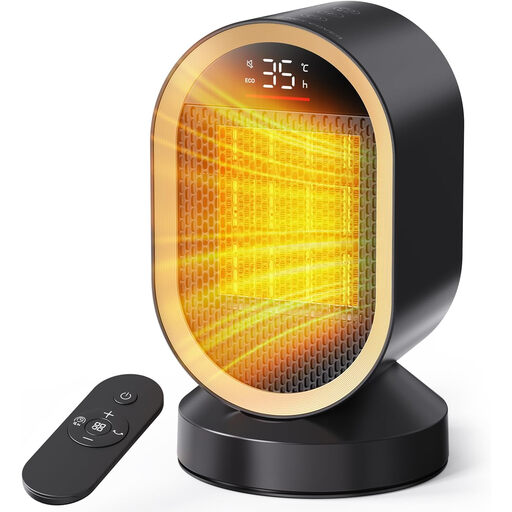
Oscillating ceramic tower fan heater
A good fit if: You want to circulate warm air around a seating area while you’re there, and adjust the temperature or running time.
Consider: Oscillation and user-friendly controls won’t make up for heat loss or an unsuitable location.
Check for heat loss or consider another heating option
A good fit if: You want the conservatory to stay warm regularly for extended periods, or a fan heater can’t be used safely where you plan to put it.
Consider: The right long-term solution for your building and budget will depend on the conservatory itself.
This table matches the main buying considerations with the needs of people thinking about a ceramic fan heater for a chilly conservatory.
| What to consider |
What to look for |
Who should pay particular attention? |
| Targeted heat |
Check the heat settings, thermostat and permitted positioning for the specific model. |
If I only want to warm the seating area during occasional visits, suitable heat settings and controls are important. Around 33% of consumers put targeted heat for occasional use first. |
| Safe positioning |
Check the operating instructions and protection rating against the surroundings. Keep the appliance away from flammable items and avoid damp conditions. |
If condensation, splashes, plants or textiles are a factor in the available space, I need to check the conditions particularly carefully. Around 25% of consumers prioritise a suitable location. |
| Electricity consumption |
Consider the rated power, planned hours of use and your electricity tariff; kW × hours gives kWh. |
If I use the heater repeatedly, I want to estimate the running costs based on how I actually use it. Around 25% of consumers focus primarily on keeping running costs down. |
| Noise and airflow |
Compare oscillation, controls and the noise figures for each model. Only compare figures measured under similar conditions. |
If I spend longer sitting in the conservatory, suitable airflow and an acceptable level of fan noise matter more than they do when briefly warming up the space. Around 17% of consumers prioritise quieter, more evenly distributed heat. |
Common buying mistakes
-
Assuming ceramic technology means lower heating costs
A ceramic fan heater still uses electricity when it runs for longer periods. Verbraucherzentrale recommends using conventional fan heaters only in a specific area and for a limited time.
Before buying, think about how often and for how long you’ll want to heat the space. Don’t assume that advertised savings will apply to your conservatory.
-
Assuming safety features mean it can be used in a damp location
Overheat and tip-over protection do not replace the need to follow the permitted environmental conditions, allow sufficient clearance and keep airways unobstructed. Güde lists the GEH 2000 P as having an IP20 rating; this does not mean it is suitable for exposure to splashing water.
Check the location against the operating instructions and keep the appliance and electrical connections away from moisture. Also keep it away from flammable items, as recommended by the German Fire Service Association.
-
Assuming similarly named versions for different countries are identical
Dreo’s US product page lists 120 V and 1000–1500 W for the Solaris Slim H3, while the German H3S page lists 220–240 V and 2000 W. The H3 and H3S are not interchangeable without checking the full model name.
Check the full model name, mains voltage and what’s included on the specific product page.
Brands to consider
Güde
The GEH 2000 P 85122 is a compact PTC ceramic fan heater for occasional use in suitable indoor spaces.
- Güde lists two heat settings of 1 and 2 kW, as well as a thermostat and overheat protection.
- Its IP20 rating and the manufacturer’s recommendation for well-insulated rooms or occasional use limit its suitability for a given conservatory location.
Rowenta
The Mini Excel Safe SO9266 is a compact ceramic option with two heat settings.
- Rowenta lists 1000 and 2000 W, a thermostat, overheat protection and a Silence setting at 50 dB(A).
- The noise figure applies to a specific setting; it doesn’t mean the heater is suitable for a damp conservatory.
De’Longhi
The HFX65V20 is a ceramic tower fan heater with a remote control.
- De’Longhi lists 1200 and 2000 W, a safety cut-out if the heater tips over and a dust filter.
- The manufacturer’s information does not show that it is specifically suitable for a damp conservatory.
Dreo
According to the German manufacturer’s website, the Solaris Slim H3S is a 220–240 V tower fan heater with a thermostat, timer and oscillation.
- Dreo lists 2000 W, 70° oscillation and a 12-hour timer for the H3S.
- According to the manufacturer, the US H3 version differs in voltage and power. Check the full model version rather than assuming the appliances are the same.
Joybuy product selection
The following Joybuy products are ceramic fan heaters for targeted supplementary heat. Whether a model can be used in your conservatory depends on its operating instructions and the conditions at your location.
 No image available
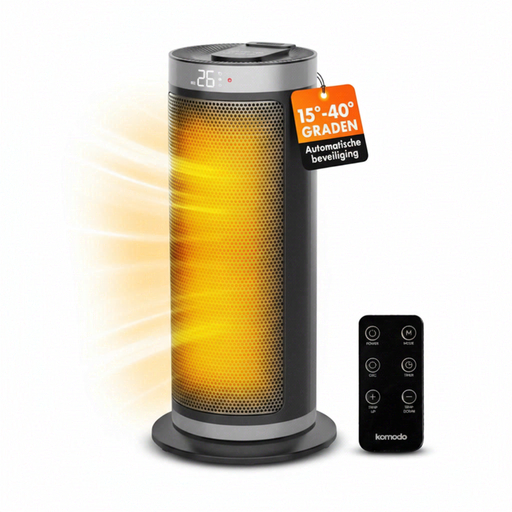
Komodo Cozi+ ceramic fan heater
May be suitable for targeted heat during occasional visits, provided the operating instructions allow it to be used in your chosen location.
The product name lists heat settings of 750, 1500 and 2000 W, 90° oscillation and a remote control. The product warning says not to use it near sources of water while it is plugged in.
View at Joybuy
 No image available
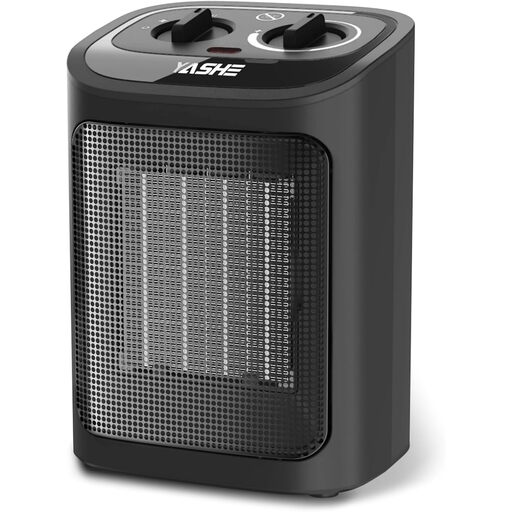
YASHE PTC-919 ceramic fan heater
May be suitable as a source of targeted supplementary heat while you’re there, if the instructions permit use in that location and under those conditions.
The product name lists 1500 W, three heat settings, an Eco mode, and overheat and tip-over protection. Check the instructions for permitted positioning.
View at Joybuy
 No image available
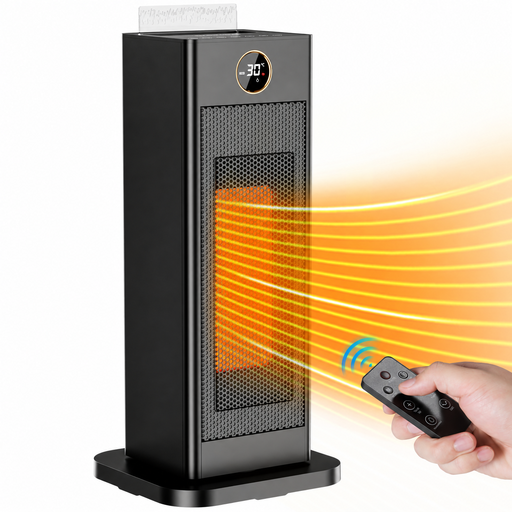
PTC ceramic tower fan heater with thermostat
May be suitable for targeted heat while you’re there, provided the instructions confirm that the specific location is suitable.
The product name lists a thermostat, an Eco mode and 90° oscillation. Check the permitted environmental conditions before use.
View at Joybuy
 No image available
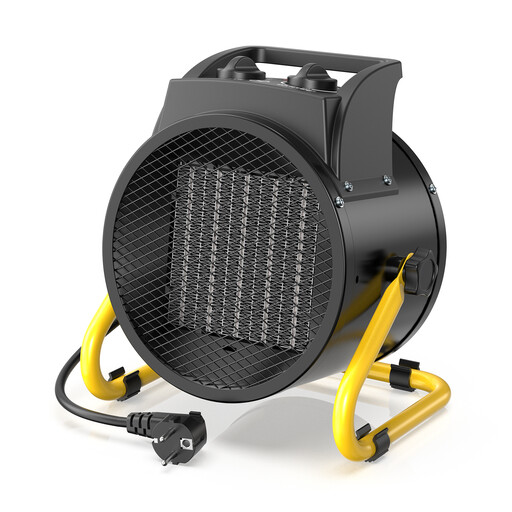
DAHTEC ceramic fan heater, 3000 W
May be suitable for targeted supplementary heat if the intended use and location comply with the operating instructions.
The product name lists 3000 W and two heat settings. Take the rated power into account alongside your planned running time and electricity tariff.
View at Joybuy
 No image available
1500 W PTC ceramic fan heater
May be suitable as a supplementary heater for occasional visits, provided the instructions allow use in your chosen location.
The product name lists 1500 W, a 24-hour timer, a remote control, and tip-over and overheat protection. Check the full specifications for the specific version.
View at Joybuy
Frequently asked questions
Can you use any ceramic fan heater in a conservatory?
No. The word ‘ceramic’ doesn’t tell you whether an appliance is approved for use in a damp location. Check the operating instructions for the specific location; for example, the Güde GEH 2000 P is listed with an IP20 rating. Don’t assume a product is suitable for a location where water may get in just because it belongs to this product category.
How can I position and care for the appliance safely?
Keep the clearances and airways specified in the manufacturer’s instructions unobstructed, and don’t dry clothes on the appliance. Protect it and its electrical connections from moisture. Always follow the instructions for the specific model when it comes to cleaning and permitted conditions. The German Fire Service Association advises leaving sufficient clearance between fan heaters and flammable items.
How much does an hour of heating cost?
Multiply the power in kW by the actual number of hours the heater runs and your electricity price per kWh. Running continuously at 2 kW for one hour works out at 2 kWh; a thermostat may change the actual time the heater is switched on. To calculate the cost, you’ll also need your tariff and actual usage.
What should I look for on labels and in the documentation in Germany?
The Federal Network Agency lists checks including correct CE marking, identifiable manufacturer details and German operating instructions with the required warnings. Check the documentation for your chosen model; CE marking alone does not prove that it is suitable for every conservatory.


