What should you consider when choosing one?
Targeted warmth at your desk
Suitable if: You need warmth directly at your own desk only during certain periods of work.
The trade-off: The airflow can be directed towards your seat, but it will distribute less warmth to other areas.
Oscillation for several seats
Suitable if: You’d like nearby seats to benefit from the warmth and there’s enough space for the heater to oscillate.
The trade-off: The warmth won’t stay as directly focused on one person as it would with a fixed airflow.
Heating the whole living room
Suitable if: The large living room, not just your desk, is too cold for long periods.
The trade-off: This calls for a different heating solution. According to the Consumer Advice Centre NRW, a small fan heater is no substitute for room heating.
When choosing a heater, consider warmth at your seat, safe positioning, noise while you work, running time and the area you want it to cover separately.
| Priority |
What to check before buying |
Who is it important to? |
| Targeted warmth at your seat |
Check the footprint, airflow direction and heat settings for your intended workspace. Don’t mistake a small plug-in heater for a room heater. |
If I only need warmth at my desk while I’m working, airflow directed at my seat matters more than heating distant corners. Around 29 % of consumers put targeted warmth at their seat first. |
| Safe positioning |
Check the positioning instructions, clearance from flammable items, unobstructed airflow and the capacity of the power supply. Safety features don’t make an unsafe location suitable. |
If the heater is near paper or furniture, I want to check where it can go and how it will be powered before considering comfort features. Around 23 % of consumers prioritise safe positioning. |
| Fan noise while you work |
Check noise figures along with the operating mode and testing conditions. Rowenta gives a minimum noise level of 50 dB(A) for the SO9266 as a manufacturer’s specification. |
If I’m making calls or concentrating, I want to know how noisy the specific heater is on the setting I’ll use. Around 18 % of consumers put quiet operation first. |
| Electricity consumption while in use |
Consider the power rating, actual running time and your electricity tariff together. A heat setting or the word ‘ceramic’ alone doesn’t prove that you’ll save money. The ADAC recommends assessing consumption based on usage and power. |
If I plan to run the heater for longer periods, I want to estimate its consumption based on its power rating, actual running time and my tariff. Around 18 % of consumers prioritise predictable running costs. |
| Warmth for other seats |
Compare oscillation features and room coverage figures for specific models. Steba gives a figure of up to around 30 m² for the KH 4, while Eurom lists a maximum of 75 m³ for the Safe-t-Heater 2000. Floor area and volume are different measurements, and manufacturers’ figures are no guarantee that a heater will warm every living room. |
If I want other seats to benefit from the warmth, I’d prefer oscillating airflow to a stream of air constantly directed at me. Around 12 % of consumers put warmth for other seats first. |
Joybuy products for targeted warmth
This selection includes ceramic fan heaters for targeted indoor warmth, including models whose product details mention use on a table or at a workstation. Before choosing, check that the power rating, footprint and positioning instructions suit your desk. This selection does not guarantee that a heater will warm your entire living room.
 No image available
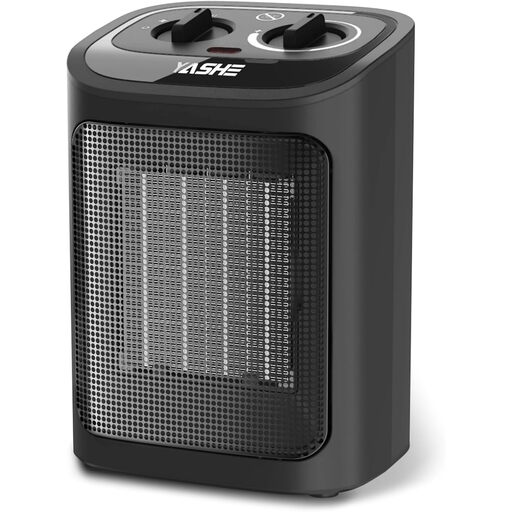
YASHE PTC-919 ceramic fan heater, 1.500 W, 3 heat settings
For targeted warmth at your desk when you’d like to choose between several heat settings.
1.500 W; 3 heat settings; Eco mode; overheat and tip-over protection.
View at Joybuy
 No image available
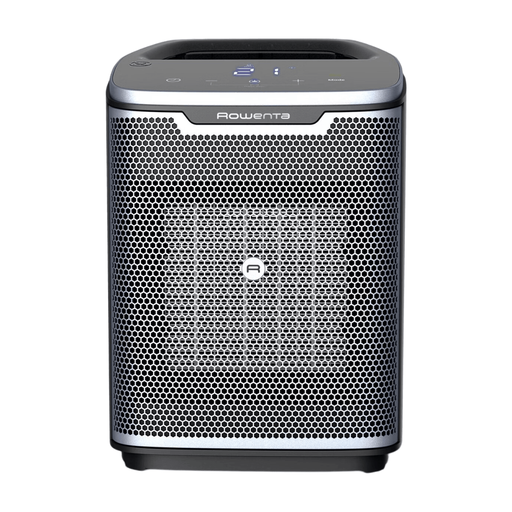
Rowenta SO9360 ceramic fan heater
Designed for use indoors on a table or bench.
IP20. The product description requires a minimum distance of 1 m from flammable materials and an earthed socket. It also says not to use extension leads or multiway adaptors.
View at Joybuy
 No image available
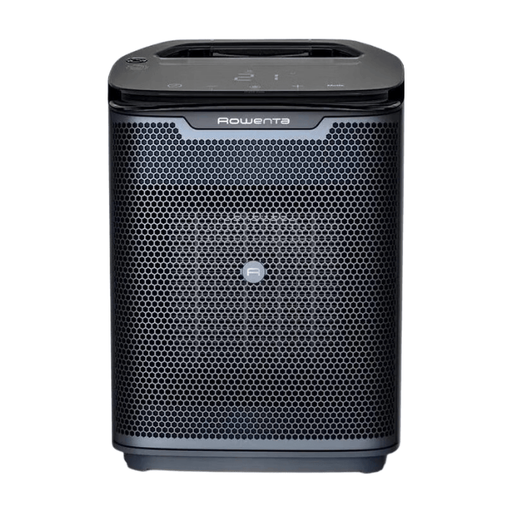
Rowenta Intense Comfort Aqua SO9380F0 ceramic fan heater
Designed for use indoors on a table or console.
IP21. The product description requires a minimum distance of 1 m from flammable materials and an earthed socket. It also says not to use extension leads or multiway adaptors.
View at Joybuy
 No image available
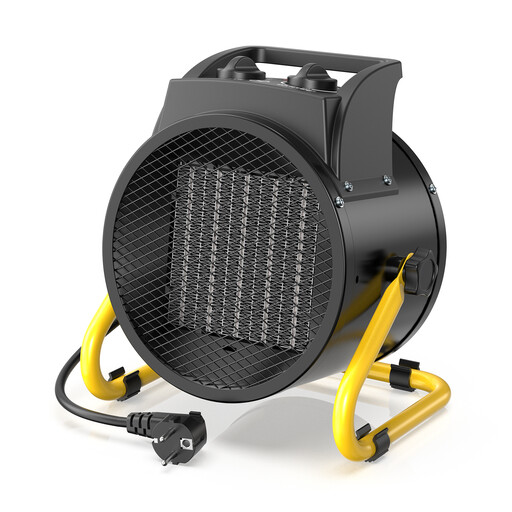
DAHTEC ceramic fan heater, 3.000 W
For targeted indoor warmth if you’re considering a heater with several operating settings.
3.000 W; thermostat; 2 heat settings.
View at Joybuy
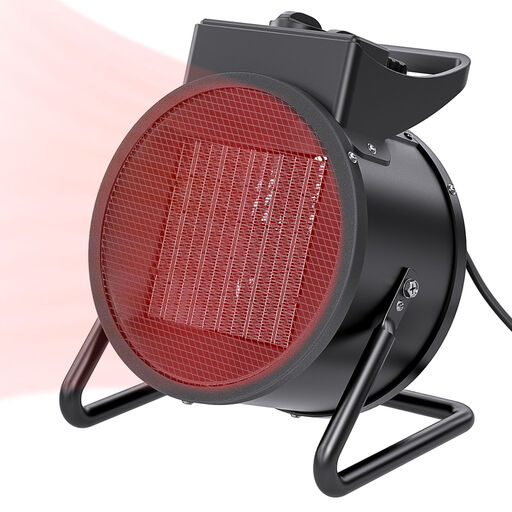 No image available
PTC ceramic fan heater, 2 kW, 3 settings
For indoor use if you’re looking for a ceramic heat source with adjustable settings.
PTC heating element; 2 kW; 3 settings; continuously adjustable thermostat.
View at Joybuy
Frequently asked questions about ceramic fan heaters at your desk
Is a small plug-in fan heater enough for a large living room?
No, not as a replacement for room heating. Consumer advice centres consider small heaters unsuitable for whole rooms because of their low heat output. Using one to provide occasional warmth directly at your workstation is different.
How can I position a fan heater safely at my workstation?
Keep it a sufficient distance from flammable items, don’t cover it with clothing and avoid overloading sockets. Also follow the positioning and cleaning instructions for the specific model. The German Fire Service Association specifically advises keeping the heater away from flammable items.
How can I estimate electricity consumption before buying?
Multiply the power drawn in kW by the actual running time in hours to estimate consumption in kWh. To work out the cost, use your personal electricity tariff. If the thermostat switches the heater on and off, base your estimate on its actual operating time.
Does an electric ceramic fan heater need an EU energy label?
According to the European Commission, electric local space heaters are exempt from EU energy labelling. Ecodesign requirements are separate; the absence of an energy label alone doesn’t mean a fan heater is non-compliant.
What do CE marking and safety requirements mean in Germany?
Mains-powered equipment covered by the EU Low Voltage Directive, operating at 50 to 1.000 V AC, must meet the applicable safety requirements. By applying the CE mark, the manufacturer declares that the product conforms to those requirements; it is not an independent test report. Check the product identity and manufacturer’s information, as the Federal Network Agency also recommends when buying.


