
Lieferung heute & morgen

Qualitätsgarantie

Willkommens-Angebote freischalten: KOSTENLOSE Lieferung | Bis zu 80 % RABATT | Kostenlose 30-Tage-JoyPlus-Testphase
App herunterladen
A professional fan heater should provide heat quickly, be easy to move around and work safely with regular use. In practice, however, many models aren’t suited to the available power supply, room size or working environment. Before you buy, it’s worth checking the technical specifications rather than focusing only on wattage and marketing claims.
A 3 kW fan heater produces more heat at full power than a 2 kW model, but it also uses more electricity. A 5 kW model uses around 5 kWh for each hour of operation at full power. Actual consumption depends on how long the heater runs, the temperature setting and how well insulated the room is.
A built-in thermostat can limit how long the heater runs, but it’s no substitute for suitable insulation. For a small, well-insulated room, a 3 kW electric heater may be more practical than an oversized model.
A splashproof fan heater with an IP24 or IPX4 rating is protected against certain levels of water ingress or splashing. This rating doesn’t automatically make it suitable for rain, standing water or exposed outdoor areas. When used outdoors, a professional fan heater should be placed somewhere dry and stable, and protected from direct exposure to the weather.
Depending on how you plan to use it, a portable patio heater, infrared heater or gas patio heater may also be suitable for balconies, patios and covered outdoor areas. Always follow the safety and installation instructions in the product manual.
At 3 kW, a suitable 230-volt connection is often required. Models rated at 5 kW or 9 kW may have different connection requirements, depending on the specification. Some versions come with a power cable, while certain 9 kW models are listed without one.
Before buying, trade customers and contractors should check:
The right heat output depends on the room volume, insulation, outdoor temperature and how quickly you want the space to warm up. A building site heater or industrial fan heater rated at 5 kW is more suitable for larger, draughty areas than for a small office. For individual workstations, a directional infrared heater may be more economical, as it heats people and surfaces directly.
Don’t just look at the maximum output; check whether the heater has several heat settings. A model with half-power and full-power settings is easier to adapt to a workshop, garage or storage area.
A fan heater with a thermostat switches the heater on or off according to the selected temperature. This can reduce continuous operation. An axial fan, adjustable air deflector and several temperature settings help distribute warm air more evenly.
A carry handle is also useful for workshop heating. If you need to move the heater between locations, a compact metal casing makes it easier to transport. Make sure the weight is suitable for how you plan to use it.
Key safety features include:
Never cover a heater. Even a model described as a fan heater for indoor and outdoor use must not be used in a shower, bath, close to water sources or in exposed rain. Gas and paraffin models also need particular care when it comes to ventilation, fuel storage and the risk of carbon monoxide.
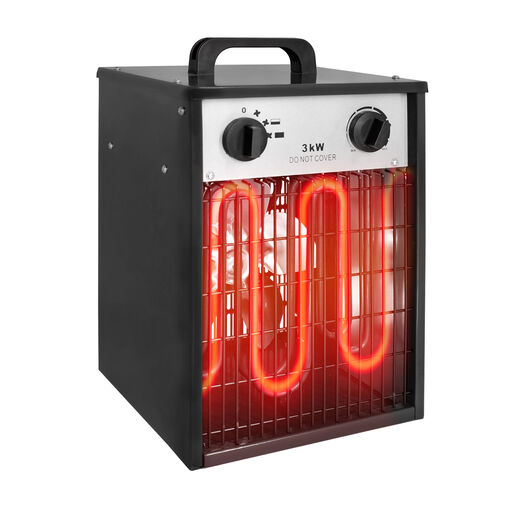
Why it suits this user: The 3 kW version is a good option if you’re looking for a portable electric heater for a workshop, garage or additional room, with several heat settings to choose from.
The product description specifies overheat protection, a thermostat and IP24 splash protection, so you can check the key details before buying.
3 kW heat output, metal casing, carry handle and several operating modes, including a fan-only function.
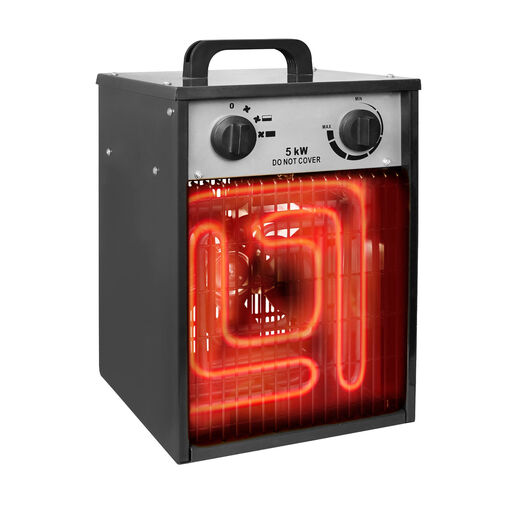
Why it suits this user: For regular use in a workshop, garage, storage area or suitable building site, the 5 kW class offers more capacity than compact heaters designed for living spaces.
The product details specify 5 kW, a thermostat, four heat settings, a metal construction and IP24 protection. Check the required power connection separately before buying.
Axial fan with an aluminium impeller, integrated air deflector and several heating and ventilation functions.
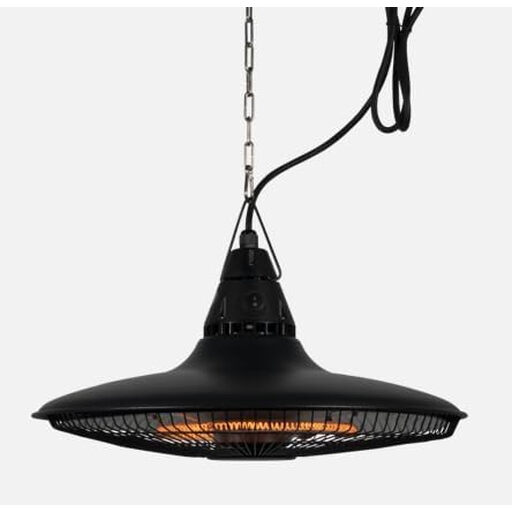
Why it suits this user: This infrared heater is designed for covered patios, balconies and seating areas where you want targeted warmth without air from a fan.
The IP34 rating and mounting options are clearly specified. However, keep the heater away from direct rain and prolonged contact with water.
1500 W output, quiet operation, targeted heat, and wall or ceiling mounting.
We’ve put together a complete, regularly updated list of products that meet these strict selection criteria and the safety regulations in force across the EU.
At full power, it uses around 3 kWh per hour of operation. A 5 kW model uses about 5 kWh. A thermostat can reduce the actual running time once the desired temperature is reached. To calculate the exact cost, multiply your electricity tariff by the actual consumption.
It depends on the power connection, room size, ventilation and dampness. An electric heater with an IP24 or IPX4 rating may be suitable for dry areas or areas exposed to limited splashing. It must be placed on a stable surface, left uncovered and kept away from flammable materials. Gas- or paraffin-powered heaters need particularly careful consideration in enclosed spaces because of combustion and the potential for exhaust fumes.
A fan heater distributes warm air and is suitable when a temporary power supply is readily available. A gas patio heater doesn’t need a mains connection, but you’ll need to consider the gas cylinder, ventilation and fire safety. An infrared heater mainly warms the people and surfaces it is directed at, so it can be useful when you need heat in a specific spot. The right choice depends on where you’ll use it, the available power connection, the room volume and the instructions in the relevant product manual.