Who is this relevant to?

Conservatories with damp problems

If you notice cold walls or glazing, check whether warming the room air will address the underlying problem before buying an appliance. The Verbraucherzentrale highlights the importance of humidity levels immediately in front of cold walls.

Occasional conservatory users

If you only use the room now and then, compare how each fan heater distributes air, where it can be positioned and what shut-off functions it offers.

Regular conservatory users

If you heat the space for longer periods or more frequently, actual running time and electricity use matter. The Verbraucherzentrale warns that running a fan heater for long periods can use a lot of electricity.

What should you look for when buying?

Portable ceramic fan heater

Suitable if: You want to warm a closed, dry conservatory quickly at your usual spot, and only use the room occasionally.

Consider: Blown warm air is no substitute for checking cold surfaces or assessing damp. Longer running times can increase electricity use.

Targeted infrared heating

Suitable if: You usually sit in one place and want to direct heat towards people or surfaces. Bosch Home Comfort describes this targeted warmth as a feature of infrared heaters.

Consider: Areas out of the heater’s line of sight won’t be warmed in the same way. Neither Bosch Home Comfort nor the Verbraucherzentrale provides evidence that this type of direct electric heating is a cheaper way to heat the whole conservatory.

Long-term heating and damp-control plan

Suitable if: You use the conservatory regularly for longer periods, or repeatedly notice high humidity on cold surfaces.

Consider: Ventilation, the building’s fabric and a suitable permanent heating system all need to be right for the specific room. A more powerful fan heater won’t solve these issues on its own.

Priority What to check when buying Who it matters most to
Cold surfaces and damp Check humidity and cold surfaces separately; wattage and the thermostat won’t measure moisture on the wall. If I notice cold walls or glazing and damp, I want to check the room’s humidity and possible causes first. Around 31% of consumers put this priority first.
Warmth where you sit Compare the heat settings, thermostat, oscillation function and the clear space required around the specific model. If I only use the conservatory occasionally, I want to know how the warmth reaches my seating or working area. Around 25% of consumers prioritise quick warmth where they spend time.
Electricity use over longer periods Consider the power consumption and your own running hours; longer use means greater electricity consumption. If I heat the space regularly for longer periods, I want to factor running time and electricity use into my decision. Around 25% of consumers prioritise longer running times and costs.
Safe positioning Check the protection rating, tip-over protection, mains connection and the safety clearances in the specific appliance’s instructions. If space or damp at the intended location is a concern, I want to check the instructions and protection details for the model. Around 19% of consumers prioritise a safe place to position the heater.

Common buying misconceptions

  • A large fan heater will solve the problem of cold walls

    Warming the air in a room won’t automatically remove the cause of cold walls or glazing. The Verbraucherzentrale points out that moisture levels directly in front of a cold wall can be relevant to mould growth.

    Assess humidity, ventilation and cold surfaces separately before choosing the heater’s output.

    Longer running times can use electricity without addressing the cause of the damp.

  • Ceramic technology or an Eco mode automatically means lower heating costs

    A ceramic heating element alone is no proof of lower electricity use for the same amount of heat produced. Bosch Home Comfort describes the conversion process in direct electric heaters as one kilowatt-hour of electricity producing one kilowatt-hour of heat. Claims about energy-saving modes only apply under the stated comparison conditions.

    Compare power consumption, controls and how long you actually use the heater. Assess manufacturers’ comparisons in light of the conditions they specify.

  • A stated room size or safety feature won’t necessarily suit every conservatory

    A general coverage figure doesn’t tell you whether an appliance will adequately heat your particular conservatory or suit its humidity conditions.

    Check the instructions and protection rating, and make sure the space required around the heater is available at its intended location.

Key brands at a glance

Clatronic

The HL 3763 is a portable PTC ceramic fan heater with a timer, oscillation and two stated heat settings.

  • Clatronic lists a thermostat and maximum heat output of 2000 W. The manufacturer says the model is intended for well-insulated rooms or occasional use.
  • The product page gives conflicting information about the lower heat setting. Check the instructions if this figure is important to your comparison.
  • The manufacturer lists overheat protection and a safety contact switch; this does not mean the model is suitable for damp locations.

Unold

According to the manufacturer, the Ceramic Fan Heater 3D, item number 86535, offers adjustable air distribution.

  • Unold lists 1800 W, 80° oscillation and 45° tilt. It also describes a removable filter.
  • These model specifications don’t prove that the heater will provide enough warmth for every conservatory or that it is suitable for damp locations.

Rowenta

The SO9420F0 is a ceramic fan heater with three stated power settings and oscillation.

  • Rowenta lists 1000/1400/2400 W, an electronic thermostat and an IP20 protection rating.
  • The manufacturer’s coverage and Eco claims don’t prove independent heating performance or savings in a conservatory with cold walls. IP20 does not mean the heater is approved for splashes.

De’Longhi

The HFX65V20 is a portable ceramic tower fan heater with a remote control and two power settings.

  • De’Longhi lists 1200/2000 W, frost protection, a dust filter and an automatic shut-off if the heater tips over.
  • These features don’t prove that the heater is suitable for damp locations or that it will save energy compared with other direct electric heaters.

EMKE

The ERL200B combines a PTC tower fan heater with a flame effect that can be used separately.

  • EMKE lists 1300/2000 W, 80° oscillation, a timer, tip-over protection and overheat protection.
  • The flame effect is a design feature, not extra heating power. EMKE requires the heater to be plugged directly into a 220–240-V earthed socket.

Joybuy products for warmth where you spend time

These portable ceramic fan heaters are designed to provide blown warm air where you need it. They are not a substitute for separately assessing cold surfaces, humidity or ventilation.
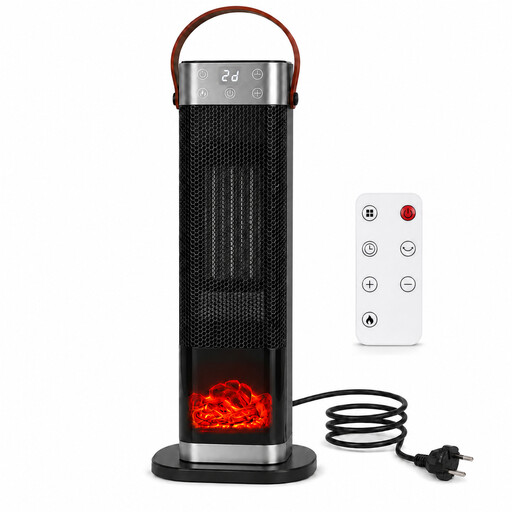
Rosnek HQ30-300B ceramic fan heater with flame effect

Rosnek HQ30-300B ceramic fan heater

For anyone looking to combine warmth where they spend time with adjustable temperature and running time.

The product name lists 2000 W, oscillation, a thermostat with a range of 15–40 °C, a 1–12-hour timer, overheat protection and tip-over protection. The flame effect is a design feature.

Joybuy

OmniHeat 1800 W ceramic fan heater

OmniHeat 1800 W ceramic fan heater

For anyone comparing multiple heat settings and adjustable temperature to suit changing heating needs.

The product name lists four heat modes, oscillation and a thermostat with a range of 5–35 °C. The product description also lists a timer, remote control, overheat protection and tip-over protection.

Joybuy
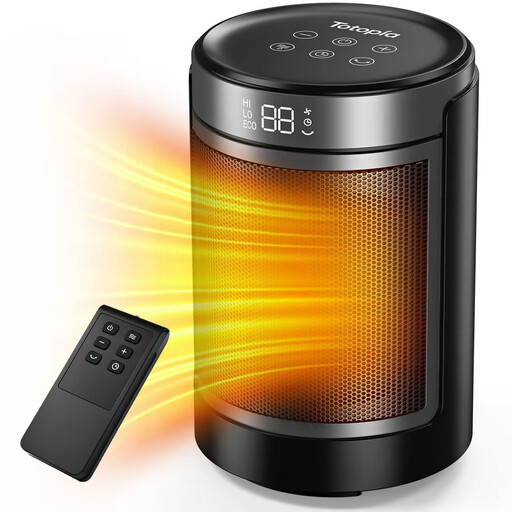
Totopia PTC-907B ceramic fan heater

Totopia PTC-907B ceramic fan heater

For anyone comparing heat settings and air distribution for an area used occasionally.

The product description lists 750 W and 1500 W, four modes and wide oscillation. A timer, remote control, overheat protection and tip-over protection are also listed.

Joybuy
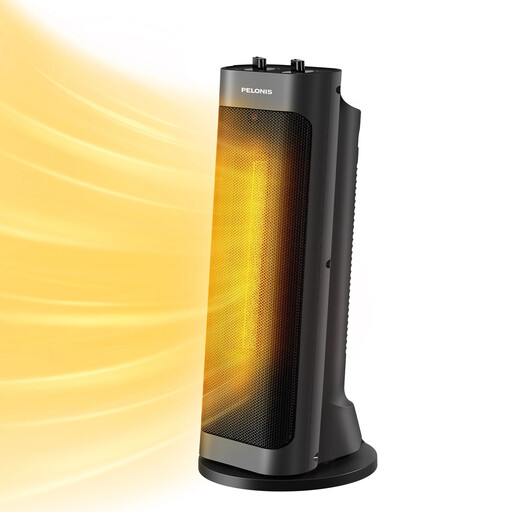
PELONIS 2000 W PTC ceramic fan heater

PELONIS 2000 W PTC ceramic fan heater

For anyone looking to distribute warm air and take the listed safety features into account when comparing appliances.

The product name lists 70° oscillation, tip-over protection and overheat protection; the product description also lists a thermostat.

Joybuy

DREO Solaris 628 PTC ceramic fan heater

DREO Solaris 628 PTC ceramic fan heater

For anyone comparing temperature control and oscillating warm air for the area they use.

The product name lists 2000 W, a thermostat, 70° oscillation and a timer of up to 12 hours. The product description also lists a remote control, tip-over protection and overheat protection.

Joybuy

Frequently asked questions

Can a ceramic fan heater get rid of cold walls and condensation?

Not reliably by warming the room air alone. Humidity can be higher immediately in front of cold surfaces, so check humidity levels and assess ventilation and the cause of the cold surfaces separately. The Verbraucherzentrale says that relative humidity of around 70 to 80% directly in front of a wall is a range in which mould can grow.

How do I work out the running costs?

If you leave a 2000-W setting on continuously, 2000 W is equal to 2 kW, so allow for 2 kWh per hour. Multiply 2 kWh by your actual price per kWh in €/kWh. Thermostat breaks reduce the actual time spent heating at full power; this full-load example is not a measured figure for a conservatory.

How should I position and maintain a fan heater?

Follow the instructions for your chosen model and make sure it has a suitable, clear space. For the ERL200B, EMKE requires a firm, level surface, clear air inlets and outlets, and a direct connection to a 220–240-V earthed socket. Unold describes the Ceramic Fan Heater 3D, item number 86535, as having a removable, washable filter. These details apply to the specific models only and shouldn’t automatically be assumed to apply to other appliances.

What should I bear in mind when buying an electric fan heater in Germany?

Electrical appliances covered by the EU Low Voltage Directive must meet requirements for conformity and CE marking. The CE mark is a manufacturer’s declaration, not an independent safety certificate. Since 1 July 2025, covered local space heaters have been subject to Regulation (EU) 2024/1103 instead of the previous Regulation (EU) 2015/1188. A product reference to the previous regulation alone proves neither current compliance nor that the individual appliance is in breach.

Can I use a ceramic fan heater in a damp or open conservatory?

There’s no blanket approval: the conditions at the specific location, as well as the model’s protection rating and instructions, are what matter. Rowenta gives the SO9420F0 an IP20 rating; this does not mean it is approved for splashes. Before using it, also check that you can position the appliance safely with adequate clearance, as set out in its instructions.