If you want targeted warmth at a desk you’re using, a model specifically described as suitable for desktop use is probably the better fit. If you want to warm more of the room for a while, consider an adjustable room fan heater. De’Longhi lists the Capsule Desk at 360 W, while Rowenta gives the SO9261F0 two heat settings of 1,000 and 1,800 W. What matters is how much warmth you actually need, how noisy the fan is and how long you plan to run it. The German Fire Service Association warns against placing fan heaters near easily flammable materials.
Who are these heaters for?
For anyone who gets cold at their desk
If you mainly need warmth while working at your desk and don’t want to heat the whole bedroom, a model specifically described as a desktop heater could be a good option. De’Longhi describes the Capsule Desk HFX10B03.LB as a desktop fan heater with an adjustable airflow direction.
For anyone who occasionally needs more warmth in the room
If warmth directly around your seat isn’t enough, you can compare adjustable room fan heaters and their heat settings for the time you plan to use them. Your choice will also depend on whether you have a suitable, clear space to put one.
For anyone mindful of noise and safety
If you need peace and quiet while working, or plan to use a heater near bedding or work materials, check the noise information, make sure there’s a clear space for it and read the instructions for the specific model.
What to look for when buying
First decide whether you mainly want to warm your seat or occasionally heat more of the room. Then check where you’ll put the heater, how noisy it is and what your planned use will cost.
| What you need |
What to check before buying |
Who this matters most to |
| Warmth where you’re sitting |
Is the model specifically designed for desktop use, and can you direct the airflow? |
If I get cold at my desk, I mainly want to warm the area where I’m sitting, not automatically the whole bedroom. Around 31% of consumers prioritise personal warmth at their seat. |
| A safe place to put it |
Check the instructions and required clearances, make sure the airways are unobstructed and use a suitable, stable surface. Don’t assume overheat protection means the heater has tip-over protection. |
If there’s bedding, curtains or paper nearby, I first need a clear space that’s suitable according to the instructions. Around 25% of consumers prioritise safe placement. |
| Noise while you work |
Only compare decibel ratings for the same operating mode. Manufacturers’ figures aren’t an independent comparison of how the heaters sound at your desk. |
When I’m concentrating, I want a fan that’s as unobtrusive as possible and don’t necessarily need the widest heat distribution. Around 25% of consumers prioritise a quiet working environment. |
| Running costs |
Take the power rating in kW, hours of use and your own tariff in €/kWh into account. Don’t assume the thermostat will pause the heater unless you’ve measured this. |
If I use the fan heater for longer periods, I want to compare its power setting and running time with my tariff. Around 19% of consumers prioritise running costs. |
For a rough calculation, use: power in kW × hours of use × your tariff in €/kWh. Actual thermostat cycles may differ from continuous operation at the selected setting.
Avoiding buying pitfalls
-
‘Ceramic’ doesn’t automatically mean lower electricity costs
Your running costs depend on the power setting you choose, how long you use the heater and your electricity tariff. The consumer advice centre Verbraucherzentrale notes that plug-in mini heaters advertised for sockets aren’t a replacement for room heating, and that extended use can increase electricity consumption.
Compare the intended use and work out the cost of your planned running time using the rated power and your tariff. Don’t rely on the product name or broad promises about saving energy.
-
Don’t put a small heater between bedding and work materials
The German Fire Service Association warns against using fan heaters near easily flammable materials or on deep-pile carpets.
Before buying, check whether you can follow the instructions on clearances and placement where you intend to use it. Keep the air inlets and outlets clear.
-
Don’t assume similarly named regional models are identical
DREO lists the German Solaris Slim H3S as 220–240 V; the differently specified US Solaris Slim H3 is listed as 120 V. The model names therefore don’t demonstrate that the versions are identical.
Before choosing an offer, compare the full model number, rating plate, plug and intended market.
Key brands to consider
De’Longhi
De’Longhi offers the Capsule Desk HFX10B03.LB, a desktop model for targeted warmth where you’re sitting, and the more powerful portable Capsule HFX30C18.AG.
- De’Longhi lists the Capsule Desk at 360 W with adjustable airflow. The HFX30C18.AG is listed at 900 and 1,800 W.
- The manufacturer’s information doesn’t show that the desktop model can heat a whole room, or how noisy it is compared with other heaters.
Rowenta
The Mini Excel SO9261F0 is a compact ceramic fan heater with two heat settings and a mechanical thermostat.
- Rowenta lists settings of 1,000 and 1,800 W, a washable filter and an overheat cut-out.
- The 49 dB(A) figure comes from the manufacturer and relates to one operating setting. It isn’t an independent comparison of how the heater sounds at your desk.
Güde
The GEH 2000 P, article 85122, is a compact PTC ceramic fan heater with an adjustable tilt angle.
- Güde lists two heat settings of 1 and 2 kW, as well as a thermostat and overheat protection.
- Güde specifically states that this model doesn’t have tip-over protection. The F.A.Z. Kaufkompass page lists 1,800 W rather than Güde’s 2 kW. Check the rating plate for the specific version you’re considering.
DREO
According to DREO’s German website, the Solaris Slim H3S is a fan heater with oscillation and digital temperature control.
- DREO Germany lists the H3S at 2,000 W and 220–240 V, with 70° oscillation.
- The manufacturer’s claims of especially fast or quiet heating aren’t an independent comparison. Don’t assume the German H3S is the same as the differently specified US H3.
Joybuy products
The Joybuy models below range from desktop heaters for targeted warmth where you’re sitting to adjustable ceramic fan heaters for occasional extra warmth indoors. For each one, check that its intended use and placement instructions are suitable for your bedroom.
 No image available
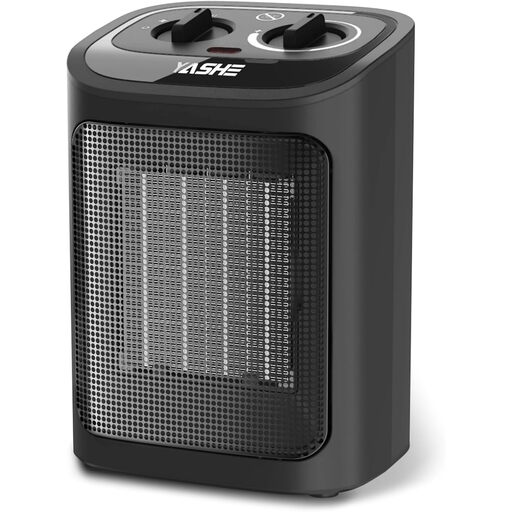
YASHE PTC-919 ceramic fan heater, 1,500 W, 3 heat settings
The product description lists a desk, bedside and work surface as possible locations. Check that there’s a clear space there that’s suitable according to the instructions.
The product title lists 1,500 W, three heat settings, Eco mode, overheat protection and tip-over protection.
View at Joybuy
 No image available
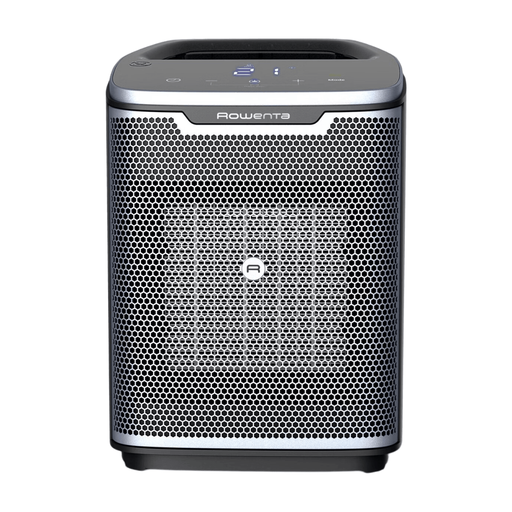
Rowenta SO9360 ceramic fan heater
The product title lists a desk or bench as possible locations. Check that these suit the available space and the clearances specified in the instructions.
The product title describes it as a ceramic heater for indoor use.
View at Joybuy
 No image available
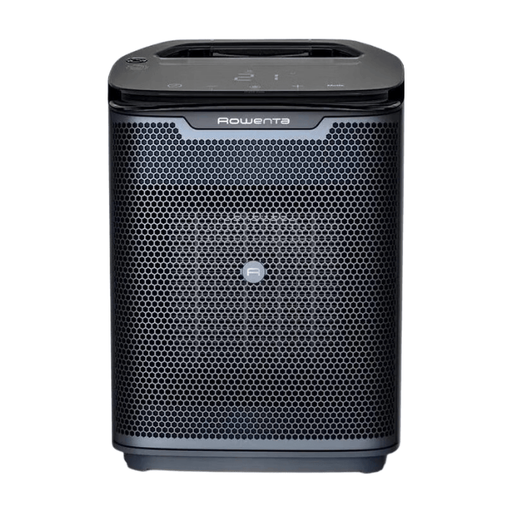
Rowenta Intense Comfort Aqua SO9380F0 ceramic fan heater, IP21
The product title lists a desk or console as possible locations. The listing says to keep the heater at least 1 m from flammable materials; check the instructions for the specific model.
The product title describes it as a ceramic heater with IP21 protection for indoor use.
View at Joybuy
 No image available
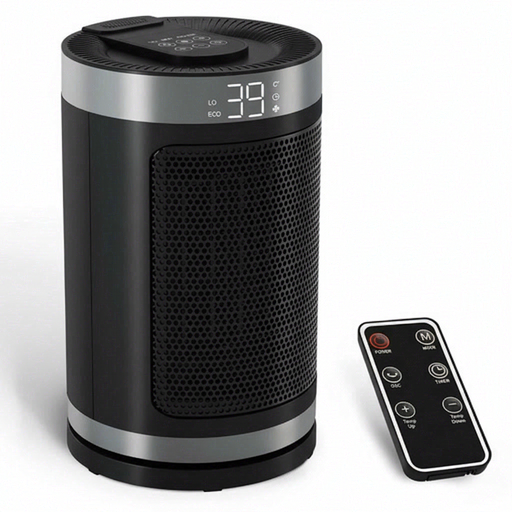
MASHIRO PTC tabletop ceramic fan heater, 1,500 W, 3 modes
The product title describes this as a desktop fan heater, while the description lists a desk and bedroom as possible locations. Check that you can place it there in line with the safety instructions.
The product title lists 1,500 W and three modes.
The description calls for a stable, level surface, clear ventilation openings and a safe distance from flammable materials.
View at Joybuy
 No image available
DAHTEC ceramic fan heater, 3,000 W, 2 heat settings, thermostat
The description presents this as an additional heater for small, enclosed indoor spaces. Check that the room you intend to use it in is suitable.
The product title lists 3,000 W, two heat settings and a thermostat.
View at Joybuy
Frequently asked questions
Can I leave a fan heater running in the bedroom all night?
For this desk-use scenario, it’s safest to run the heater only while you’re in the room. Check the instructions for the specific model and don’t place it near bedding or other easily flammable items. An automatic shut-off feature doesn’t mean it’s safe to run unattended overnight. The German Fire Service Association warns against using fan heaters near flammable materials.
How do I work out the electricity costs for the time I plan to use it?
For continuous use, multiply the power in kW by the hours of use and your tariff in €/kWh. At 1,000 W for two hours, that works out at 2 kWh; actual thermostat cycles can affect consumption.
How do I keep the airways and heater clean?
Keep the air inlets and outlets clear in accordance with the instructions for the specific model, and check the heater for damage. Rowenta lists a washable filter for the Mini Excel SO9261F0. Follow the instructions supplied with the heater for cleaning and drying it.
Which labels and EU rules are relevant in Germany?
For a specific mains-powered fan heater, check the product and manufacturer identification, that the CE marking is correct, and that the required safety information is provided in German. Germany’s Federal Network Agency explains that by applying the CE marking, the manufacturer confirms on its own responsibility that the product meets the relevant requirements; it isn’t an independent safety certificate for an individual listing. According to the European Commission’s guidance, the main new requirements of Ecodesign Regulation 2024/1103 have applied to covered electric local space heaters since 1 July 2025. This does not confirm that any particular product complies.


