What should you look for when buying?
Desktop heater for targeted warmth
A good fit if: You only need extra warmth at your regular seat and the instructions confirm there’s a suitable, clear place to use the heater.
Consider: A 360 W desktop heater such as the De’Longhi Capsule Desk HFX10B03.LB is not automatically suitable for heating a hobby room.
Compact freestanding heater for more than one spot
A good fit if: You move between work areas and have enough floor space and clearance for a freestanding heater.
Consider: A fan and oscillation can distribute warm air, but they don’t replace a safe location or checking how noisy the heater is in your workspace.
More powerful heater for a larger area
A good fit if: You sometimes need extra warmth across a larger work area, rather than just at your seat.
Consider: At the same running time, a heater on a higher power setting uses more electricity.
Whichever of these three uses you have in mind, compare the power settings and controls, check the available space against the instructions, and only compare noise claims when they’re based on similar conditions.
| Priority |
What to check before buying |
Who is it important to? |
| Warmth at your seat |
A suitable location in line with the instructions and a rated power appropriate for the intended use. |
If I only feel cold at my regular crafting spot, I want targeted warmth there rather than heat throughout the room. Around 31% of consumers put warmth at their seat first. |
| A safe location |
Clearance and unobstructed airways, as well as the condition of the cable and socket. |
With paper, fabrics and tools around, I need a spot where the heater can be placed with the recommended clearances. Around 25% of consumers pay particular attention to finding a suitable location. |
| A quiet workspace |
Noise levels for each setting and the distance from the heater to your seat. |
If I need to concentrate for a long time, I want to know whether the fan will be distracting at my desk. Around 25% of consumers prioritise a workspace that’s as quiet as possible. |
| Energy use |
Rated power for each setting and the expected daily running time. |
If I use the heater regularly, I want to estimate its energy use from its power and running time. Around 19% of consumers prioritise electricity use while the heater is running. |
Ceramic fan heaters at Joybuy
This selection includes desktop and freestanding fan heaters for extra warmth in your workspace or hobby area. Before use, check the instructions and make sure you can maintain the required clearances at your chosen location.
 No product image available
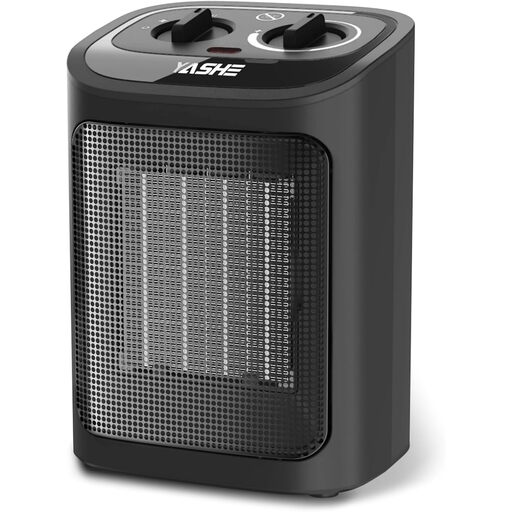
YASHE PTC-919 ceramic fan heater, 1.500 W
Could be suitable for targeted extra warmth at your desk, provided there’s a suitable, clear place to use it.
Three heat settings, including Eco mode; overheat and tip-over protection are listed in the product name.
View product at Joybuy
 No product image available
OmniHeat ceramic heater, 1.800 W
The listed features may be useful if you need occasional extra warmth at your workspace or study area.
Features include four heat modes, a thermostat with a range of 5–35 °C, oscillation and a 24-hour timer. The product description says to use it indoors, on a stable surface and never leave it unattended.
View product at Joybuy
 No product image available
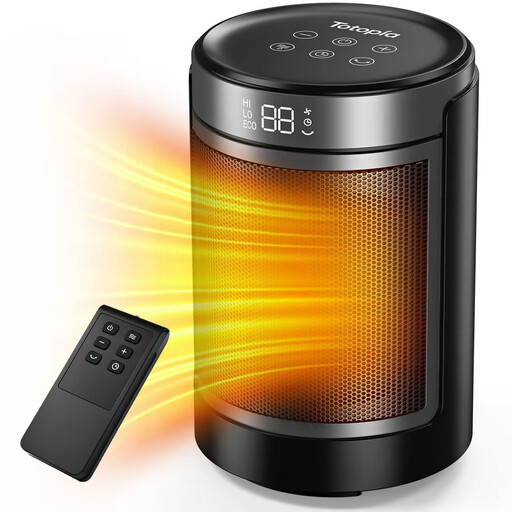
Totopia PTC-907B ceramic heater, 1.500 W
Could provide extra warmth at your desk or in a study, as long as the placement requirements can be met.
Features include four modes, 70° oscillation, an LED display, remote control and a timer of up to 12 hours. The product description says to use it on hard, level surfaces and keep it away from water and flammable materials.
View product at Joybuy
 No product image available
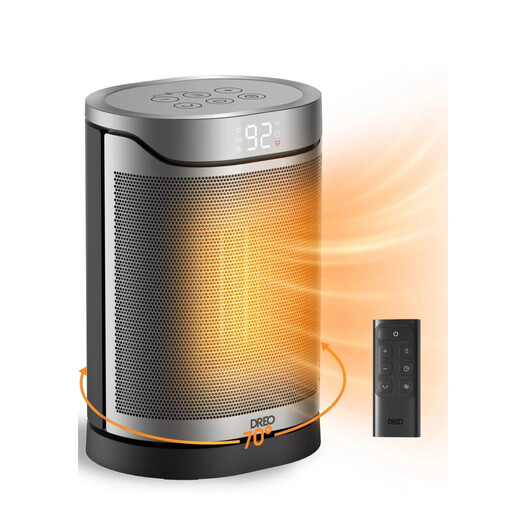
DREO Atom 318 ceramic fan heater, 1.500 W
Its compact design and oscillation may be useful if you need occasional warmth at more than one workspace.
Features include three power settings, thermostat control, 70° oscillation and a timer of up to 12 hours. Remove any packaging before use and keep the air vents clear.
View product at Joybuy
 No product image available
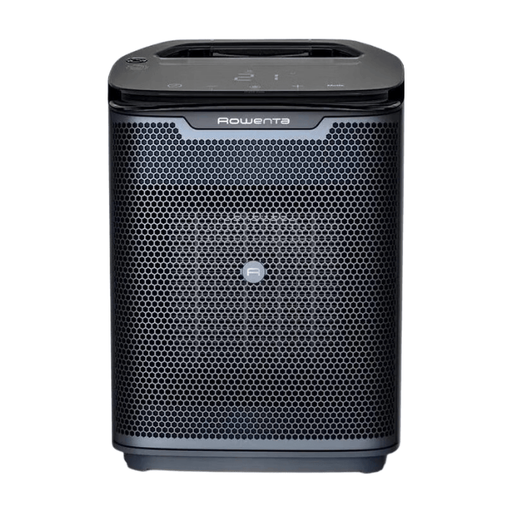
Rowenta Intense Comfort Aqua SO9380F0 ceramic fan heater, 2.000 W
This heater is only suitable if its intended location meets the clearance requirements for this specific model.
Features include four power settings, a timer and an IP21 rating. The product information specifies a clearance of at least 1 m and warns against placing the heater near flammable materials; check the instructions for the specific model.
View product at Joybuy
Frequently asked questions about ceramic fan heaters for hobby desks
Can I place a ceramic fan heater on my desk among paper and fabrics?
Only if the location meets the requirements in the instructions for that specific model and the airways remain clear. The German Fire Brigade Association recommends keeping a sufficient distance from flammable objects, while the BAuA refers users to the manufacturer’s instructions for guidance on specific use.
How can I estimate the electricity used in an hour of work?
Multiply the power in kilowatts by the running time in hours. Running continuously at 360 W uses 0,36 kWh in an hour; at 2 kW, it uses 2 kWh. Thermostat breaks and other power settings affect actual energy use, so the rated power alone won’t tell you how much energy every use will consume.
What should I know about cleaning and maintenance?
Switch the heater off and follow the instructions for the specific model. Rowenta says the Mini Excel SO9261 has a washable filter; this doesn’t mean the same cleaning instructions apply to other heaters.
What rights do I have when buying from a business seller?
Under the EU consumer rules outlined by Your Europe, when you buy from a business seller you have at least two years of legal protection against faulty goods from the date you receive them. This is separate from a voluntary manufacturer’s guarantee. The same rules don’t apply to purchases from private individuals.
Is the CE mark an independent safety certification, and which ecodesign rules apply?
No. The CE mark means the manufacturer declares that the product complies with the relevant EU requirements; it isn’t an independent certification. Since 1 July 2025, electric local space heaters that fall within the scope of Regulation (EU) 2024/1103 and are placed on the EU market have been subject to its ecodesign requirements. The European Commission and Your Europe explain the conditions for these rules to apply.


