A ceramic fan heater could be a good option if you want to warm a single chilly room occasionally and can position the appliance safely. It is not automatically a cheaper alternative to your existing heating for longer or regular use: compare the heat settings and actual running time, and take particular care to keep it away from flammable items in a small flat.
Who might benefit from a fan heater?
Occasional warmth
If you want to warm a chilly living room or home office for a limited time, a fan heater could work as a supplementary heat source. The Verbraucherzentrale recommends using conventional fan heaters only in specific areas and for limited periods.
Limited floor space
A compact, portable appliance is easier to move around. However, even in a small flat, you need a suitable spot with clear airflow and enough distance from flammable items. The German Fire Service Association highlights this point.
Longer periods of use
If you plan to use electric heating for longer periods every day, factor the actual running time and power consumption into your decision. The Verbraucherzentrale advises against viewing fan heaters as a money-saving option for continuous use.
What to look for when buying
Compact ceramic fan heater
A good fit if: You want to warm a small room for a short time and have a clear, safe spot for the heater.
Things to consider: A compact design does not reduce fan noise or electricity use during longer periods of operation.
Oscillating fan heater
A good fit if: You want the moving airflow to reach several seating areas in the same room and have space for the heater.
Things to consider: Oscillation does not mean lower electricity use or make the heater suitable for continuous heating.
Existing room heating
A good fit if: The room needs to stay warm for long periods every day. First, check your existing heating system and how you heat and ventilate the room.
Things to consider: A fan heater can provide targeted warmth in the short term, but it will not address the cause of a room that is always cold.
| What you need |
What to check before buying |
Who it matters to |
| Quick warmth |
Heat settings and thermostat; stated room size and the conditions it applies to |
If you only want to warm a chilly room occasionally, you need a suitable heat setting and adjustable temperature. Consumers whose main priority is occasional warmth in a room are likely to account for around 33%. |
| A safe position |
Positioning and clearance guidance in the instructions; overheat protection and, where applicable, tip-over protection |
In a small flat, you need to find a spot clear of easily flammable materials. Consumers who prioritise safe positioning are likely to account for around 25%. |
| Regular use |
Power consumption at each heat setting and expected hours of use |
If you plan to run the heater often or for long periods, the actual running time matters as much as the heat setting you choose. Consumers whose main concern is ongoing electricity use are likely to account for around 25%. |
| Noise where you use it |
Noise rating, including the operating setting and test conditions; a lower heat setting, if available |
If you work or relax in the same room, you will want to know how noisy the appliance is in the mode you plan to use. Consumers who put quiet operation first are likely to account for around 17%. |
Common misconceptions
-
‘Ceramic’ or ‘Eco’ automatically means lower heating costs
A ceramic fan heater is still an electric supplementary heater. A mode with one of these names does not, by itself, prove that it will save money when you need the same amount of heat.
Compare the power consumption of the setting you choose with the actual running time. Only factor in breaks caused by the thermostat if you know how often they occur.
-
A small appliance will fit in any spare corner
Small dimensions do not replace the need to keep a safe distance from flammable items. The German Fire Service Association also warns against placing heaters on deep-pile carpets.
Before buying, check that you can follow the positioning and clearance instructions for the specific model in your flat.
-
Similar model names mean the versions are identical
Dreo’s German product sheet for the Solaris Slim H3S lists 220–240 V, while the US product sheet for the Solaris Slim H3 lists 120 V. Similar names alone do not prove that the versions are identical.
Compare the full model name, voltage and features of the specific version on offer.
Brands and models to help you choose
Güde
The GEH 2000 P, item 85122, is a compact PTC ceramic heater with a thermostat and overheat protection, designed for occasional supplementary warmth.
- F.A.Z. Kaufkompass describes its metal casing as having a technical look.
- The power ratings differ: Güde lists 1 and 2 kW, while F.A.Z. Kaufkompass lists 1,800 W. Check the details for the specific version before buying.
Rowenta
The Mini Excel Safe SO9266 is a compact ceramic fan heater with an electronic thermostat and two heat settings listed by Rowenta.
- Rowenta lists 1,000 and 2,000 W, as well as 50 dB(A) for the Silence setting.
- The product page also gives a power rating of 1,800 W elsewhere. The noise rating applies to the named setting and is not an independent comparison across all operating modes.
De’Longhi
According to the German product sheet, the Capsule HFX30C18.AG is a portable ceramic fan heater with an anti-frost function and safety thermostat.
- The product sheet lists 900 and 1,800 W. Its dimensions can help you check whether it will fit in your available space.
- The product sheet does not give a dB(A) rating, so you cannot make a reliable comparison of operating noise.
Trotec
The TFC 22 E is a ceramic fan heater with a thermostat and optional oscillation.
- Trotec lists 1,250 and 2,000 W, 50° oscillation, and tip-over and overheat protection.
- The manufacturer’s stated suitability for rooms up to 24 m² is not a guarantee for every level of insulation or room.
Dreo
The German Solaris Slim H3S model is a 220–240 V tower heater with a thermostat, timer and oscillation.
- The 2,000 W, 70° oscillation and noise details are provided by the manufacturer.
- The US product sheet for the Solaris Slim H3 lists 120 V. Do not treat this as the same German version without checking the model identity and voltage.
Joybuy products
The Joybuy options below are compact ceramic fan heaters for occasional warmth in living rooms and home offices.
 No image available
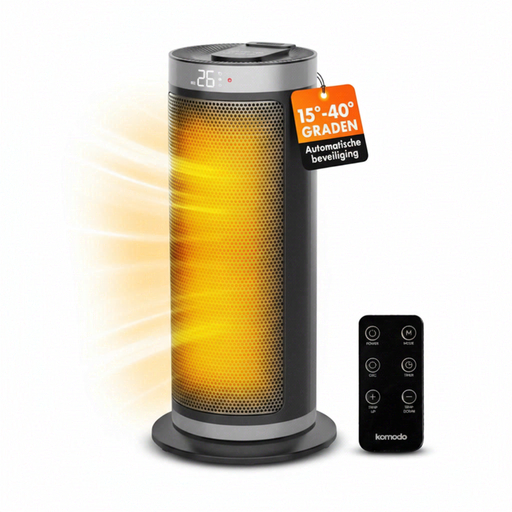
Komodo Cozi+ ceramic fan heater, 750/1500/2000 W
The three stated heat settings give you options for changing heating needs, while oscillation is designed to direct the airflow from side to side.
The product name lists 750 W, 1,500 W and 2,000 W, as well as 90° oscillation.
Joybuy
 No image available
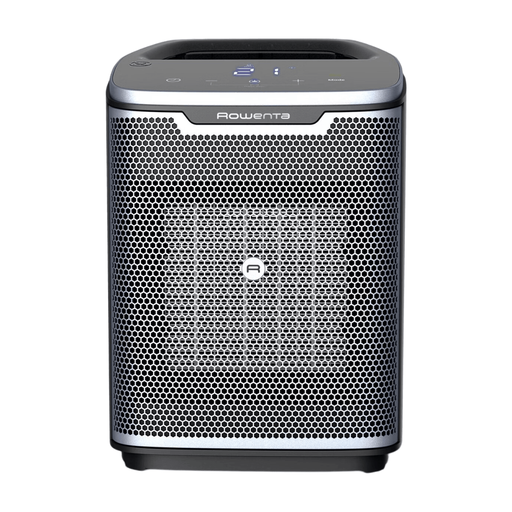
Rowenta SO9360 ceramic fan heater
This compact ceramic fan heater for indoor use could be an option for occasional warmth. First, check that its stated dimensions will fit in the space you have in mind.
The product name describes a ceramic fan heater for indoor use.
Joybuy
 No image available
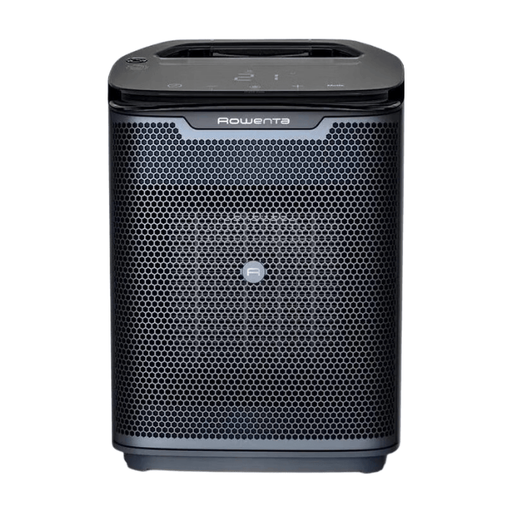
Rowenta Intense Comfort Aqua SO9380F0 ceramic fan heater
The ceramic version named in the product title is described as suitable for indoor use. Check the noise rating in the product description against the mode you plan to use.
The product name specifies model SO9380F0 and the ceramic version for indoor use.
Joybuy
 No image available
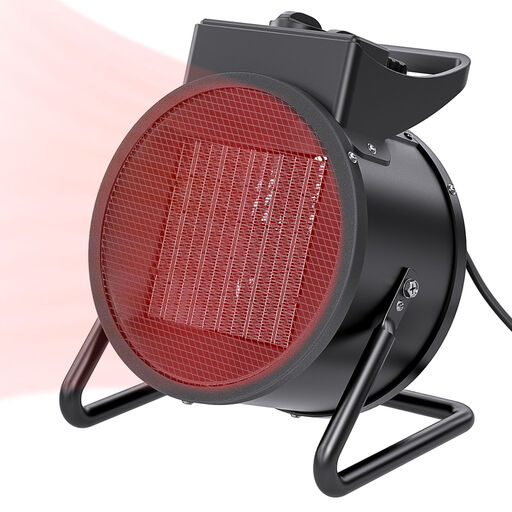
Ceramic fan heater with PTC heating element, 2 kW
The product description presents this as an appliance for living rooms and home offices. Its stated power and three settings can help you compare it with your heating needs.
The product name lists 2 kW, a PTC heating element and three settings.
Joybuy
 No image available
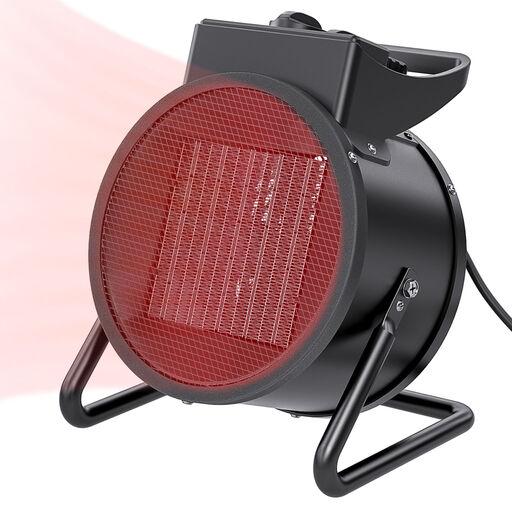
Ceramic fan heater with PTC heating element, 3 kW
If you are choosing by heat output, the 3 kW rating in the product name is worth noting. Check that this version is suitable for the way you plan to use it.
The product name lists 3 kW, a PTC heating element and three settings.
Joybuy
Frequently asked questions
Can I use a ceramic fan heater to heat my flat all the time?
It could work as a supplementary heater for one room and for a limited time, but the Verbraucherzentrale does not recommend conventional fan heaters as a general money-saving solution for continuous use. Factor the actual running time and power consumption into your decision.
How can I estimate a fan heater’s electricity use?
Multiply its power consumption in kilowatts by the actual number of hours it runs. One hour of continuous use at 2 kW works out to 2 kWh; thermostat breaks affect the actual running time.
What should I bear in mind when positioning the heater?
Keep it away from easily flammable materials, do not cover it, and follow the clearance and positioning instructions for the specific model. The German Fire Service Association specifically warns against placing heaters near flammable materials or on deep-pile carpets.
What do CE and GS mean when buying in Germany?
An electric heater covered by the Low Voltage Directive or the 1st ProdSV and placed on the EU market must carry the required CE marking. This is the manufacturer’s declaration of conformity; on its own, it is not proof of an independent safety test. A genuine GS mark indicates tested safety. However, according to the Federal Institute for Occupational Safety and Health, it says nothing in general about the product’s lifespan or performance.
Does a portable electric fan heater need an EU energy label?
The European Commission sets out ecodesign requirements for electric local space heaters, while energy labelling requirements apply to certain other local space heaters. The new ecodesign rules have applied since 1 July 2025 to electric local space heaters covered by Regulation (EU) 2024/1103 and newly placed on the EU market.


