What should you look for when buying one?
First, work out how much heat you need for the room you use and where you can position the heater safely. It’ll then be easier to compare comfort features.
| What you’re looking for |
What to check when buying |
Who will find this most important? |
| Enough extra warmth |
Compare the heat settings and maximum output with the room size, insulation and planned running time. The manufacturer’s guidance on room size isn’t a guarantee that it’ll work for every room. |
If I want to noticeably warm a small room while I’m in it, having the right heat setting matters. Around 28% of consumers put sufficient extra warmth first. |
| Electricity consumption |
Compare the planned running time and power consumption in kilowatts with your unit rate in euros per kilowatt-hour. Don’t assume that thermostat cycles guarantee a set saving. |
If I use it regularly, I want to estimate how running time and my tariff will affect consumption. Around 22% of consumers prioritise running costs. |
| Fan noise |
Only compare noise figures if you know the operating mode they refer to. Feedback on noise levels isn’t based on standardised measurements. |
If I’m working or relaxing in the room, I don’t want the fan noise to distract me. Around 17% of consumers put quiet operation first. |
| A safe place to position it |
Keep airways clear and observe the model-specific clearance from flammable materials. Check the product information for tip-over and overheat protection. |
In a small, frequently used room, I want to be able to position the heater far enough from furniture and textiles. Around 22% of consumers prioritise a safe position. |
| Size and portability |
Compare the dimensions, carry handle and cable routing with the space where you plan to use and store the heater. |
If I want to put the heater away or move it between rooms, size and ease of handling matter. Around 11% of consumers prioritise compactness and portability. |
Ceramic fan heaters at Joybuy
The Joybuy products below may suit anyone looking for occasional extra warmth in a small living or work space. Before buying, check that the output, positioning requirements and controls are right for your particular room.
 No image available
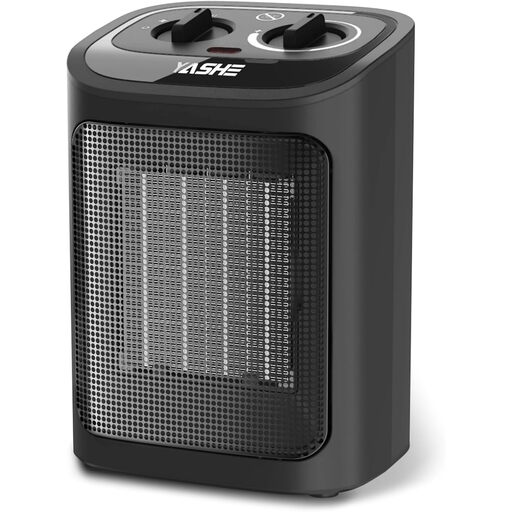
YASHE PTC-919 ceramic fan heater, 1,500 W
With three heat settings, this model is worth considering if you want to choose between different output levels for targeted extra warmth.
The title lists 1,500 W and three heat settings. The product description also mentions a thermostat, ECO mode, fan-only operation, a carry handle, and tip-over and overheat protection.
Joybuy
 No image available
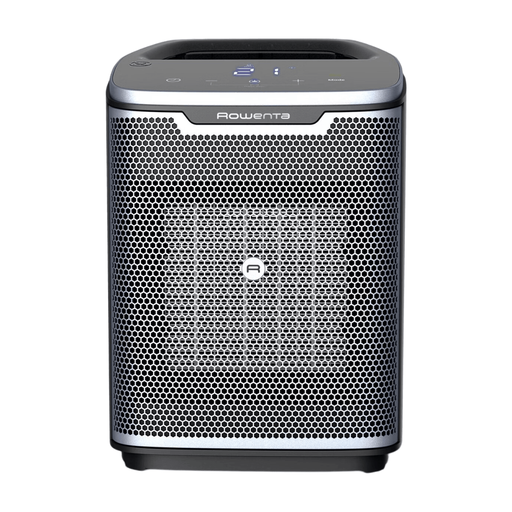
Rowenta SO9360 ceramic fan heater
This model may suit you if you want occasional warmth and a timer to control when it runs.
The product description lists 2,000 W, two heat settings, a timer, fan-only operation, a carry handle and overheat protection. It requires an earthed 220–240 V socket and at least 1 m of clearance from flammable items. Extension leads and multi-way adaptors should not be used.
Joybuy
 No image available
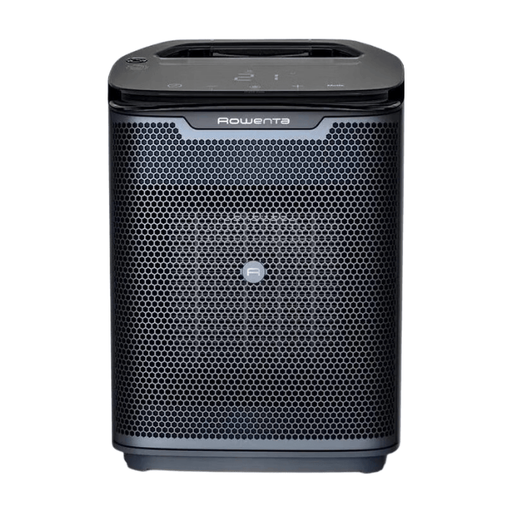
Rowenta Intense Comfort Aqua SO9380F0
The range of heat settings may be useful if you want to adjust the heat output to suit your needs in the room.
The product description lists 2,000 W, four heat settings, a timer, touch controls and overheat protection. The advertised 29 dB figure is from the manufacturer and isn’t a directly comparable measurement. The heater requires an earthed 220–240 V socket and at least 1 m of clearance from flammable items. Extension leads and multi-way adaptors should not be used.
Joybuy
 No image available
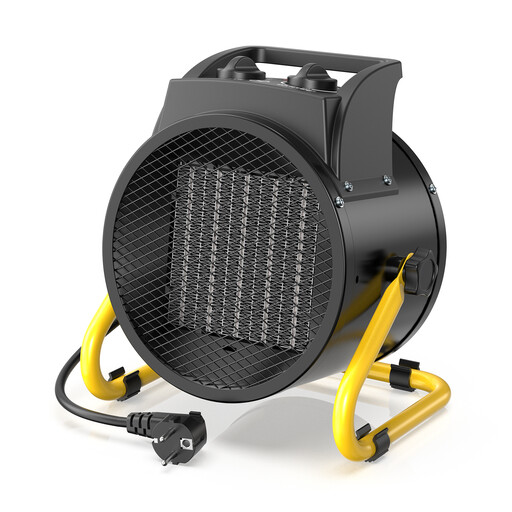
DAHTEC ceramic fan heater, up to 3,000 W
This model may be an option if you want a thermostat and several heat settings for occasional extra warmth.
The product description lists 1,500 and 3,000 W heat settings, 25 W in fan-only mode, a thermostat and overheat protection. It recommends using the heater in well-sealed indoor spaces and keeping it at least 1 m from flammable materials. The heater must not be covered.
Joybuy
 No image available
Ceramic fan heater with thermostat, 2 kW
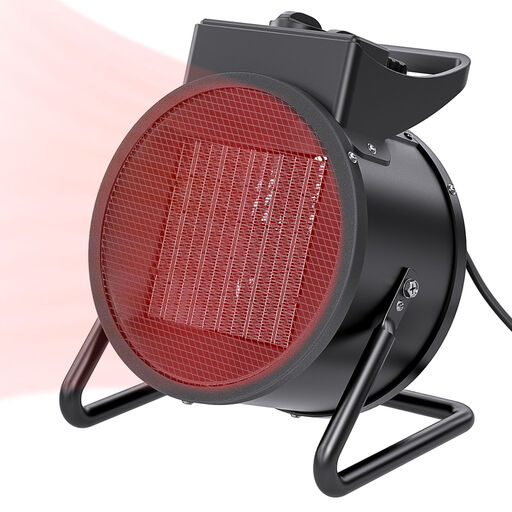
This heater may suit you if you want a thermostat and several heat settings for occasional warmth in a living or work space.
The title lists 2 kW and three heat settings. The product description mentions a continuously adjustable thermostat, a carry handle and overheat protection.
Joybuy
Frequently asked questions
Can a ceramic fan heater heat my home affordably all the time?
As a direct electric heater, a ceramic fan heater uses around one kilowatt-hour of electricity for each kilowatt-hour of heat, according to the Verbraucherzentrale energy advice service. If you plan to heat your home often or for long periods, check your regular heating system and electricity tariff first. Ceramic heating alone doesn’t guarantee lower electricity use.
How do I work out the electricity costs for using my heater?
To estimate the cost of continuous operation, multiply the power in kilowatts by the running time in hours and your unit rate in euros per kilowatt-hour. At 1.4 kW for two hours, that works out at 2.8 kWh. A thermostat can change the actual time the heater is switched on, so this isn’t a measurement of actual consumption.
What should I consider when positioning the heater?
Keep it a safe distance from flammable items, don’t put clothes on the heater and don’t overload a socket by plugging in several heaters. The German Fire Service Association recommends these precautions. You should also follow the clearance distances and instructions in the manual for your specific model. These guidelines don’t establish a single clearance in centimetres that applies to every heater.
Does an electric ceramic fan heater need an EU energy label in Germany?
According to the European Commission, electric local space heaters are exempt from the energy labelling rules for this product group. Separately, mobile electric local space heaters placed on the EU market for the first time since 1 July 2025 are subject to the relevant ecodesign requirements of Regulation (EU) 2024/1103.
Does the CE mark prove that a product has been independently safety-tested?
No. According to the European Union’s Your Europe website, the manufacturer uses the CE marking to declare that the product meets the applicable EU rules. There isn’t a central EU body that generally issues CE certificates. For the product you’re considering, check the manufacturer’s identity, model documentation and safety information rather than treating the CE mark as an independent quality seal.


