For targeted warmth while you’re at your desk, a compact heater specifically described for this purpose is likely to be the better choice. If you also want to warm the room from time to time, look at models with adjustable settings and higher heat output. In either case, consider a safe, clear location, the power consumption over the time you’ll actually use it, and whether the noise level is acceptable while you study. Ceramic technology alone is no guarantee of lower electricity use: the consumer advice centre points out that power and how long the heater is used determine its energy consumption.
Which heaters are right for different needs?
Students with a cold desk area
If you mainly want extra warmth at your desk, consider a heater designed for that location. Pro Breeze specifically describes a 500 W model for desk use; the consumer advice centre distinguishes targeted supplementary warmth from heating an entire room.
Students whose room gets chilly at times
If you also want to warm the room from time to time, heat settings and a suitable location are important factors to consider. Pro Breeze and Rowenta list different heat settings for specific models, but that doesn’t mean they’re suitable for every room.
Students who are sensitive to noise
If you find it hard to tune out fan noise while studying, consider the stated noise level alongside the operating setting. Pro Breeze and Rowenta provide figures for individual models, which shouldn’t automatically be assumed to apply to other settings.
What should you look for when buying?
| What matters |
What to check before buying |
Who it matters to |
| Warmth at your desk |
Check the intended location and heat settings; don’t plan to use a desk heater as a substitute for room heating. |
If I mainly want to warm the spot where I study, I need a heater specifically described for that purpose. Around 36% of consumers put targeted desk warmth first. |
| A safe place to position it |
Follow the spacing and positioning instructions in the specific manual; check the air vents and power supply. |
If your desk is cramped and you have paper and textiles nearby, you need a clear, stable space. Around 29% of consumers prioritise safe positioning. |
| Energy consumption |
Compare the power consumption for each setting with your planned usage time; the setting you actually choose determines how much energy it uses. |
If the heater might be on for many hours while I study, I want to estimate its energy use in advance. Around 21% of consumers focus mainly on electricity consumption. |
| A quiet study environment |
Check noise figures alongside the heat setting and measurement conditions; if in doubt, read the returns policy before buying. |
If you’re easily distracted by fan noise while working, consider the noise level for the way you plan to use the heater. Around 14% of consumers put a quiet study environment first. |
Which buying and usage mistakes should you avoid?
-
Assuming “ceramic” or “Eco” means lower energy consumption
A technology or mode name doesn’t tell you how much energy you’ll save. Energy consumption depends on the actual power draw, the setting you choose and how long the heater runs; the consumer advice centre makes the same point.
Compare the power ratings for each setting and consider how long you’re likely to use the heater.
-
Buying a small desk heater as a substitute for adequate room heating
Providing targeted warmth at your study space and adequately heating a room are two different things. The consumer advice centre does not consider small fan heaters a suitable alternative to heating entire rooms.
Before you buy, decide whether you only want to warm the area where you’re sitting or also want to warm the room from time to time.
-
Assuming a tip-over switch makes it safe to use on any desk
Safety features don’t replace a stable position or adequate clearance from flammable objects. The German Fire Service Association advises keeping fan heaters a safe distance from flammable materials.
Check the location against the manual, keep the air vents clear and don’t cover the heater.
-
Assuming a single dB figure applies to every heat setting
A noise figure may refer to a particular operating mode or the lowest setting. Rowenta describes the figure quoted for the SO9261F0 as its minimum noise level; according to Dreo Support, a higher setting may be louder.
Only compare figures when the operating setting and measurement conditions are the same.
Relevant brands and model ranges
Pro Breeze
The ceramic models documented include a compact desk heater and a model with higher heat output for occasional supplementary warmth.
- Pro Breeze specifically describes its 500 W model for desk use and lists tip-over and overheat protection.
- For this model, the manufacturer lists a noise level of 55 dB and no timer. These details apply to this specific heater.
Rowenta
The Mini-Excel range includes the SO9261F0, a documented option for adjustable supplementary warmth.
- For the SO9261F0, Rowenta lists two settings of 1000 and 1800 W, as well as a mechanical thermostat and overheat cut-out.
- The minimum noise level of 49 dB(A) is a manufacturer’s figure and can’t automatically be assumed to apply to every setting. According to the specifications, the model doesn’t oscillate.
Trotec
The TFC range includes models with different heat settings and control features.
- Trotec lists settings of 700 and 1400 W, along with tip-over protection, for the TFC 14 E. The TFC 17 E is listed with settings of 1200 and 2000 W, a thermostat and optional oscillation.
- The manufacturer’s claims about energy efficiency aren’t an independent comparison of energy consumption; features vary by model.
Dreo
Dreo lists an EU manual for the DR-HSH004 model family in its support section.
- A WELT comparison published on 1 November 2026 describes the DR-HSH004 model as having 1500 W power, oscillation, a remote control and a timer.
- These features apply to the DR-HSH004 and aren’t guaranteed for other Dreo models or regional variants.
Ceramic fan heaters on Joybuy
This selection includes ceramic fan heaters for warmth at your study space, as well as adjustable models for occasional supplementary room heating. Intended locations, power ratings and features vary by model.
 No image available
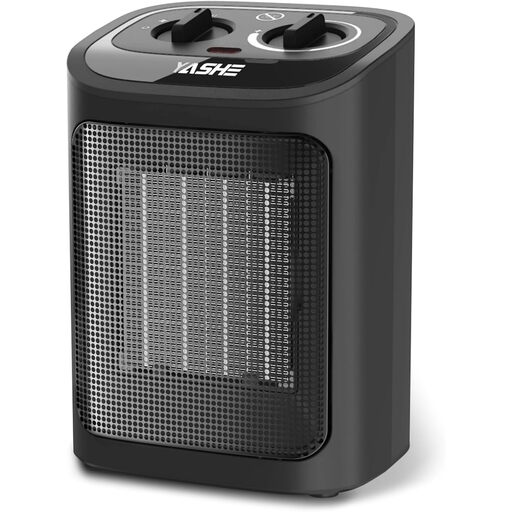
YASHE PTC-919 ceramic fan heater, 1500 W
For targeted supplementary warmth at your study space; the description lists desk use as one option.
Three heat settings and a thermostat; tip-over and overheat protection. Place on a stable, dry surface, and keep flammable objects away and air vents clear.
Joybuy
 No image available
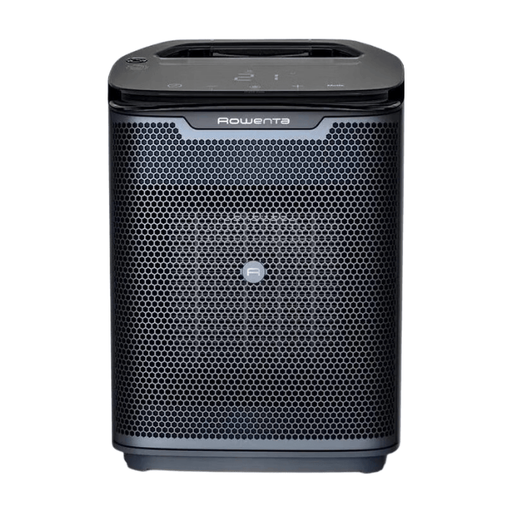
Rowenta Intense Comfort Aqua SO9380F0 ceramic fan heater
An option for indoor use if you’re looking for a heater for a table or console.
The product name specifies IP21. According to the product description, it requires an earthed 220–240-V socket; extension leads and multi-socket adaptors shouldn’t be used. Place it on a stable, non-flammable surface at least 1 m from flammable materials.
Joybuy
 No image available
OmniHeat 1800 W ceramic fan heater
For adjustable supplementary warmth in study or living spaces; the description lists study rooms as a suitable location.
Four heating modes, a thermostat from 5–35 °C, a 24-hour timer and oscillation. Don’t cover the heater or leave it unattended while it’s running.
Joybuy
 No image available
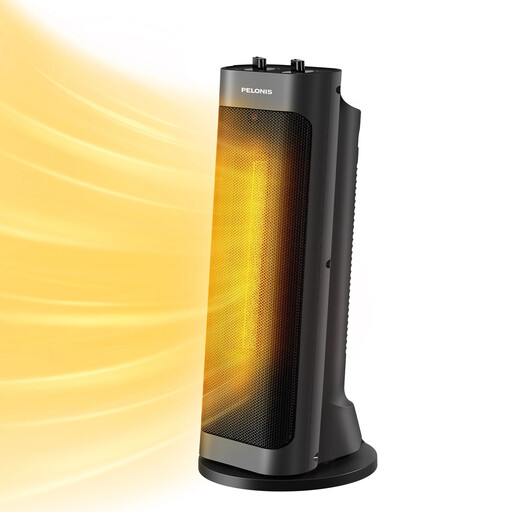
PELONIS 2000 W PTC ceramic fan heater
For extra warmth in a work or study area; the product description lists study rooms as a suitable location.
70° oscillation, plus tip-over and overheat protection. Use on a stable, level surface and keep textiles and other flammable materials at least 1 m from the air outlet.
Joybuy
 No image available
DREO 1500 W Atom 416 ceramic fan heater
An option for workspaces if you want several settings and a remote control.
The product name lists 34 dB, a 12-hour timer and a remote control. Check the operating setting and measurement conditions for the dB figure before comparing it with other models. Keep the air vents clear; don’t continue using a damaged heater or one that has been dropped.
Joybuy
Frequently asked questions
Can a small desk fan heater replace room heating?
Not necessarily: the consumer advice centre doesn’t consider small fan heaters a suitable alternative to heating entire rooms. Targeted supplementary warmth where you’re sitting is different from adequately heating and ventilating the room.
How can I position a fan heater safely on my desk?
Keep to the clearance from flammable objects specified in the manual for your model, and don’t cover the heater. The German Fire Service Association advises keeping fan heaters a safe distance from flammable materials. Also check that the air vents will remain clear and that the socket is suitable for the appliance.
How can I estimate energy consumption?
Multiply the power in kilowatts by the actual number of hours the heater is running to work out its theoretical consumption in kilowatt-hours. At 500 W on full power for two hours, that comes to 1 kWh; using a different setting or a thermostat that switches the heater off will change the actual figure.
Which markings and documents should I check when buying in Germany?
As part of its market surveillance, the Federal Network Agency lists checks including correct CE marking, identifiable manufacturer details and a German-language instruction manual with the necessary warnings. The Federal Institute for Occupational Safety and Health makes clear that CE is not an independent safety test mark; a GS mark is based on testing by a GS body, but says nothing about heating performance or product lifespan.
Does an electric ceramic fan heater need an EU energy label?
According to the European Commission, electric local space heaters are exempt from the energy label for local space heaters described there. So the absence of a label alone doesn’t prove that a product is non-compliant. The EU guidance for suppliers gives 1 July 2025 as the general application date for the revised ecodesign requirements; it does not replace the text of the regulation.


