
Lieferung heute & morgen

Qualitätsgarantie

Willkommens-Angebote freischalten: KOSTENLOSE Lieferung | Bis zu 80 % RABATT | Kostenlose 30-Tage-JoyPlus-Testphase
App herunterladen
A ceramic frying pan can make everyday cooking easier: eggs, vegetables, pancakes and meat can be prepared over moderate heat with little oil, and many food residues can simply be wiped away afterwards. Even so, not every ceramic frying pan is suitable for every household. It is not just the coating claims that matter, but also the type of hob, diameter, weight, cleaning requirements and permitted operating temperature.
That is why, as Joybuy Product Recommendation Officers, we focus our selection on clear product specifications and practical usage scenarios.
Most products on offer are aluminium frying pans with a ceramic coating. This is not a disadvantage, but it should be understood correctly: aluminium conducts heat quickly, while the ceramic layer provides the non-stick properties. Quality therefore also depends on the base structure, how the coating is applied and how the pan is handled.
Terms such as PFAS-free pan, PTFE-free pan or “non-toxic” refer to the respective manufacturer’s specifications. You should check whether the claim applies to the entire coating and whether there are additional instructions regarding temperature, cleaning and damage. A damaged coating should not continue to be used, regardless of any advertising claims.
An induction-compatible frying pan may be suitable for gas, electric, ceramic and induction hobs, but still not be oven-safe. The handle often limits use in the oven. You should therefore look for separate specifications for the pan body, handle and lid.
Ceramic non-stick coatings are sensitive to scratches. Preferably use kitchen tools made from wood, silicone or nylon, and avoid metal turners and abrasive sponges. Even an indication that a pan is dishwasher-safe does not mean that the coating will remain unchanged over time. For a longer service life, hand-washing with mild washing-up liquid and a soft sponge is usually the gentler option.
Do not overheat a non-stick pan while it is empty. Low to medium heat is sufficient for many models and is in line with their respective usage instructions. Allow the pan to cool before cleaning it and bringing it into contact with cold water.
For induction cooking, the pan needs a magnetic base. A stainless steel or magnetic multi-layer base can be crucial for this. With an induction hob, the base diameter should also match the cooking zone so that heat is transferred as evenly as possible.
An aluminium body supports rapid heat conduction. However, claims such as “even heat distribution” should still be considered in relation to the construction of the base. For example, the SENSARTE Deep Frying Pan is specified as having a magnetic stainless steel base; according to the product description, this makes it suitable for gas, induction, electric, ceramic, halogen and other types of hob.
A higher rim helps prevent splashes when stirring. Also check the weight and handle design: a large cast-iron pan distributes heat differently from a lightweight aluminium frying pan and is less easy to toss.
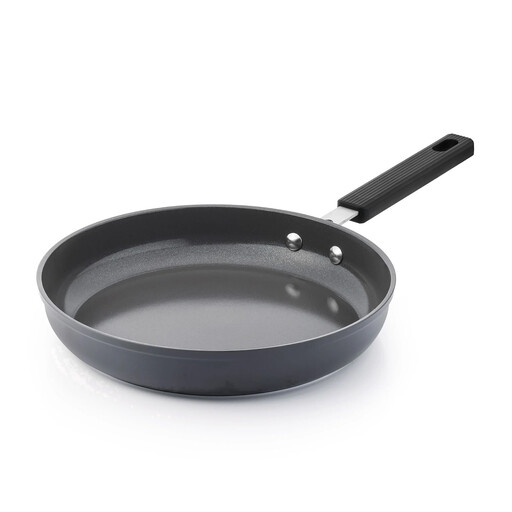
Why this product suits this profile: The 24 cm diameter is suitable for smaller households and everyday portions. According to the product specifications, the pan is designed for induction, gas, electric and ceramic hobs.
The product specifications explicitly state that the coating is PFAS-free and free from lead and cadmium, and include warnings against metal utensils and overheating.
24 cm diameter, Anti-Scald handle and space-saving design; hand-washing is recommended to help protect the coating.

Why this product suits this profile: With 24 and 28 cm pans, the set covers two commonly used sizes. According to the product description, the pans are made from Cromargan 18/10 stainless steel and feature a TransTherm universal base for various types of hob, including induction.
The two diameters mean that you do not have to use a single pan for every portion. The product specifications also state that it has a mineral-reinforced ceramic coating.
Two sizes, stainless steel construction and, according to the manufacturer’s specifications, oven suitability; check the specific temperature limits before use.
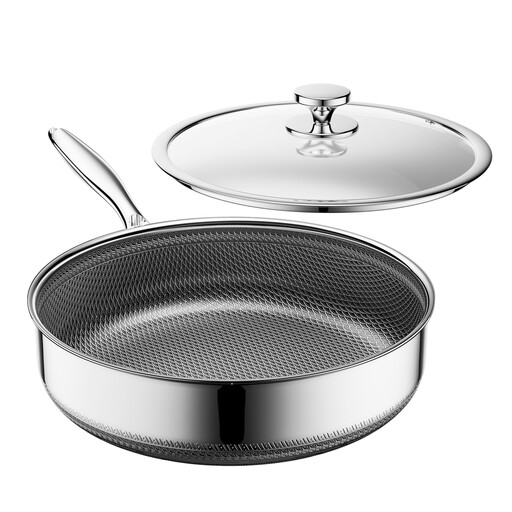
Why this product suits this profile: As a deep frying pan with a glass lid, the model is, according to the product specifications, suitable for braising, sautéing and one-pan dishes. It is designed for gas, electric, ceramic, halogen and induction hobs.
The product description specifies clear temperature limits: up to 260 °C for the pan and up to 148 °C for the glass lid. This provides clearer limits for oven use.
PFAS-, PTFE- and PFOA-free coating according to the product specifications, plus a lid, deep design and stated oven temperature limits.
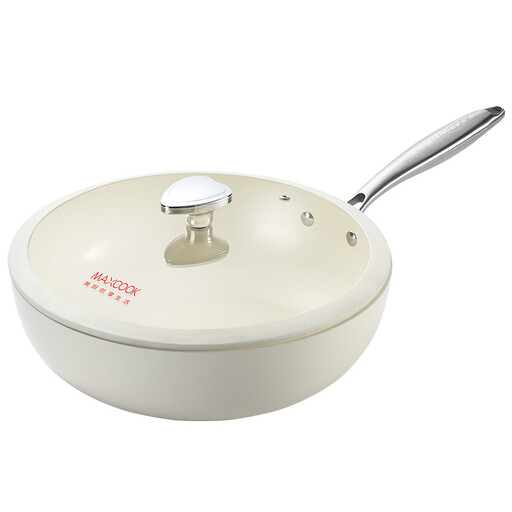
Why this product suits this profile: The 32 cm diameter provides plenty of cooking space for several portions, vegetable stir-fries or larger cuts of meat. The die-cast aluminium will appeal to anyone looking for a large coated frying pan.
The large cooking surface helps prevent overcrowding. Before buying, however, check whether 32 cm is suitable for your cooking zone and storage space.
32 cm diameter and die-cast aluminium according to the product name; check the specifications for hob types, lid and oven use separately before buying.
We have put together a complete, regularly updated list of products that fully meet these strict selection criteria and the safety regulations applicable in the EU.
A little oil can help food release from many ceramic frying pans. “Non-stick” does not mean that every dish will turn out perfectly without any preparation and at every temperature.
Its service life depends on the coating, operating temperature, kitchen utensils and cleaning method. There is no universally applicable lifespan. Gentle hand-washing, low to medium heat and avoiding metal utensils can help reduce everyday wear on the coating. The instructions provided by the respective manufacturer remain the key reference.
Not every ceramic frying pan is induction-compatible. The pan base must be magnetically conductive. Look for “induction”, “induction-compatible” or a magnetic stainless steel base in the product description. If you are unsure, check the specifications for the exact model.
The term describes only one particular material aspect according to the manufacturer’s specifications. Diameter, rim height, weight, handle, hob compatibility, oven suitability and cleaning requirements also matter when choosing a pan. For example, a PFAS-free pan may be suitable for induction but not suitable for use in the oven. Choose based on your overall usage profile rather than a single marketing term.