
Lieferung heute & morgen

Qualitätsgarantie

Willkommens-Angebote freischalten: KOSTENLOSE Lieferung | Bis zu 80 % RABATT | Kostenlose 30-Tage-JoyPlus-Testphase
App herunterladen
A ceramic frying pan can be a practical alternative to conventional coated pans. It is often suitable for frying with little oil, is easy to clean when cared for properly and, depending on the model, can be used on induction, gas or electric hobs. However, the construction, coating, care requirements and heat resistance can vary considerably.
If you only look for terms such as “non-stick” or “ceramic”, you may overlook important details. The following criteria will help you choose a ceramic frying pan that suits your household.
Many products are not made entirely from ceramic. They typically feature an aluminium or stainless steel body with a ceramic non-stick coating. This is not necessarily a disadvantage, but it does affect the weight, heat conductivity and care requirements.
An aluminium body usually heats up quickly. Multi-layer stainless steel with an aluminium core can distribute heat more evenly, but is often heavier. So pay attention to the specific material details rather than just the term “ceramic frying pan”.
PFAS, PFOA and PTFE are different terms. A product description stating “PFOA-free” does not automatically mean that the entire product is free from PFAS or PTFE. If you are specifically looking for a PFAS-free frying pan, PFOA-free frying pan or PTFE-free frying pan, check whether the relevant property is expressly stated for the coating.
These details describe material properties and are not medical claims. Buyers should also check the current product page and the manufacturer’s information listed there for the products mentioned here.
A dishwasher-safe frying pan is convenient, but frequent cleaning with harsh detergents can put more strain on the coating than hand washing. Similarly, an oven-safe frying pan cannot automatically be used with its lid and handle at the same temperature.
It is therefore important to check the specific details regarding:
An induction-compatible frying pan needs a magnetic base. Gas, electric, ceramic and halogen hobs have different requirements. The product description should clearly state which hob types are compatible.
Aluminium pans require a suitable stainless steel or magnetic base if they are to be used on induction. A multi-layer construction with an aluminium core can help distribute heat more evenly. Even so, coated pans are generally best used at medium temperatures, as prolonged heating while empty can place stress on the coating.
A 24 cm frying pan is suitable for smaller portions, eggs, pancakes or vegetables for one or two people. A 28 cm pan provides more room for family meals, meat, fried potatoes or several portions.
When choosing a pan, the external diameter is not the only factor to consider. Also check:
A deep sauté pan with sides measuring 7 to 8 cm is useful if you want to prepare sauces, casseroles or one-pot meals. A matching lid expands its range of uses even further.
Ceramic surfaces should be used with wooden, silicone or nylon utensils. Metal turners, steel wool and abrasive cleaners can cause scratches. Allow the pan to cool before cleaning and avoid moving it directly from very hot to cold water.
The non-stick performance can change with use, overheating and cleaning. A ceramic frying pan is therefore not completely maintenance-free cookware.
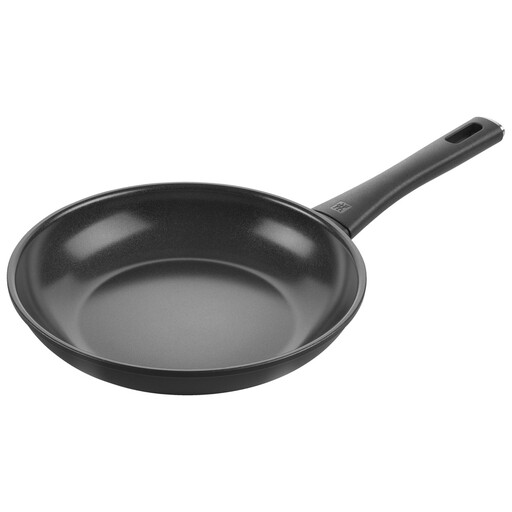
Why this product suits this profile: The compact 24 cm pan is suitable for single people, couples and smaller portions. According to the product details, it is compatible with gas, induction, ceramic and halogen hobs.
The coating is expressly stated to be free from PTFE and PFOA. However, the care instructions recommend low to medium heat and gentle utensils.
24 cm diameter, forged aluminium body, oven-safe up to 250 °C; hand washing is recommended to protect the coating.

Why this product suits this profile: With 24 and 28 cm pans, the set covers different portion sizes and, according to the product details, is suitable for all hob types, including induction.
The TransTherm base and specific hob compatibility are clearly stated. Before buying, check the oven-use details for the relevant model.
Two diameters, Cromargan stainless steel 18/10, ceramic coating with mineral reinforcement and wide pouring rims.
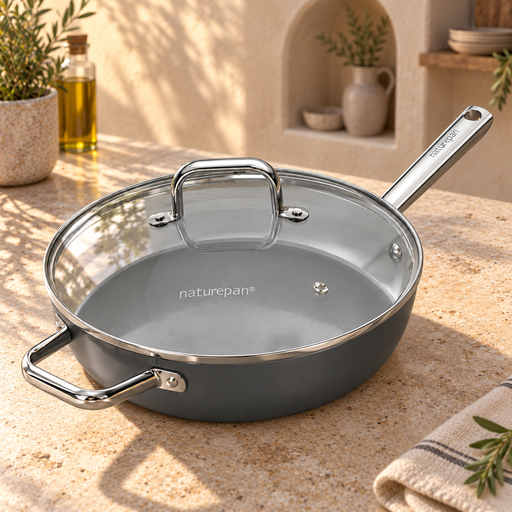
Why this product suits this profile: The 28 cm sauté pan, with its high sides and lid, is suitable for family meals, casseroles, sauces and one-pan dishes.
The high sides and matching glass lid make its intended use clearer than that of a shallow frying pan. The coating is stated to be free from PTFE, PFAS and PFOA.
28 cm diameter, 7.5 cm internal height, lid, induction compatibility, oven-safe up to 260 °C and dishwasher suitability according to the product details.
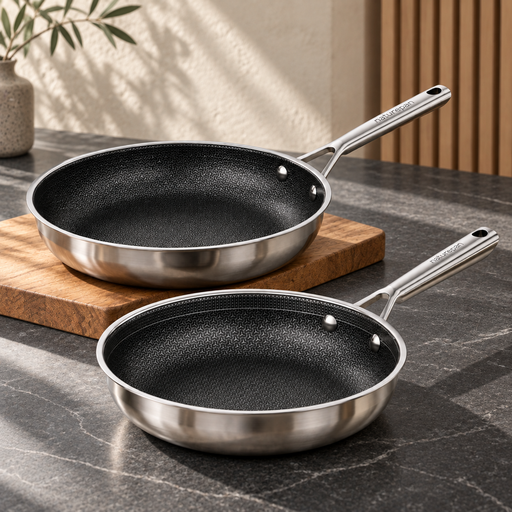
Why this product suits this profile: This ceramic frying pan set combines 24 and 28 cm pans, making it suitable for small breakfast portions as well as larger fried dishes.
The etched honeycomb structure combines coated areas with exposed stainless steel ribs. This clearly describes its intended use for frying and searing.
Two sizes, aluminium heat core, induction compatibility, dishwasher suitability and oven use up to 230 °C according to the product details.
We have put together a complete, regularly updated list of products that fully meet these strict selection criteria and the safety regulations applicable in the EU.
Not every model is automatically induction-compatible. A magnetic base is essential. The product description must expressly state that the pan is suitable for induction. Models with a plain aluminium body and no suitable base plate will generally not work on an induction hob.
Service life depends on heat, utensils, cleaning and frequency of use. Overheating, metal utensils and harsh cleaning products can shorten the non-stick coating’s effectiveness. Gentle hand washing and medium temperatures can help keep the coating in good condition for as long as possible.
“PFAS-free” describes a material property of the coating and is not a medical efficacy claim. If this aspect is important to you, check the specific manufacturer’s information regarding PFAS, PFOA and PTFE. You should also follow correct usage instructions and the general guidance for materials that come into contact with food.