
Lieferung heute & morgen

Qualitätsgarantie

Willkommens-Angebote freischalten: KOSTENLOSE Lieferung | Bis zu 80 % RABATT | Kostenlose 30-Tage-JoyPlus-Testphase
App herunterladen
A ceramic frying pan can be practical for everyday cooking. It is often easy to clean, requires little oil when used correctly and is available in a range of sizes. However, ceramic-coated frying pans can differ considerably in terms of materials, coating, heat distribution and care requirements.
If you only look for terms such as “non-stick”, “PFAS-free” or “suitable for all hob types”, you can easily overlook important details. The following points will help you choose a suitable ceramic non-stick frying pan for your household and avoid common buying mistakes.
Many products are not made from solid ceramic. More commonly, they have a body made from aluminium or stainless steel with a ceramic coating. This is not necessarily a disadvantage, but it does affect weight, heat conduction and care requirements.
An aluminium frying pan usually heats up relatively quickly. A coated stainless steel pan may offer a more robust construction and more even heat distribution, but is often heavier. The important thing, therefore, is not just the word “ceramic”, but the complete material construction.
Claims such as PFAS-free pan, PTFE-free frying pan or PFOA-free refer to specific groups of substances or coating components. You should always check the manufacturer’s product information for the precise meaning of the claim.
For the products featured here, the suppliers state, for example, that the coating is PFAS-free or PTFE-free. These claims should be understood as manufacturer information and do not constitute a general statement about all ceramic frying pans. When choosing a pan, it is also important to consider whether the surface is resistant to scratches and whether the care instructions can be followed.
A dishwasher-safe frying pan is convenient for everyday use. However, detergents, high temperatures and mechanical stress can put more strain on a coated surface than gentle hand washing. This is why some suppliers recommend washing by hand despite declaring the pan dishwasher-safe.
Metal turners, scouring pads, prolonged heating when empty and sudden temperature changes are among the most common causes of damage. A ceramic-coated frying pan should also be allowed to cool down after cooking before it is cleaned.
For an induction hob, the pan needs a magnetically conductive base. An induction-compatible frying pan should therefore be explicitly described as suitable for induction. It is also worth checking the other hob types:
According to the product descriptions, models such as the Redchef Starlight Series, SENSARTE Ceramic Pan and several Naturepan variants are offered for induction, gas and electric hobs. According to the supplier, the Tefal C43604 Renew+ is not suitable for induction.
A 24 cm frying pan is suitable for smaller portions, omelettes, eggs or a two-person household. If you are cooking for several people or preparing larger portions, a 28 cm frying pan offers more space. However, it is not just the external diameter that matters: the actual base and usable cooking surface may be smaller.
As a guide:
A large pan requires more energy on small hobs and may heat unevenly if the hob size is not suitable.
A frying pan with lid is useful when food needs to be braised, kept warm or cooked with liquid. The USELUCK frying pan and the Naturepan Deep Sauté Pan include a lid. Before using them in the oven, however, you should check the temperature limits and the instructions for the lid.
The shape of the handle is also relevant. Bakelite handles can feel relatively comfortable to hold on the hob, while metal handles may be more practical in the oven but can become hot. Claims such as “oven-safe up to 230 °C” only apply under the respective manufacturer’s conditions.
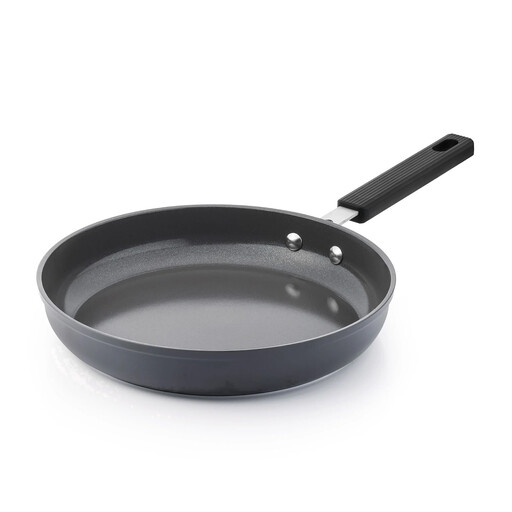
Why this product suits this profile: The 24 cm size is designed for smaller portions and typical breakfast dishes. The supplier states that it features aluminium, a ceramic coating and compatibility with induction, gas, electric and ceramic hobs.
The product information states that the coating is free from PFAS, lead and cadmium, and provides specific care instructions, including hand washing and avoiding metal utensils.
24 cm diameter, anti-scald handle and compatibility with several hob types.

Why this product suits this profile: The set covers two popular sizes and, according to the product description, is made from Cromargan stainless steel 18/10 with a ceramic coating and TransTherm universal base.
The combination of sizes reduces the need to use the same pan for small and larger portions. Induction compatibility is explicitly stated.
Two diameters, stainless steel construction and, according to the supplier, oven suitability.
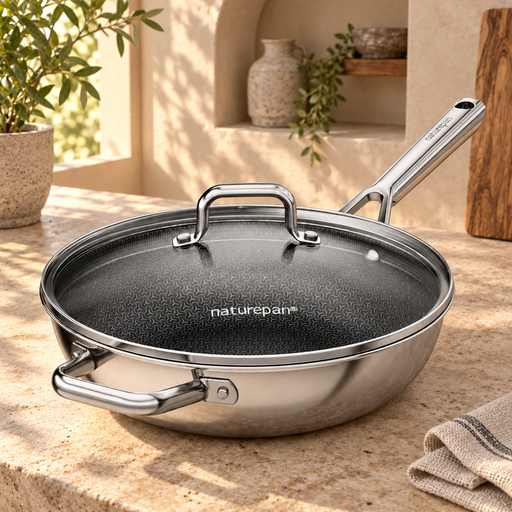
Why this product suits this profile: According to the description, the deep 28 cm pan with matching lid is suitable for sautéing, braising and larger dishes. The multi-layer stainless steel body has an aluminium heat core.
The specifications state compatibility with induction, gas, electric and ceramic hobs, as well as clear limits for oven use, microwaves and cleaning.
Deep design, lid included and multi-layer stainless steel body with an aluminium core.
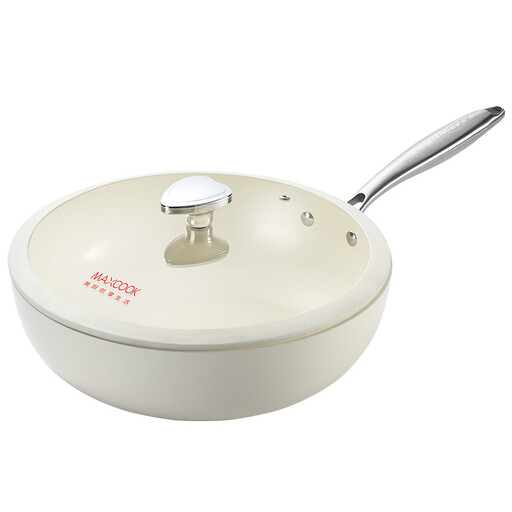
Why this product suits this profile: The 32 cm diameter provides plenty of frying space for family-sized portions. The product name indicates a die-cast aluminium construction with a ceramic non-stick coating.
The large surface is suitable for bigger quantities, but should only be used on a sufficiently large hob. Before buying, check the information on hob type and care requirements.
32 cm frying surface and die-cast aluminium construction, according to the product name.
We have put together a complete, regularly updated list of products that fully meet these strict selection criteria and the safety regulations applicable in the EU.
Regardless of the model, gentle use can often extend the practical lifespan of the surface:
It is not possible to give a general estimate of the lifespan. Among other things, it depends on cooking temperature, utensils, cleaning method and frequency of daily use.
Not every ceramic frying pan is automatically suitable for induction. A magnetic base is essential. Induction compatibility must be explicitly stated in the product description or instruction manual.
A 24 cm frying pan is often sufficient for smaller meals. If you regularly prepare vegetables, meat or side dishes for several people, a 26 to 28 cm pan offers greater flexibility. You should also take the available space on the hob into account.
Once it has cooled, warm water with mild washing-up liquid and a soft sponge is usually sufficient. Even if a model is described as dishwasher-safe, hand washing can be gentler on the coating during everyday use. Always follow the manufacturer’s specific care instructions.