
Lieferung heute & morgen

Qualitätsgarantie

Willkommens-Angebote freischalten: KOSTENLOSE Lieferung | Bis zu 80 % RABATT | Kostenlose 30-Tage-JoyPlus-Testphase
App herunterladen
A ceramic frying pan can be handy for low-fat frying, sautéing and braising. But the name alone doesn't tell you much about everyday practicality or durability. What really matters are the exact coating, the pan base, hob compatibility and the care instructions.
If you only look out for terms like "non-stick", "stone-effect" or "suitable for all hob types", you can easily miss important limitations. Three typical buying mistakes are particularly relevant:
A ceramic-coated frying pan is usually made from a metal body, for example aluminium, stainless steel or a combination of several metal layers. Aluminium heats up quickly and is relatively light. Multi-layer stainless steel can offer more even heat distribution and greater stability, but is often heavier.
Look for clear information about the coating. With a PFAS-free pan or PTFE-free pan, these properties should be explicitly stated in the product data. According to product information from Ballarini, the CeraForce coating on the model mentioned has a PTFE- and PFOA-free composition. For the Redchef Starlight, PTFE, PFOA and PFAS are stated as not included. Such statements refer to the respective manufacturer or product information and should not be equated with any medical effect.
Terms like "granite", "maifan stone" or "titanium" also don't automatically describe the base material. So check:
For a long service life, wooden, silicone or nylon turners are better than metal cutlery. Scratches can impair the function of a coating.
A 20 cm pan is suitable for smaller portions, one or two eggs or individual side dishes. 24 to 28 cm is a practical range for many British households for vegetables, fish, stir-fries and several portions. A deep sauté pan with a high rim also offers space for sauces, braised dishes and one-pot meals.
A lid is useful if you want to cook food slowly, reduce liquid or avoid splashes. Check whether the lid is oven-safe. With some models, the pan may only go in the oven without the lid.
The capacity helps with assessment: the USELUCK Pix Pan is stated in the product information as 3.8 quarts, which is roughly 3.6 litres, and has a raised lid and two pouring spouts. For small kitchens or single portions, a 20 cm pan can be easier to handle and more space-saving.
A frying pan for induction needs a suitable magnetic base. For gas, electric and ceramic hobs, the construction of the base is also important so that the heat is transferred as evenly as possible.
Before buying, you should check these points:
A dishwasher-safe pan can reduce the cleaning effort. However, for coated surfaces, hand washing with mild washing-up liquid and a soft sponge is often the gentler option. Let the pan cool down before cleaning and avoid sudden temperature changes.
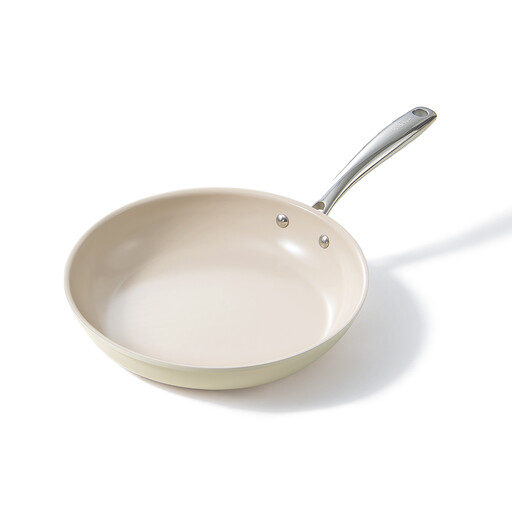
Why this product fits the profile: The compact 20 cm size is suitable for smaller households and simple everyday dishes. According to the product information, the model is suitable for gas, electric and induction hobs.
The product data specifies a three-layer ceramic non-stick coating and specific hob types rather than a vague stone-effect finish.
Aluminium body, 20 cm diameter, stainless steel handle and, according to the product information, suitability for the oven and dishwasher.

Why this product fits the profile: The set covers two common pan sizes. According to the product information, it is made from Cromargan stainless steel 18/10 and has a TransTherm universal base for various hob types including induction.
Two diameters reduce the compromise between single portions and family meals. The product information also states oven suitability up to 400 °C.
24 cm and 28 cm pans, stainless steel construction, wide pouring rim and handle design with reduced heat transfer according to the product description.
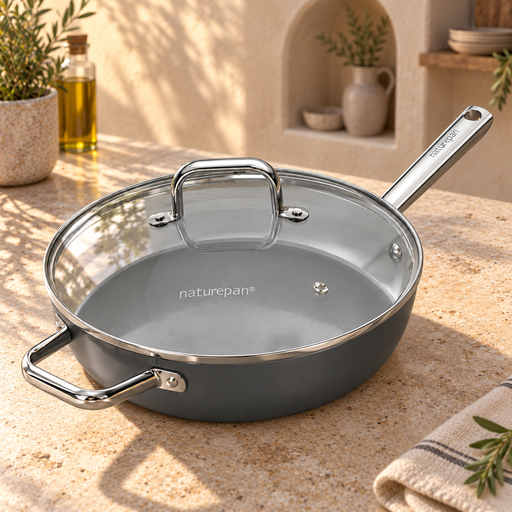
Why this product fits the profile: The deep shape and included lid are ideal for braised dishes, sauces, vegetables and one-pan meals. According to the product information, the model is designed for induction, gas, electric and ceramic hobs.
The product description clearly defines the material: aluminium body with ceramic coating, not solid ceramic. Temperature and care instructions are provided.
28 cm diameter, 7.5 cm body height, lid and oven suitability up to 260 °C without the lid according to the product information.
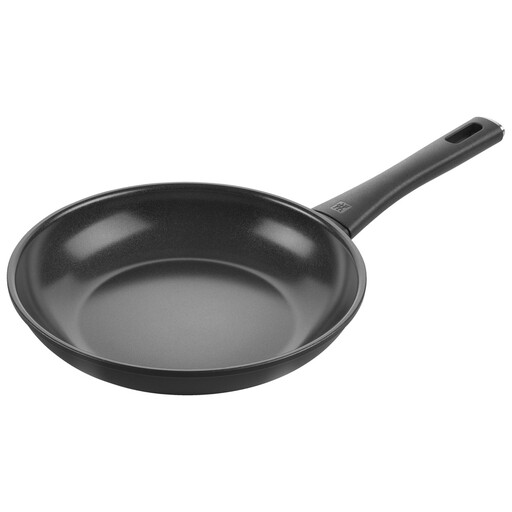
Why this product fits the profile: The 24 cm pan is suitable for typical everyday portions. According to the product information, it has a forged aluminium body, a PTFE- and PFOA-free coating and is suitable for induction.
The technical details explicitly state the coating base and the approved hob types. Low to medium heat and hand washing are recommended for the surface.
24 cm diameter, stainless steel handle, forged aluminium and oven suitability up to 250 °C according to the product description.
We've put together a complete, regularly updated list of products that fully meet these strict selection criteria and the safety regulations in force in the EU.
Even a coated pan needs the right treatment:
"Healthy frying" should be understood factually as low-fat preparation. A non-stick pan can reduce the need for oil or butter, but it doesn't replace a balanced diet and isn't a medical product.
That depends on the pan base. A pan for all hob types should be explicitly approved for induction, gas, electric and ceramic hobs in the product data. For halogen or infrared hobs, the manufacturer's information is decisive if in doubt.
A general lifespan can't be given. It depends on heat, cleaning, kitchen utensils and frequency of use. Low to medium temperatures, hand washing and avoiding metal cutlery can help preserve the coating.
"PTFE-free" simply describes that no PTFE is used. Statements about other substances must be stated separately in the product data. So look for specific information on PTFE, PFOA, PFAS and for notes on compliance with the applicable regulations for materials that come into contact with food.