
Lieferung heute & morgen

Qualitätsgarantie

Willkommens-Angebote freischalten: KOSTENLOSE Lieferung | Bis zu 80 % RABATT | Kostenlose 30-Tage-JoyPlus-Testphase
App herunterladen
A ceramic frying pan can require very little oil when frying, braising and sautéing, and with proper care it can be easy to clean. Yet the wide range of coatings, materials and promises doesn't automatically lead to the right buying decision. What really matters are specific details about hob compatibility, temperature, care and intended use.
Most products on offer are actually a coated frying pan made from aluminium or stainless steel. The ceramic sits as a thin non-stick layer on the metal body. This affects weight, heat conduction and behaviour during temperature changes.
A sensible way to think about it is this: a frying pan with a ceramic coating can heat up quickly, but it isn’t automatically durable. The coating should neither be heated empty on a high setting for a long time nor be used with metal utensils.
The terms PFAS-free pan and PFOA-free pan describe different things. PFOA is a single substance from the PFAS group of chemicals. If you care about specific material properties, you should check the manufacturer’s exact details about the coating rather than just relying on the general term “ceramic”.
For the products mentioned here, the claims refer to the individual product descriptions. They should not be applied blanketly to all models from a brand.
A pan may be suitable for gas, ceramic and electric hobs, but not for induction. An induction frying pan must have a magnetically conductive base. A magnet test can give you a rough idea, but the manufacturer’s specification is what counts.
Oven suitability also varies. Some handles are made of plastic or Bakelite and limit the maximum temperature. With other models, the lid must be removed before placing the pan in the oven.
Aluminium usually heats up quickly and keeps the weight down. Stainless steel is shape-stable and can – depending on its construction – help distribute heat evenly. Hybrid surfaces combine partly coated areas with structured stainless steel zones.
For healthy cooking with little oil, a surface that releases food easily is practical. However, the term “non-stick” doesn’t mean unlimited lifespan. Low to medium heat, suitable kitchen tools made of wood or silicone, and gentle cleaning all help to keep the surface in good condition for longer.
A braising pan with a lid needs more storage space than a flat frying pan. So before you buy, you should also consider the diameter, handle length and space in your kitchen cupboard.
The claims “dishwasher-safe” and “recommended for daily cleaning” are not the same thing. For many coatings, hand washing with mild washing-up liquid and a soft sponge is the gentler choice.
Important basic rules:

Why this product fits the profile: This 26 cm aluminium pan is designed for everyday dishes such as eggs, vegetables, fish or pancakes and, according to the product details, is compatible with induction, gas and ceramic hobs.
The product details explicitly state the hob types and recommend hand washing with soft sponges. This means key care requirements are clear before you buy.
Lightweight aluminium body, 26 cm diameter and heat-insulating wooden handle. A lid is not included.

Why this product fits the profile: The set covers two common pan sizes. According to the product description, it features a mineral-hardened ceramic coating, a TransTherm universal base and suitability for all hob types.
The hob compatibility and maximum heat resistance up to 400 °C are clearly stated in the product description. This makes it easier to match with your hob and oven.
Two diameters, Cromargan stainless steel and oven suitability according to the supplier. The specific care instructions should be followed before use.

Why this product fits the profile: The deep shape with a 3.8 quart capacity is suitable, according to the product description, for searing, braising, sautéing and wok dishes. Two pouring spouts and a raised lid help when working with liquids.
The description explicitly states suitability for all hob types and the PFAS-free Ti-ceramic coating. At the same time, it clearly states that the pan is neither dishwasher-safe nor oven-safe.
Deep body, 45 % more cooking surface according to the product claim, plus a wooden spatula and cleaning sponge included.
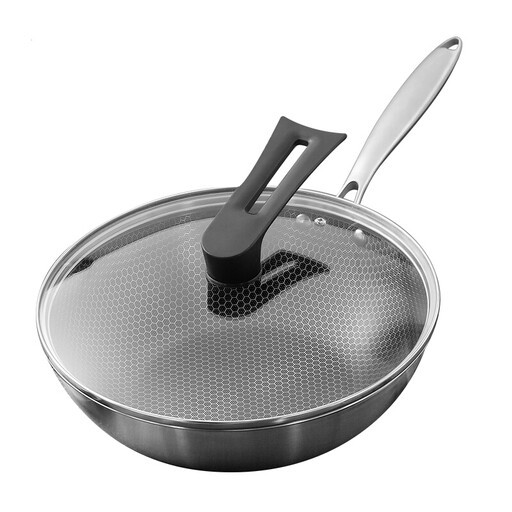
Why this product fits the profile: This 30 cm wok pan made from stainless steel is suitable, according to the product details, for gas, induction and electric hobs, and comes with a matching lid.
The product description clearly states the material, diameter, lid and hob types. The term “without Teflon” should not be equated with a ceramic coating.
Large 30 cm surface, stainless steel construction and lid for moist dishes. The total weight of the pan and lid should be considered when handling.
We have put together a complete, regularly updated list of products that fully meet these strict selection criteria and the safety regulations in force in the EU.
Not every model is automatically an induction frying pan. Look for the manufacturer’s statement “suitable for induction” or “suitable for all hob types”. If you’re unsure, a magnet test on the base of the pan can give you a rough idea.
The lifespan depends on heat, kitchen utensils, cleaning and how often you use the pan. Metal utensils, overheating when empty, sudden temperature changes and abrasive cleaners can damage the coating more quickly. It’s not possible to give a reliable general figure for how long it will last.
That depends on the model. Some products are listed as dishwasher-safe by the supplier, while others are for hand washing only. Even if the dishwasher is allowed, gentle hand washing can help keep the coating and surface appearance in good condition for longer.