
Lieferung heute & morgen

Qualitätsgarantie

Willkommens-Angebote freischalten: KOSTENLOSE Lieferung | Bis zu 80 % RABATT | Kostenlose 30-Tage-JoyPlus-Testphase
App herunterladen
A ceramic frying pan can be practical for frying with little oil and is usually easy to clean when it has a suitable coating. However, attractive advertising claims do not automatically guarantee the right purchase. The key factors are hob compatibility, coating specifications, pan size and proper care.
A ceramic frying pan only works on an induction hob if its base is magnetically conductive. Aluminium alone is not sufficient. Look specifically for confirmation that the pan is suitable for induction, rather than relying only on the wording “suitable for all hob types”. Some models may also have restrictions when used on halogen or infrared hobs.
These terms do not mean the same thing. PTFE is a specific coating material, while PFOA is a single chemical compound. PFAS refers to a larger group of substances. If a pan is advertised as PFAS-free, PTFE-free or PFOA-free, check the relevant manufacturer’s information carefully.
A material specification like this is not a guarantee of a particular service life either. Even a coated pan that does not contain these substances can lose its non-stick performance through overheating, metal utensils or harsh cleaning.
A dishwasher-safe pan is convenient, but high temperatures, strong detergents and contact with other dishes can put long-term strain on the coating. Many manufacturers therefore recommend hand washing despite stating that the pan is dishwasher-safe. This advice is particularly relevant for a ceramic frying pan if you want to preserve its non-stick performance for as long as possible.
Ceramic frying pans are generally not made entirely from ceramic. Aluminium or stainless steel often forms the body of the pan, while a ceramic non-stick layer covers the cooking surface. Aluminium heats up quickly and distributes heat evenly, whereas stainless steel is usually more robust but can be heavier.
For low-fat frying, look for a clear and verifiable description of the coating. Claims such as “mineral ceramic coating”, “PTFE-free” or “PFOA-free” should come from the product specifications. According to the product information, for example, the Ballarini Frying Pan 24 cm features a CeraForce-Granite ceramic coating described as PTFE-free and PFOA-free.
A pan for induction requires a suitable magnetic base. Also check whether it is compatible with gas, electric and ceramic hobs. If you want to finish cooking dishes in the oven, check the maximum permitted temperature and the handle. A plastic or Bakelite handle may rule out oven use, while a stainless steel handle may allow higher temperatures, depending on the model.
Important: the maximum oven temperatures for the pan and lid may differ. According to the product information, the ZEROPAN Deep Frying Pan is suitable for temperatures up to 260 °C, while its glass lid is suitable for up to 148 °C.
A 24 cm frying pan is suitable for smaller portions, one or two people, as well as eggs, pancakes and vegetables. A 28 cm frying pan provides more space for several portions, schnitzels or one-pan dishes. Large 30 or 32 cm models are useful for family portions, but require sufficient space on the hob and in the cupboard.
A deep pan or a pan with a lid is also suitable for braising, sautéing and cooking dishes containing liquid. Before buying, also check the weight, handle type and available storage space.
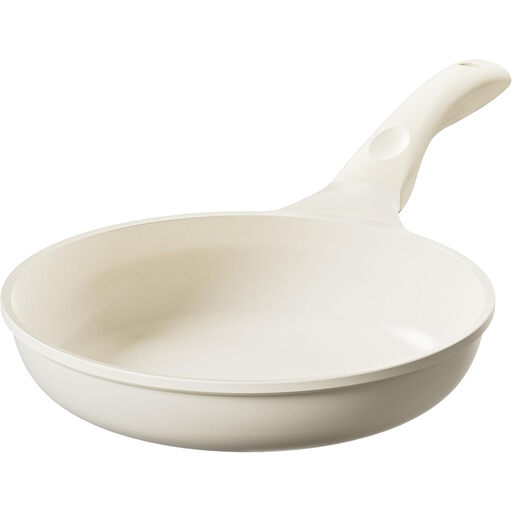
Why this product suits this profile: The compact size is ideal for smaller households and everyday portions. According to the product information, the pan is suitable for induction, gas and electric hobs and features a PTFE-free, PFOA-free and PFAS-free ceramic coating.
The size, coating and hob compatibility are clearly specified. This makes it easier to check before buying whether the pan suits your hob and household.
24 cm diameter; dishwasher-safe according to the product data and fitted with an ergonomic Bakelite handle.
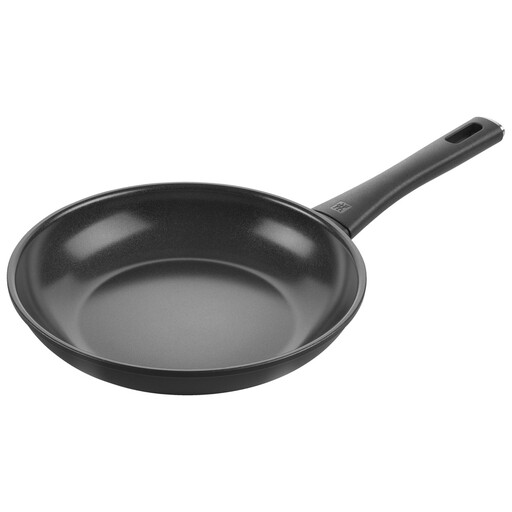
Why this product suits this profile: The pan combines a forged aluminium body with a CeraForce-Granite ceramic coating. According to the product information, it is suitable for gas, induction, ceramic and halogen hobs, as well as for oven use up to 250 °C.
The technical data specifies the coating type, base and overall diameter, as well as the maximum oven temperature. This makes it easier to compare the pan with your requirements.
Forged aluminium; stainless steel handle; PTFE-free and PFOA-free coating according to the product description.
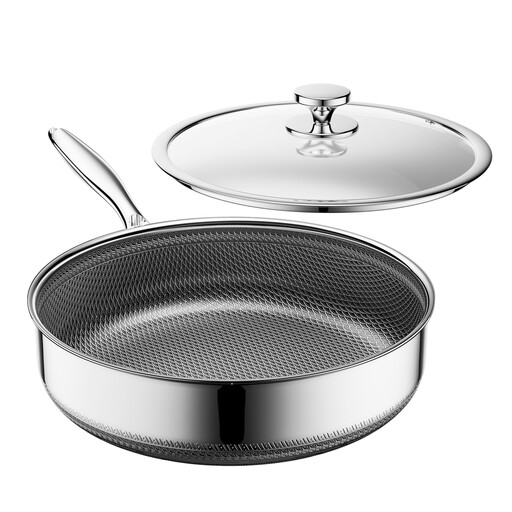
Why this product suits this profile: The deep shape and glass lid are ideal for sautéing, braising and dishes with sauce. According to the product information, the pan is suitable for all common hob types, including induction.
The product data lists the temperature limits for the pan and lid separately. Hand washing is also recommended despite the stated dishwasher suitability.
Lid made from shatter-resistant glass; PFAS-free, PTFE-free and PFOA-free coating according to the product information, plus oven suitability up to 260 °C without the lid.
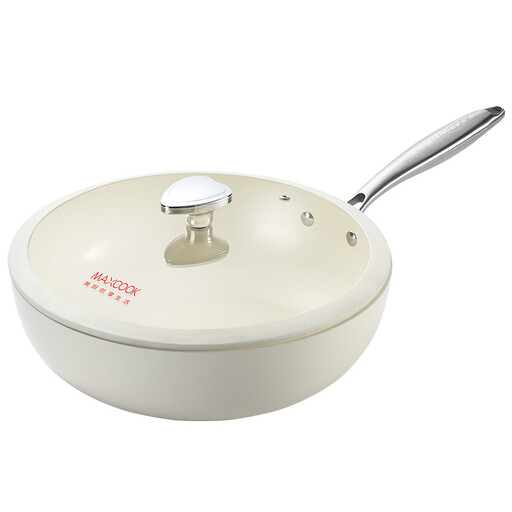
Why this product suits this profile: The large diameter provides more space for family portions, vegetable dishes or several pieces of meat. According to the product information, this model is made from aluminium and features a ceramic non-stick coating.
The large cooking surface is not treated as equivalent to a small standard pan. Before buying, check the dimensions of your hob and kitchen cupboard.
32 cm diameter; aluminium body for rapid heat absorption according to the product description.
We have put together a complete, regularly updated list of products that fully meet these strict selection criteria and the safety regulations applicable in the EU.
Only models with a magnetically conductive base work on induction hobs. The product data should explicitly state that the pan is “suitable for induction”. Aluminium models often require an additional stainless steel base.
It is not possible to give a reliable fixed service life for every model. Longevity depends on heat, frequency of use, cooking utensils and cleaning. Low to medium temperatures, hand washing and soft kitchen utensils can help protect the coating. Overheating and scratches can significantly reduce the non-stick performance much sooner.
According to the relevant product information, a ceramic frying pan often allows you to fry with little oil. Whether a coating is PFAS-free, PTFE-free or PFOA-free depends on the specific model and should be checked against the manufacturer’s information. “Healthy frying” is not a medical claim here, but primarily describes the option of cooking with less fat.