
Lieferung heute & morgen

Qualitätsgarantie

Willkommens-Angebote freischalten: KOSTENLOSE Lieferung | Bis zu 80 % RABATT | Kostenlose 30-Tage-JoyPlus-Testphase
App herunterladen
Choosing a new ceramic hob seems straightforward at first glance. But behind the glossy surfaces and marketing promises, there are often pitfalls that lead to frustration and unnecessary expense. Incorrect dimensions, incompatible connections, or superfluous features that drive up the price are common problems. As your Joybuy Product Recommendation Officer, I'll help you navigate these hurdles and make an informed decision that perfectly suits your needs.
Before we dive into the technical details, let's look at the most common mistakes that buyers often only notice after installation.
To avoid the pitfalls mentioned above, focus on the following three core aspects. These will determine whether a hob truly fits your household and cooking habits.
The physical size of the hob is the first criterion. Measure the available space in your worktop accurately.
Here, the distinction is between permanently installed and portable appliances.
Modern ceramic hobs are operated almost exclusively via touch controls. Look for an intuitive and responsive user interface. However, more important than exotic automatic programs are the fundamental safety features:
Here are some recommendations tailored to specific user profiles, taking the above criteria into account.
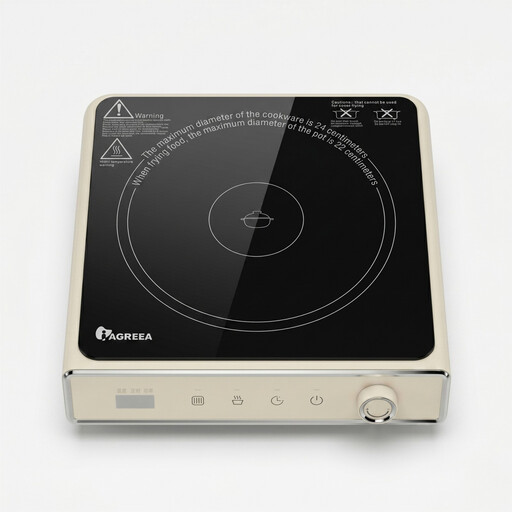
Why This Fits Their Persona: Ideal for students, campers, or as a temporary solution. Its light weight and compact size make it extremely portable. It plugs into a standard socket and is ready to use instantly.
It bypasses the trap of incorrect installation type and connection. As a portable electric hot plate, it requires no permanent installation and no high-voltage wiring.
Works with all types of cookware and offers fast, even heat distribution thanks to its infrared technology.
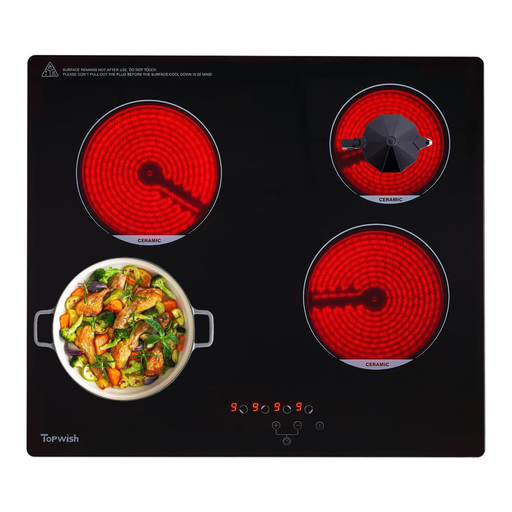
Why This Fits Their Persona: This independent built-in hob, with its 60cm width and standard cutout dimensions (56x49cm), fits perfectly into most German kitchens. It's designed for families looking for a reliable appliance for daily use.
It avoids the trap of overpriced extra features by focusing on the essentials: 9 power levels, a timer, a child lock, and a residual heat indicator.
Offers excellent value for money with all the necessary safety and convenience features for everyday life. The scratch-resistant surface is also easy to clean.
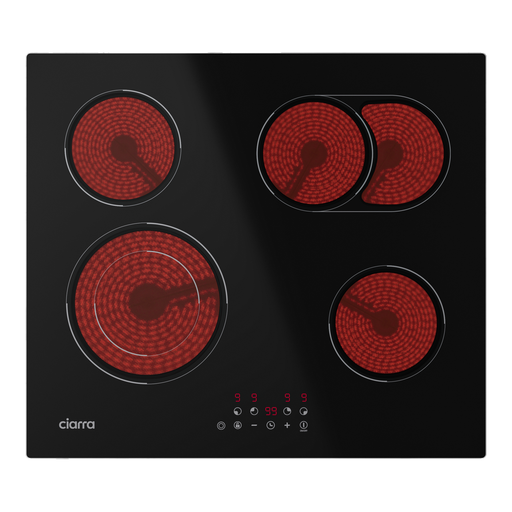
Why This Fits Their Persona: For anyone who enjoys using different types of cookware like roasting pans or large skillets. The high power of 6600W ensures rapid heating, while the flexible cooking zones guarantee optimal heat distribution.
This model solves the problem of incompatibility with specialty cookware. The expandable oval zone and the dual-ring zone prevent uneven cooking with large or oblong pots.
Maximum flexibility thanks to the oval and dual-ring cooking zones. The high total power allows for quick boiling and high-heat searing.

Why This Fits Their Persona: This double hob is the solution for small kitchenettes, single apartments, or offices. With a width of just 29cm, it offers the full functionality of a built-in ceramic hob in a minimal footprint.
It solves the problem of incorrect sizing. Instead of cramming an oversized 4-zone hob into a small kitchen, this 2-zone ceramic hob offers a perfectly fitting and aesthetic solution.
Compact design for maximum space savings. This model comes with a plug, which simplifies installation in many cases (please check the power rating and circuit protection).
We have compiled a complete, up-to-date list of products that fully meet these strict selection criteria and German safety regulations.
A ceramic hob (also called a glass-ceramic hob) generates heat via heating coils under the glass plate. This heat is then transferred to the pot. This has the advantage that it works with almost all types of pots and pans. An induction hob creates an electromagnetic field that generates heat directly in the base of the cookware. This is more energy-efficient and faster but requires special cookware with a magnetic base.
Not all of them. Large built-in hobs with four cooking zones and a total power output of over 3,700 watts typically require a 400-volt high-voltage connection, which must be installed by an electrician. Smaller double hobs (2-zone ceramic hobs) or portable single hot plates are often designed to run on a standard 230-volt safety socket. Always check the connection type and total power in the product specifications.
Wait until the hob has completely cooled down and the residual heat indicator has gone out. Remove coarse debris with a special glass scraper. Then, apply a few drops of ceramic hob cleaner to the surface and rub it in with a clean, soft cloth or paper towel. Finally, wipe with a damp cloth and dry the surface to avoid streaks. Never use abrasive sponges or harsh cleaning agents, as they can scratch the surface.