
Lieferung heute & morgen

Qualitätsgarantie

Willkommens-Angebote freischalten: KOSTENLOSE Lieferung | Bis zu 80 % RABATT | Kostenlose 30-Tage-JoyPlus-Testphase
App herunterladen
As a Joybuy Product Recommendation Officer, I see every day how difficult choosing the right kitchen equipment can be. Especially with a ceramic pan for induction, many promises are made that often don't hold up in practice. A pan that loses its non-stick properties after just a few months or heats unevenly on an induction hob is a waste of money.
This guide is designed to help you recognise the common pitfalls and make an informed decision. We will focus on the technical features that truly matter, so you can find a durable and functional pan.
Marketing terms can be confusing. Many buyers regret their decision because they fell for one of these three common assumptions:
To avoid the problems mentioned above, you should check three technical aspects before buying. These determine whether your ceramic pan for induction will perform its job reliably.
For optimal performance on an induction hob, a ferromagnetic base is essential. This means the base must be magnetic to efficiently convert the hob's energy into heat.
The non-stick property is the main reason for buying a ceramic pan. Its durability depends directly on its quality and composition.
A good pan should be flexible enough to adapt to various cooking scenarios.
Here are some models that, based on their objective features, are suitable for different user profiles.
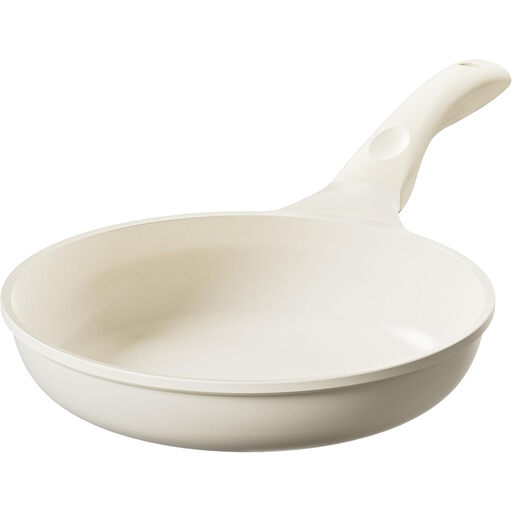
Why This Fits Their Persona: Ideal for daily tasks like frying eggs or vegetables. It offers reliable basic functionality for induction hobs without breaking the bank. The 24 cm size is perfect for individuals or couples.
The pan is explicitly declared as PTFE/PFOA/PFAS-free and features an induction-ready base that allows for rapid heating. This sidesteps the trap of misleading toxin claims and poor induction performance.
Even and fast heat distribution thanks to the thickened base. The heat-resistant Bakelite handle stays cool on the stovetop, ensuring safe handling.
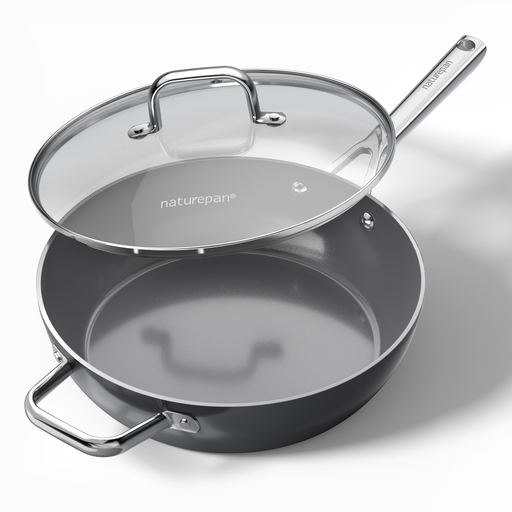
Why This Fits Their Persona: With a 28 cm diameter, high sides, and a lid, this pan is ideal for families. It's perfect for braised dishes, sauces, or larger portions of fried potatoes. Its versatility from stovetop to oven makes it a workhorse in the family kitchen.
The coating, reinforced with diamond and titanium particles (a titanium-ceramic pan), directly addresses the weakness of short lifespan. It is designed for frequent use and is more resilient than simple ceramic layers.
High oven-safety up to 260°C thanks to the stainless steel handle. The included lid and high sides significantly expand its uses, from searing to steaming.
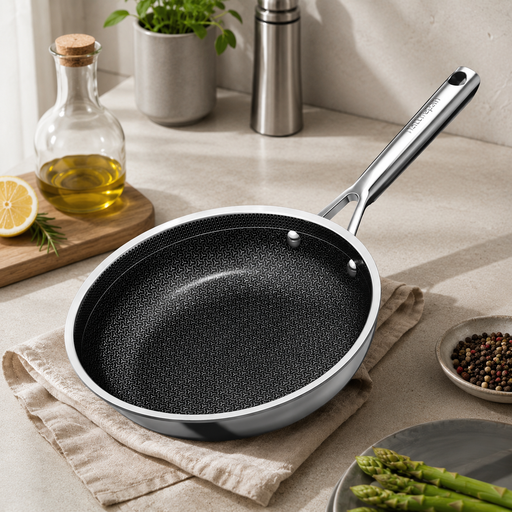
Why This Fits Their Persona: For chefs who appreciate searing a steak like in a stainless steel pan but don't want to sacrifice the convenience of a non-stick surface. The hybrid technology is designed for precise, high-heat cooking.
It resolves the conflict between high-heat searing and non-stick functionality. The laser-etched stainless steel honeycomb pattern allows for excellent browning, while the ceramic valleys prevent sticking. The 5-ply construction also prevents the pan from warping.
Combines the benefits of stainless steel (searing) and ceramic (non-stick). The construction is extremely robust, scratch-resistant, and oven-safe up to 260°C.
We have compiled a complete, up-to-date list of products that fully meet these strict selection criteria and German safety regulations.
To protect the non-stick coating, you should follow a few basic rules:
The most reliable method is to look for the official induction symbol (a stylised coil) on the packaging or the bottom of the pan. Alternatively, you can perform a simple test: hold a magnet to the base of the pan. If it sticks firmly, the base is ferromagnetic and suitable for induction.
The main advantage of ceramic coatings is that they are manufactured without per- and polyfluoroalkyl substances (PFAS), including PFOA and PTFE. These substances are suspected of being a health concern if traditional coatings are overheated or damaged. A ceramic pan declared as PFAS-free therefore offers a great alternative for health-conscious cooks who wish to avoid these chemicals.