
Lieferung heute & morgen

Qualitätsgarantie

Willkommens-Angebote freischalten: KOSTENLOSE Lieferung | Bis zu 80 % RABATT | Kostenlose 30-Tage-JoyPlus-Testphase
App herunterladen
A ceramic mug can be used every day for many years – provided that its capacity, handle, glaze and care instructions suit the intended use. However, product images and terms such as “high quality”, “Japanese” or “robust” can often appear more informative than the technical details actually are.
Three common buying pitfalls occur particularly often:
For a classic coffee, sizes between around 245 and 330 ml are often suitable. If you prefer large portions of café au lait or tea, consider 370 to 390 ml. A 300 ml cup is a versatile middle ground for breakfast, the office and afternoon coffee.
Matcha and concentrated tea tastings require different standards. A matcha cup or Gongfu teacup often does not have the capacity of a classic mug. Small vessels holding 65 ml or 160 ml are ideal for portioned tastings, but are not intended to replace a large ceramic mug.
Pay attention to the shape as well:
Ceramic, stoneware and porcelain differ in density, weight and surface finish. For your buying decision, the specific product description is more relevant than the marketing terminology. Check whether the vessel is intended for contact with food and whether information about the glaze is provided.
A matt surface may feel different to a glossy glaze and may be more sensitive to abrasive cleaners. For every ceramic coffee cup, the rule is: do not use metal brushes or harsh scouring pads unless the manufacturer expressly permits them.
Even a suitable ceramic mug is not automatically resistant to thermal shock. Do not expose a cold vessel directly to boiling liquid, and do not use it on the hob. Cracks, chips or sharp edges are reasons to stop using the cup.
The terms “microwave-safe” and “dishwasher-safe” should be stated explicitly in the product details. A microwave-safe coffee mug is particularly useful for reheating coffee or milk-based drinks in the office. Nevertheless, the cup should not be heated while empty or left at high power for longer than necessary.
A dishwasher-safe cup should preferably be washed on a gentle cycle. Decorations, matt glazes and wooden components may require special care. If a product description only states suitability vaguely or as an assumption, check the latest manufacturer’s information on the product page before buying.
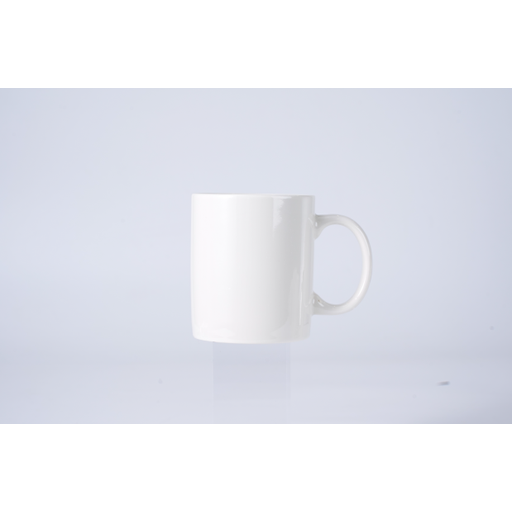
Why this product suits the profile: The single 325 ml cup is designed for shoppers looking for a simple vessel for coffee, tea or hot chocolate without needing a set.
The capacity is clearly stated as 325 ml. The product description also specifies dishwasher and microwave suitability; check these details again on the product page before placing your order.
Single cup, 325 ml capacity, handle and glossy white surface for easy use at home or in the office.
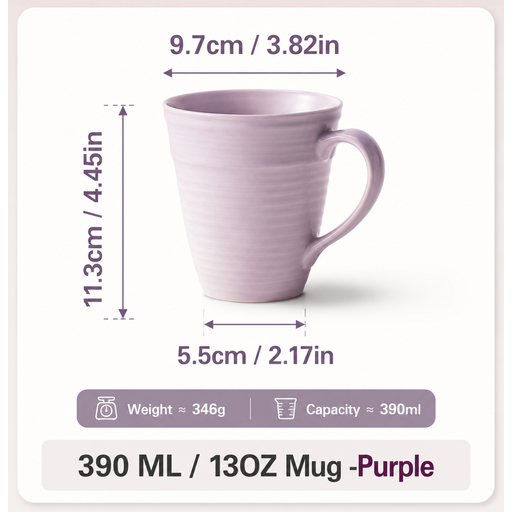
Why this product suits the profile: With a 390 ml capacity, there is plenty of room for large portions of coffee, tea or hot chocolate. The matt purple glaze adds a distinctive design accent.
The capacity, material and suitability for the dishwasher and microwave are listed in the product data. Matt surfaces should be cleaned with soft sponges.
390 ml capacity, stoneware or ceramic according to the product data, and clearly stated care options.
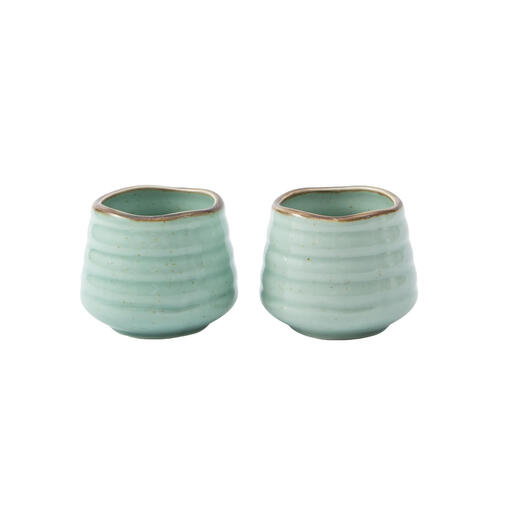
Why this product suits the profile: The two 160 ml handleless cups are suitable for matcha latte, tea and smaller portions of coffee. Their stackable design is ideal when storage space is limited.
The clearly stated individual capacity prevents you from expecting a large ceramic mug. As there are no handles, the cup should be held carefully when filled with hot drinks.
Set of 2, each holding 160 ml, handleless, stackable and finished with a green twisted-glaze effect.
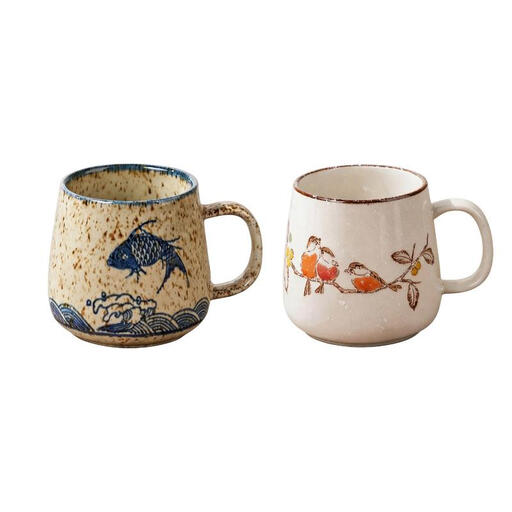
Why this product suits the profile: The set of 2, with each mug holding 380 ml, is designed for couples, families or shared office kitchens and caters for a range of drinks.
The pack size and capacity per cup are clearly stated. The guidance on abrasive cleaners and sudden temperature changes still applies to the glaze and ceramic material.
Set of 2, 380 ml each, Japanese-inspired design and versatile use for coffee, tea, milk or juice.
We have put together a complete, regularly updated list of products that fully meet these strict selection criteria and the safety regulations applicable in the EU.
A ceramic mug as a gift should be chosen based on more than just colour and shape. For the workplace, a handle, medium capacity and easy cleaning are usually more important than a seasonal design. A ceramic cup set, on the other hand, is a good choice when several people use the same design or coffee and tea are regularly served together.
For tea drinkers, a ceramic teacup with a lid and built-in infuser can be a practical choice. According to the product information, the Sakura model, with a capacity of around 300 ml, has a porcelain filter and lid but is not microwave-safe. This restriction should be taken into account when making your choice.
If you prefer a traditional look, you can also find small Japanese teacups, Gongfu models and hand-painted vessels. With these products, variations in the glaze and pattern may occur. Before buying, therefore, read the capacity, contents and care instructions particularly carefully.
Only if the manufacturer expressly states that it is. Metallic decorations, wooden components or special inserts may restrict its use. Do not heat the cup while empty and avoid significant temperature changes.
Its lifespan depends on the material, glaze, use and care. Impacts, abrasive cleaners and changes from very cold to very hot can encourage cracks or chips. For safety reasons, damaged cups should no longer be used for drinks.
For everyday use, around 245 to 330 ml is versatile. Large portions of café au lait are better suited to models holding 370 to 390 ml. Smaller cups of approximately 65 to 160 ml are common for matcha and Gongfu tea. The key consideration is whether you want to serve a single portion or a concentrated tasting.