
Lieferung heute & morgen

Qualitätsgarantie

Willkommens-Angebote freischalten: KOSTENLOSE Lieferung | Bis zu 80 % RABATT | Kostenlose 30-Tage-JoyPlus-Testphase
App herunterladen
A good ceramic pan promises healthy, low-fat cooking and easy cleanup. However, the market is flooded with models of widely varying quality. Many buyers find that after just a few months, the non-stick performance degrades or the pan is unsuitable for their stovetop. As a Joybuy Product Recommendation Officer, I'll help you identify the crucial features and bypass marketing traps, so you can make an informed decision.
Before we look at the important features, let's highlight the typical issues that lead to disappointment. Understanding these pitfalls will help you search more effectively for a long-lasting product.
To avoid the problems mentioned above, you should carefully check three technical aspects before buying. These are the primary determinants of your new pan's performance and lifespan.
A pan with a ceramic coating is based on a sol-gel process and does not contain per- and polyfluoroalkyl substances (PFAS). Look for the following features:
The base is the pan's foundation and is critical for cooking performance.
Beyond the basic functions, some models offer practical extras that make daily cooking easier.
Here are some models that represent a considered choice for specific user profiles, based on their objective features.
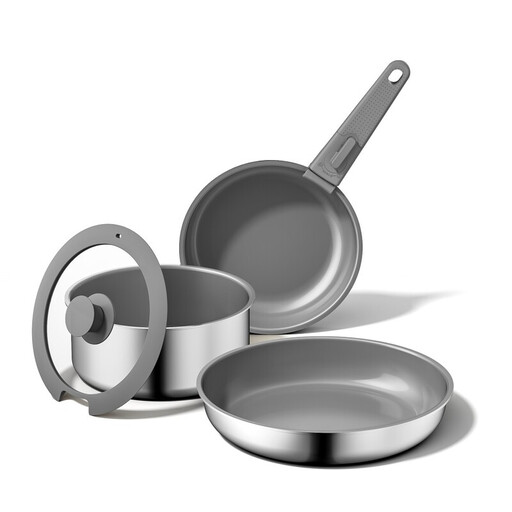
Why This Fits Their Persona: Ideal for users with limited storage space in the kitchen, RV, or for camping. The detachable handle allows the pots and pans to be stacked, saving up to 70% of space according to the manufacturer.
The combination of a stainless steel body and induction suitability addresses the compatibility problem. The detachable handle solves a practical issue that goes beyond mere marketing promises.
Versatility: Suitable for all stovetops including induction and oven-safe up to 250°C. Space-Saving: The set is extremely compact for storage thanks to the detachable handle.
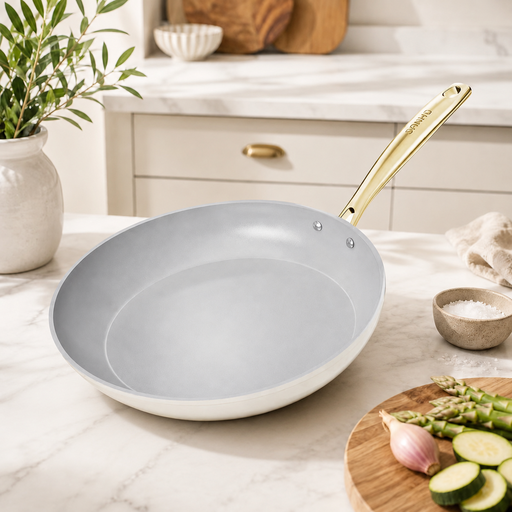
Why This Fits Their Persona: A robust, all-around pan for families who cook daily. The 26 cm size is versatile, and the reinforced coating (per manufacturer claims) is designed for a longer lifespan with frequent use.
Addresses rapid wear and tear with a patented diamond-titanium coating. The explicit declaration as PFAS-, PFOA-, and PTFE-free provides transparency on the "healthy pan" issue.
Robust Construction: The aluminium core with an encapsulated stainless steel base ensures fast, even heat. High Heat Resistance: Oven-safe up to 260°C, which expands its range of uses.
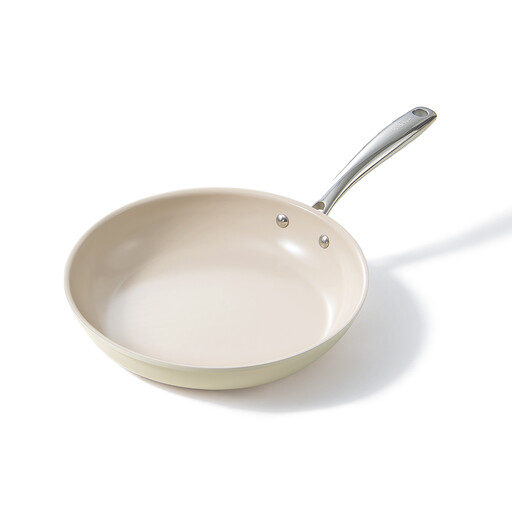
Why This Fits Their Persona: For home cooks who need a pan that can move seamlessly from the stovetop to the oven. Its exceptionally high oven-safe temperature of up to 450°C (842°F), according to the manufacturer, is a clear distinguishing feature.
Instead of vague promises, this model provides a specific, very high temperature rating for its oven-safe capability. The riveted stainless steel handle is a robust design necessary for such temperatures.
Extreme Oven-Safe Temperature: Allows for browning and cooking at very high temperatures. Even Heat Distribution: The forged aluminium body ensures precise cooking without hotspots.
We have compiled a complete, up-to-date list of products that fully meet these strict selection criteria and German safety regulations.
1. How do I properly care for a ceramic pan to extend its lifespan? Proper care is crucial. Always let the pan cool down after use before cleaning it with warm water and a soft sponge. Avoid aggressive abrasive cleaners and steel wool. Although many pans are listed as dishwasher-safe, hand washing is recommended to protect the coating. Only use wooden, silicone, or plastic cooking utensils.
2. Are ceramic pans really healthier than Teflon pans? Ceramic coatings are free of PTFE and PFOA. In the past, PFOA, a substance now considered a health concern, was used in the production of traditional PTFE (Teflon) coatings. Modern PTFE pans are PFOA-free. The main advantage of ceramic is that it generally does not use fluoropolymers (like PFAS). If a pan is certified as PFAS-free, it offers a great alternative for health-conscious consumers.
3. Can I use any ceramic pan on an induction stovetop? No. Only a ceramic pan for induction with a ferromagnetic base will work on an induction cooktop. Be sure to check the product description and look for the induction symbol (a stylised coil) when purchasing. Pans made of pure aluminium or copper are not induction-compatible without a special base plate.