
Lieferung heute & morgen

Qualitätsgarantie

Willkommens-Angebote freischalten: KOSTENLOSE Lieferung | Bis zu 80 % RABATT | Kostenlose 30-Tage-JoyPlus-Testphase
App herunterladen
A ceramic pan promises a lot: healthy cooking without harmful chemicals, effortless cleaning, and perfect searing results. In practice, however, many models turn out to be short-lived and disappointing. As your Joybuy Product Recommendation Officer, I'll filter the facts from the marketing hype and show you what truly matters when making your choice, ensuring your next pan is a worthwhile investment.
Many buyers invest in a new pan, only to find that food sticks or the base warps after just a few months. These issues are often due to common but avoidable flaws.
To make an informed decision, you should carefully examine three technical aspects. These factors determine the durability, functionality, and safety of your new pan.
A pan with a ceramic coating is not the same as a solid ceramic pan. The quality depends primarily on two factors:
A flat, thick base is essential for great cooking results. Compatibility is especially crucial for those using an induction hob.
The ability to move a pan from the hob directly into the oven significantly expands your cooking options—for example, for finishing a dish with a gratin or using it as a ceramic braiser pan.
Instead of an overwhelming list, we present a few models tailored to specific user profiles that successfully avoid the pitfalls mentioned above.
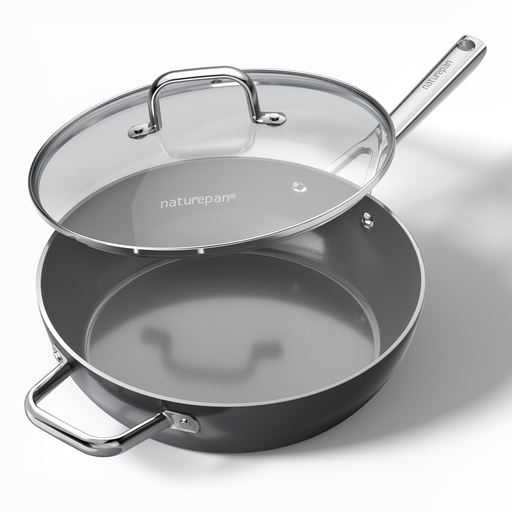
Why This Fits Their Persona: Ideal for preparing larger quantities and one-pot meals. The high rim and included lid make it the perfect braiser for saucy dishes or stews, while the coating, explicitly declared as PFAS-free, meets the demand for healthy cooking for the whole family.
The ceramic coating, reinforced with diamond and titanium particles, addresses the weakness of scratch resistance. The encapsulated base ensures even heat distribution and prevents hotspots.
High versatility (frying and braising pan), suitable for all hob types including induction, and oven-safe up to 260°C.
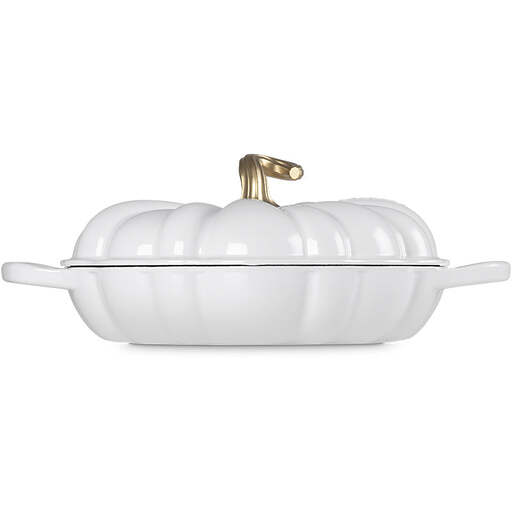
Why This Fits Their Persona: For cooks who view cookware as part of their table setting. This Dutch oven is not just a cooking tool but a decorative centrepiece that goes directly from the oven to the table. Perfect for special occasions and as a prestigious gift.
Enameled cast iron is extremely robust and durable, bypassing the fragility of thin ceramic coatings. The material itself guarantees unparalleled even heat distribution and retention.
Excellent heat retention for gentle cooking and keeping food warm. The material is suitable for all hob types (incl. induction) and the oven, and is renowned for its generational durability.
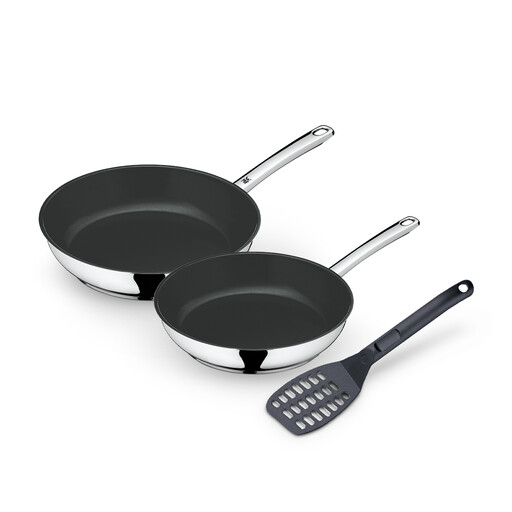
Why This Fits Their Persona: This ceramic pan set provides a solid starter kit for daily use from a brand well-established in Germany. It covers the two most common pan sizes and offers an economical solution without compromising on fundamental quality features.
The TransTherm universal base is specifically designed for optimal heat distribution, effectively preventing hotspots. As a product from a renowned manufacturer, you can expect reliable material quality and craftsmanship.
A complete set for all hob types, including an induction ceramic pan. The wide pouring rim allows for drip-free pouring, and the stainless steel handles make the pans oven-safe up to 250°C.
We have compiled a complete, up-to-date list of products that fully meet these strict selection criteria and German safety regulations.
1. How do I properly care for a ceramic pan to maximize its lifespan? Avoid extreme heat; medium temperatures are sufficient for most applications. Use only utensils made of wood, silicone, or heat-resistant plastic. Allow the pan to cool completely before cleaning to prevent thermal shock, and wash it by hand with a soft sponge and mild dish soap.
2. Is a ceramic pan really healthier than a conventional non-stick pan? Ceramic coatings are generally free of PFAS, PFOA, and PTFE. At very high temperatures (above 260°C), these substances can potentially release fumes. A PFAS-free ceramic pan therefore offers an alternative for health-conscious cooks who wish to avoid this risk.
3. How can I tell if my ceramic pan is suitable for induction? Check the bottom of the pan or the packaging for the induction symbol (a stylized coil). Alternatively, you can hold a magnet to the base. If it sticks, the pan is suitable for an induction cooktop as it has the necessary ferromagnetic core.