
Lieferung heute & morgen

Qualitätsgarantie

Willkommens-Angebote freischalten: KOSTENLOSE Lieferung | Bis zu 80 % RABATT | Kostenlose 30-Tage-JoyPlus-Testphase
App herunterladen
A good frying pan is the heart of many kitchens. But the search for the right model can quickly become overwhelming. With ceramic pans in particular, manufacturers promise durability and healthy cooking. The reality is often different: coatings that lose their non-stick properties after just a few months, or pans that don't get hot enough on an induction hob.
As your Joybuy Product Recommendation Officer, I'll help you recognise the common pitfalls and make an informed decision. We'll look at which features truly matter and how to find a pan that meets your everyday needs.
Marketing promises often sound tempting, but certain weaknesses frequently lead to disappointment and unnecessary expense.
To avoid these pitfalls, you should check three core features before buying. These determine the performance, safety, and longevity of your new pan.
The most important aspect of a modern non-stick pan is its coating. Per- and polyfluoroalkyl substances (PFAS) are increasingly becoming a focus for consumers.
For induction hob users, the pan's base is everything. Optimal performance is only achieved when the base is fully ferromagnetic.
A scratch-resistant pan only remains functional for a long time if handled correctly. The pan's body material and the care instructions are crucial.
Based on these objective criteria, we have identified some products that suit different user profiles.
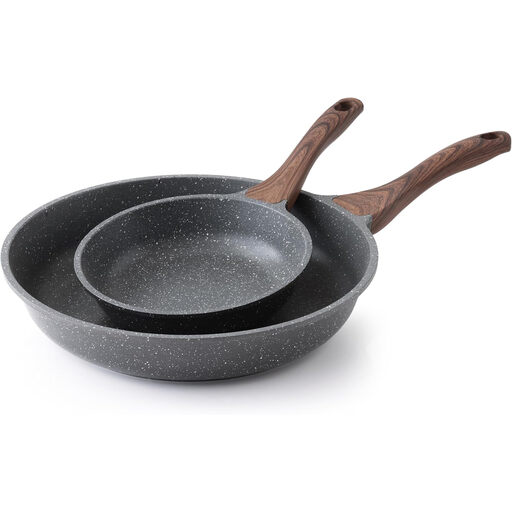
Why This Fits Their Persona: With two popular sizes, this set covers a family's daily cooking needs—from fried eggs in the small pan to roasted potatoes or sautés in the large one.
The solid cast-aluminium body resists warping, and the magnetic base is designed for even heat distribution on induction hobs, thus avoiding the trap of inefficient performance.
A practical induction pan set for various dishes. The manufacturer states the coating is free of intentionally added PFOA.
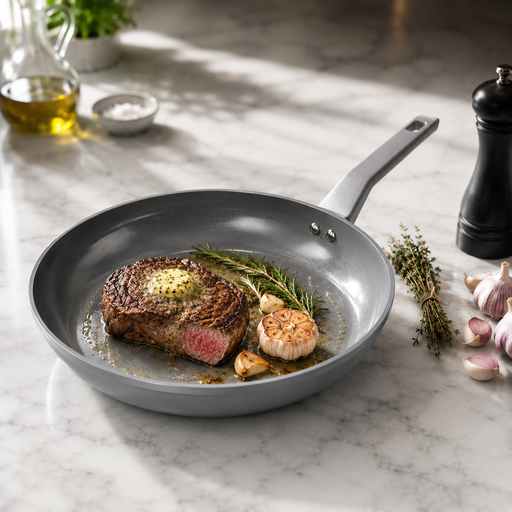
Why This Fits Their Persona: Ideal for individuals or couples looking for a single, high-quality, all-purpose pan and who place special emphasis on material composition.
Directly addresses the pitfall of vague 'health' promises: the manufacturer declares the pan is 100% free of PFAS, PFOA, and PTFE. The diamond- and titanium-reinforced coating aims for greater durability.
Clear declaration of being free from harmful substances (PFAS-free pan). The multi-layer ceramic coating is designed for enhanced scratch resistance.
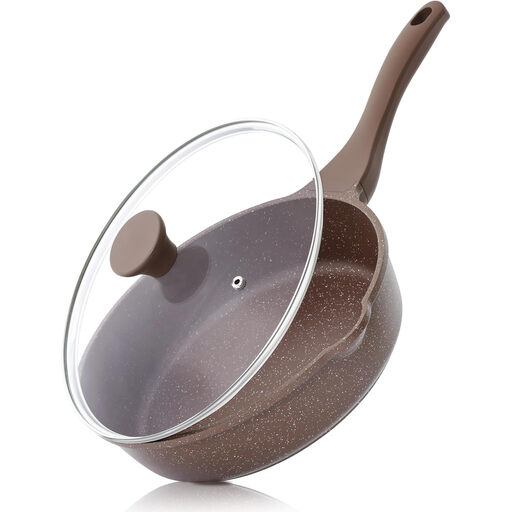
Why This Fits Their Persona: The high sides and included lid make this pan a specialist for dishes requiring more space and control, such as stews, sauces, or searing larger cuts of meat.
Instead of a compromise, this model offers a specialised function. The high sides prevent splatters and allow for cooking with liquids, which often causes problems in standard flat pans.
High capacity and versatility for sautéing, braising, and frying. The glass lid allows for excellent control over the cooking process.
We have compiled a complete, up-to-date list of products that fully meet these strict selection criteria and rigorous safety standards.
The lifespan of a ceramic coating heavily depends on its quality and how it's used. High-quality, multi-layer coatings typically last for several years with proper care (hand washing, no metal utensils, avoiding extreme overheating). Inexpensive, single-layer models can lose their non-stick properties after just a few months.
Ceramic coatings are often marketed as a healthier alternative because they are manufactured without PFAS (including PFOA and PTFE). This means that even if accidentally overheated, no potentially harmful fumes are released. It's important to look for an explicit declaration like "PFAS-free" or "PFOA-free".
This is generally not recommended. Ceramic coatings are sensitive to extreme heat and rapid temperature changes (thermal shock). Cooking on medium to medium-high heat is sufficient for most applications and protects the coating, significantly extending its lifespan. Heating the pan while empty should be avoided.