
Lieferung heute & morgen

Qualitätsgarantie

Willkommens-Angebote freischalten: KOSTENLOSE Lieferung | Bis zu 80 % RABATT | Kostenlose 30-Tage-JoyPlus-Testphase
App herunterladen
The search for the right ceramic pan can quickly become complex. The market is flooded with promises of durability and healthy cooking, but not every product delivers. As a Joybuy Product Recommendation Officer, I see every day which features truly matter and which marketing traps lead to disappointment. This guide will help you separate the wheat from the chaff and make an informed decision.
Before you buy a coated pan, you should be aware of the typical problems that often only become apparent after a few weeks of use.
To avoid these issues, you should focus on three core technical features. These define the performance and lifespan of your future ceramic frying pan.
The material of the pan's body is the foundation for good heat conduction.
The quality of the non-stick layer is the most important feature. A single layer of ceramic is often not sufficient for heavy use.
The ability to move a pan from the hob directly into the oven greatly expands your cooking options.
Based on the objective criteria above, we have identified several models suitable for different user profiles and requirements.
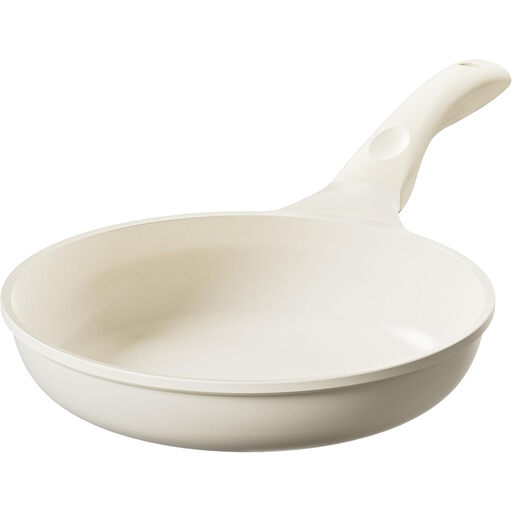
Why it's a good fit: Ideal for daily use in smaller households or for novice cooks looking for a reliable, toxin-free pan for simple dishes like eggs or vegetables without a large investment.
Offers solid basic features without exaggerated claims. The coating is explicitly declared free of PFAS, PTFE, and PFOA, and the aluminium body ensures fast, even heating, which avoids the pitfall of poor heat distribution.
Full compatibility with all hob types, including induction, and a heat-resistant Bakelite handle that stays cool on the hob.
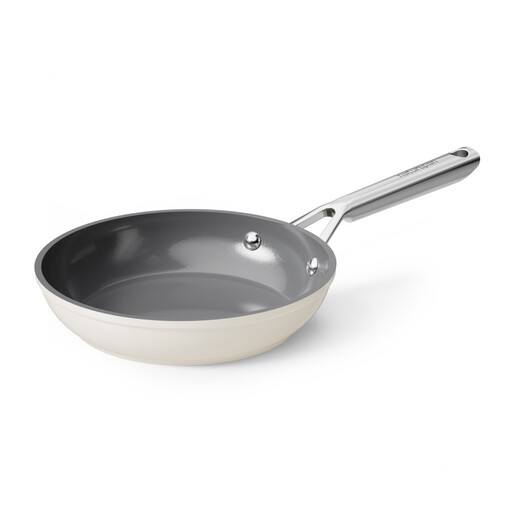
Why it's a good fit: For ambitious cooks who value maximum durability and versatility. This pan is suitable for demanding dishes that require high-heat searing followed by finishing in the oven.
Directly addresses the pitfall of poor scratch resistance with a ceramic coating reinforced with diamond and titanium particles. This provides demonstrably higher mechanical resilience and longevity compared to basic coatings.
High oven-safety up to 230 °C thanks to the solid stainless steel handle. The pan is suitable for all hob types, including induction, offering maximum flexibility in the modern kitchen.

Why it's a good fit: This set of three pan sizes (20, 24, 28 cm) covers all the needs of a family household, from a small fried egg to a large one-pan meal. The robust construction is designed for frequent use.
The three-layer ceramic coating and forged aluminium body ensure durability and excellent, even heat distribution. The riveted stainless steel handles are a clear quality feature often missing from cheaper pans.
Exceptionally high oven-safety up to 450 °C (according to the manufacturer), which vastly expands its range of use. The pans are also dishwasher-safe, simplifying cleanup in a hectic family life.
We have compiled a complete, up-to-date list of products that fully meet these strict selection criteria and safety regulations.
The lifespan of a ceramic pan heavily depends on the quality of the coating and how it's cared for. A high-quality model can last for several years with proper handling. To maximise its lifespan, you should avoid using metal utensils, never overheat the pan while empty, and preferably wash it by hand with a soft sponge, even if it is labelled as dishwasher-safe.
Yes, one of the main strengths of a good ceramic coating is its non-stick performance, which allows for cooking with very little or no fat. This is ideal for a health-conscious diet. However, a small drop of oil can improve browning results and helps to preserve the non-stick properties in the long run.
No. For a pan to work on an induction hob, its base must be made of a magnetisable (ferromagnetic) material. Many ceramic pans have an aluminium body, which is not naturally magnetic. Therefore, when buying, look explicitly for the "suitable for all hob types" label or the official induction symbol on the packaging or in the product description. This is a crucial criterion to avoid a purchasing mistake for modern kitchens.