
Lieferung heute & morgen

Qualitätsgarantie

Willkommens-Angebote freischalten: KOSTENLOSE Lieferung | Bis zu 80 % RABATT | Kostenlose 30-Tage-JoyPlus-Testphase
App herunterladen
A ceramic pan is often at the top of the wish list for anyone interested in healthy cooking and a low-maintenance alternative to traditional coatings. However, the market is flooded with products whose marketing promises often fall short in practice. As your Joybuy Product Recommendation Officer, I'll help you identify the crucial features and avoid common buying pitfalls, ensuring your next pan is a worthwhile and long-lasting addition to your kitchen.
Many buyers are disappointed after just a few months because the non-stick effect diminishes or the pan warps. This is often due to three common problems that are overlooked at the time of purchase.
To avoid a bad purchase, you should focus on three objective criteria that determine the longevity and functionality of your new pan.
The term ceramic pan technically refers to a coated frying pan using a ceramic-based material. Its quality depends on two factors:
Not every pan works on every hob.
Choose the shape that suits your cooking style.
Here are some models that represent a considered choice for different user profiles based on their objective features.
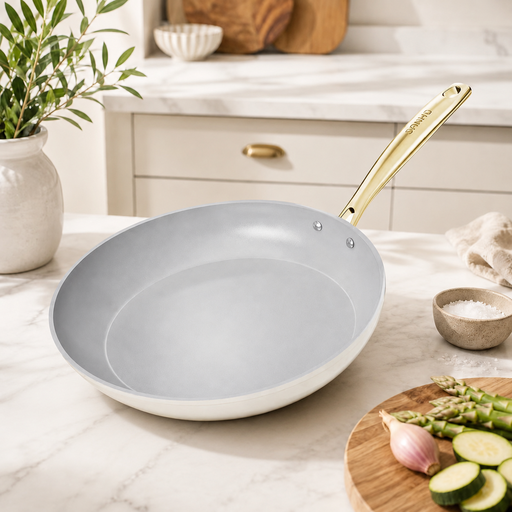
Why This Fits Their Persona: Ideal for daily, intensive use. The combination of durability, safety (PFAS-free), and versatility (oven-safe) makes it a reliable tool for the family kitchen, from quick weeknight dinners to Sunday roasts.
According to the manufacturer, the patented diamond-titanium coating is significantly more scratch-resistant than conventional ceramic pans, directly countering the problem of short-lived coatings.
High oven-safe temperature up to 260°C and an encapsulated stainless steel base for fast, even heat distribution on all hob types, including induction.
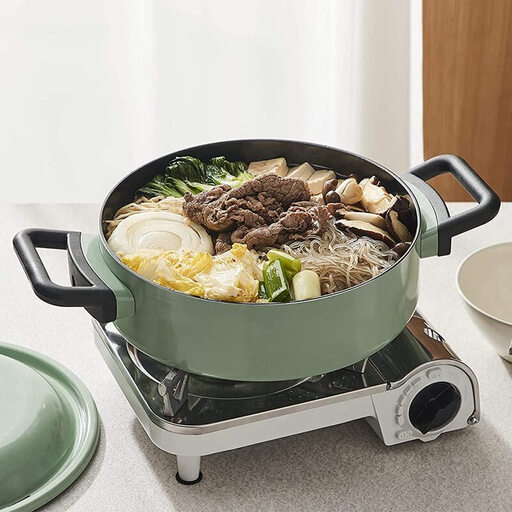
Why This Fits Their Persona: For those who value a cohesive kitchen aesthetic without compromising on functionality. The retro design and colour scheme make the pan an eye-catcher that also delivers on technical performance.
This model debunks the prejudice that design pieces can't be functional. It combines an appealing look with a solid technical foundation, including induction compatibility and a toxin-free coating.
The manufacturer's "Extended Heat Technology" (E.H.T) ensures faster heating. The titanium-ceramic coating is free of PFOA, PTFE, and other harmful substances.
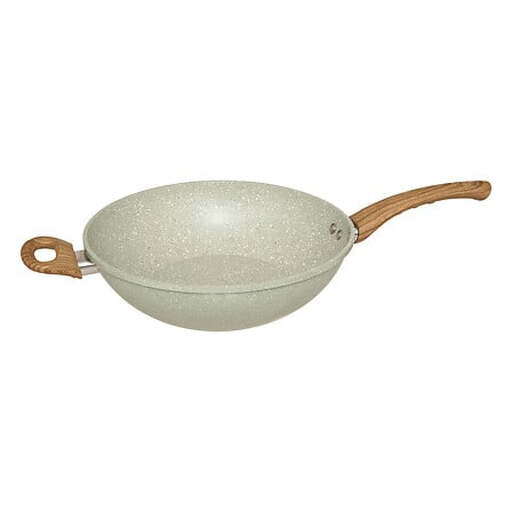
Why This Fits Their Persona: For lovers of Asian cuisine seeking a specialised tool for authentic stir-frying. The large, deep shape allows for rapid cooking at high heat and easy tossing of ingredients.
Instead of being an inadequate all-rounder, this is a dedicated wok pan. Its shape and size are specifically optimised for stir-frying, not just a marketing label on a high-sided frying pan.
The large 32 cm diameter offers plenty of space. The forged aluminium ensures even heat distribution, which is crucial for successful wok cooking.
We have compiled a complete, up-to-date list of products that fully meet these strict selection criteria and all relevant safety standards.
The lifespan of a ceramic coating heavily depends on its quality and care. Basic, thin coatings can lose their non-stick properties in as little as 6-12 months. High-quality, particle-reinforced coatings (e.g., with titanium or diamond) can last for several years with proper handling—using wooden or silicone utensils, avoiding overheating, and hand washing.
No, using metal utensils is not recommended for any non-stick pan, including ceramic ones. Although some manufacturers advertise high scratch resistance, sharp or pointed metal objects can damage the surface and shorten the life of the non-stick properties. Always use utensils made of wood, bamboo, silicone, or heat-resistant plastic.