
Lieferung heute & morgen

Qualitätsgarantie

Willkommens-Angebote freischalten: KOSTENLOSE Lieferung | Bis zu 80 % RABATT | Kostenlose 30-Tage-JoyPlus-Testphase
App herunterladen
A good ceramic pan promises healthy, low-fat cooking and easy cleanup. However, the market is flooded with products whose marketing claims often don't hold up in practice. Many buyers find that after just a few months, the non-stick properties degrade or the pan begins to warp. As your Joybuy Product Recommendation Officer, I'll help you identify the critical features and avoid common purchasing traps.
Before you make a decision, you should be aware of the three most common problems that occur with low-quality models and are often only noticed after the purchase.
To avoid buyer's remorse, focus on the technical fundamentals. These three parameters determine the performance and lifespan of your new pan.
The core of the pan is crucial for heat conductivity and retention. A solid body made of cast aluminium or a multi-layered base (sandwich bottom) ensures even heat distribution without "hot spots." If you need a ceramic induction pan, make sure the base is explicitly marked as induction-compatible. It must contain a ferromagnetic layer to work on the hob. A thick, warp-resistant base also prevents the pan from deforming.
A pan with a ceramic coating is the standard, but there are significant quality differences. Some manufacturers reinforce the coating with titanium or diamond particles to increase abrasion resistance and longevity. Such a reinforced non-stick surface is more resilient and retains its properties for longer. Look for product descriptions that mention multi-layered or reinforced coatings.
The choice of handle affects handling and versatility.
Instead of making blanket recommendations, we have identified products tailored to specific user profiles that avoid the pitfalls mentioned above.
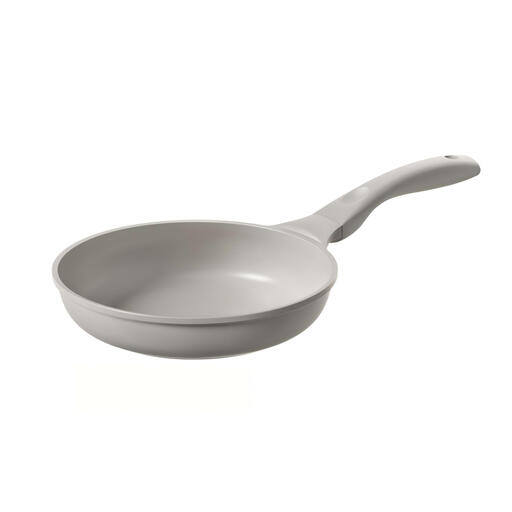
Why This Fits Their Persona: Ideal for individuals or couples looking for a reliable, all-purpose pan for daily use without a large investment. The 24cm size is perfect for fried eggs, pancakes, or searing smaller portions.
The thickened base ensures fast, even heating and is designed for all hob types, including induction. This prevents the typical hot spots found in cheaper pans.
Universal Hob Compatibility: Works on induction, gas, and electric hobs. Ergonomic Handle: The Bakelite handle stays cool and provides a comfortable grip.
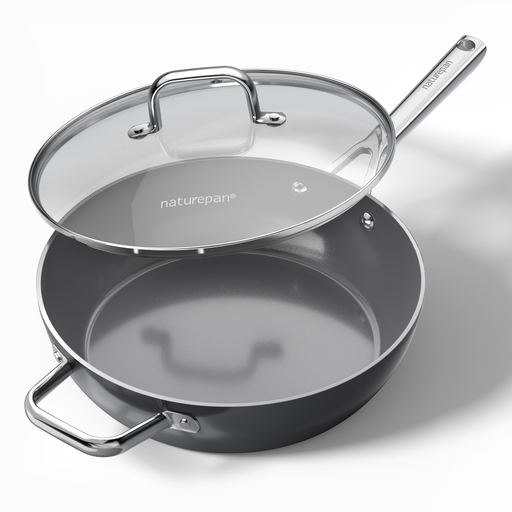
Why This Fits Their Persona: Perfect for families who cook larger quantities. The high sides and included lid make the pan ideal for braised dishes, sauces, and stews, turning it into a versatile tool for the daily kitchen.
The ceramic coating, reinforced with diamond and titanium particles, is explicitly designed for durability and resilience, counteracting the rapid wear of the non-stick effect.
High Versatility: High sides and a lid allow for frying, braising, and steaming. Oven-Safe up to 260°C: The stainless steel handle permits use in the oven.
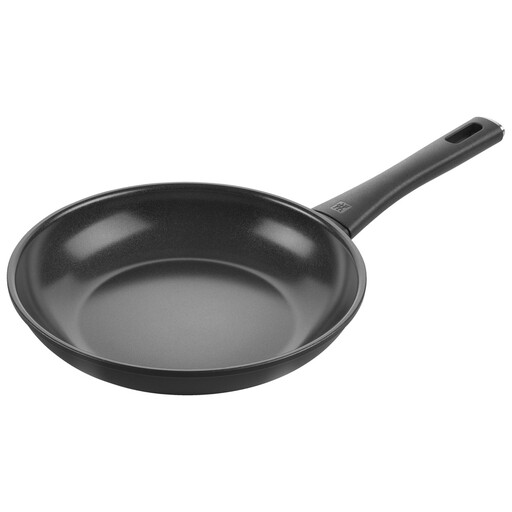
Why This Fits Their Persona: For cooks who value material quality, precise heat control, and brand reliability. The pan is designed for demanding tasks like searing steaks and then finishing them in the oven.
The forged aluminium body provides exceptionally fast and even heat distribution, minimising the risk of burning and uneven cooking—a clear mark of quality.
High-Quality Materials: Forged aluminium and CeraForce ceramic coating. High Oven-Safety: Suitable for temperatures up to 250°C.
We've compiled a complete, up-to-date list of products that fully meet these strict selection criteria and safety standards.
The lifespan of a ceramic pan heavily depends on the quality of the coating and proper care. With correct usage—which means avoiding metal utensils, not overheating the pan while empty, and allowing it to cool slowly before cleaning—a high-quality model can last for several years. Cheaper models often show signs of wear after just a few months.
Yes, healthy cooking with very little or no fat is one of the main advantages of a non-stick ceramic pan. Foods like eggs or fish slide effortlessly from the pan. Nevertheless, many manufacturers recommend using a small amount of oil, as this can extend the life of the coating.
No. For a pan to work on an induction hob, its base must be magnetisable. A ceramic induction pan therefore has a special, ferromagnetic base. When buying, always look for the induction symbol (a stylised coil) or an explicit mention in the product description. Pans made of pure aluminium or copper without a corresponding base layer are not induction-compatible.