
Lieferung heute & morgen

Qualitätsgarantie

Willkommens-Angebote freischalten: KOSTENLOSE Lieferung | Bis zu 80 % RABATT | Kostenlose 30-Tage-JoyPlus-Testphase
App herunterladen
A new ceramic plate should work well for everyday use, complement your existing crockery and remain practical over time. So when choosing one, it’s not just colour and shape that matter. Diameter, rim height, material details and cleaning instructions all help determine whether a plate is right for family meals, entertaining or commercial use.
Irregular shapes, reactive glazes and hand-painted rims can look decorative. However, they may make plates harder to stack, take up more cupboard space or require gentler cleaning. If you’re looking for a ceramic plate set for everyday use, check whether the plates are stackable and what care instructions the seller provides.
A statement that a plate is suitable for microwave use doesn’t automatically mean it can be used in an oven, on a hob or over an open flame. Ceramic can crack when exposed to sudden or extreme changes in temperature. Check the manufacturer’s instructions for each appliance, and don’t put a plate straight from the fridge into a hot oven.
A dinner plate measuring around 26 to 27 cm across works well for many main courses, but takes up more storage space than a small side plate. A soup plate should be deep enough and have a sturdy rim. For snacks, dips or sushi, rectangular plates with separate compartments can be more practical than a classic round plate.
“Ceramic plate” is a broad term. The specific material may be described as stoneware, high-fired ceramic or sandstone, for example. However, you can’t automatically infer every usage feature from the material name alone. The product details are what matter:
With decorative plates, check whether they are actually intended for contact with food. A plate sold primarily as a wall decoration or decorative object shouldn’t be used for serving food unless it is labelled accordingly.
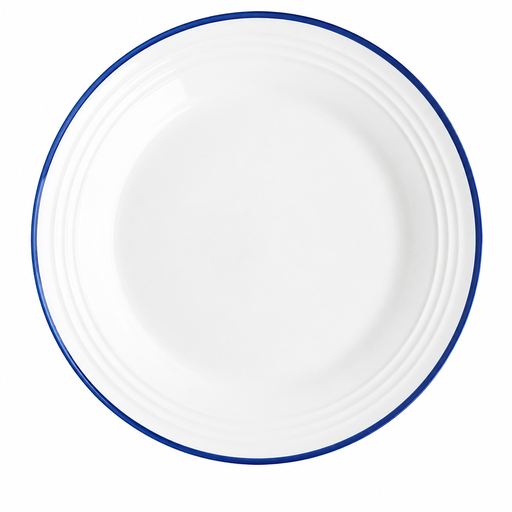
Why it suits this profile: Measuring around 20.3 cm across, this single plate is a good addition to a smaller household, or as an extra side plate, breakfast plate or dessert plate.
The clear size information helps you judge how much storage space you’ll need. According to the product description, the plate is suitable for use in the microwave, dishwasher and steriliser.
White glaze with a blue rim; versatile enough for pasta, salads, breakfast, desserts and smaller main courses.
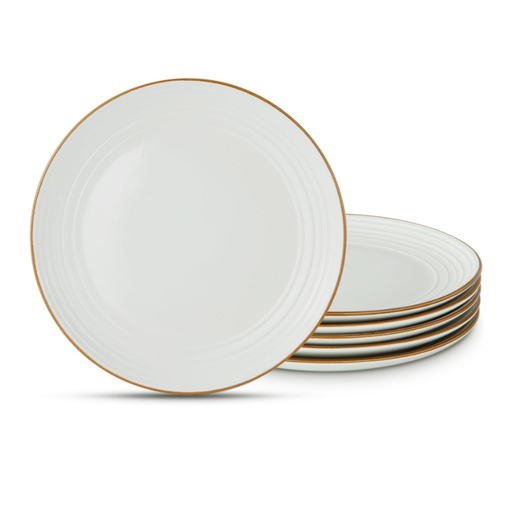
Why it suits this profile: This plate set includes six large plates, each measuring 26.5 cm across. It’s designed for households that need matching crockery for everyday meals and entertaining.
Six matching plates mean you’re less likely to end up with a mix of different sizes. The product information says they’re stackable and suitable for the dishwasher and microwave; handle the hand-painted details with care.
Stoneware with a food-safe glaze, six plates per set and a stackable shape for easy storage.
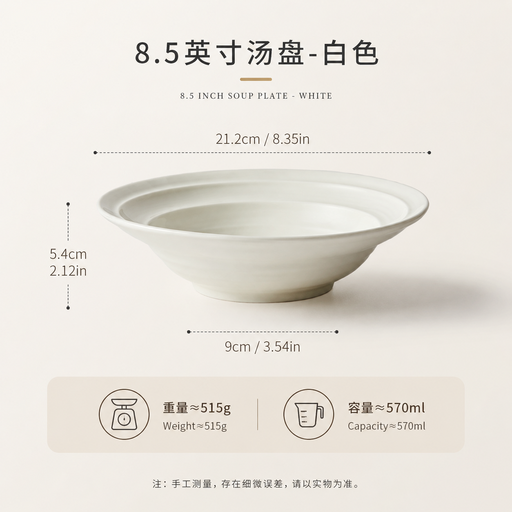
Why it suits this profile: With a diameter of 21.2 cm and a capacity of around 570 ml, this soup plate is suitable for soups, pasta, stews, salads and breakfast.
The stated capacity makes it easier to choose a plate for liquid dishes. According to the product description, it’s dishwasher- and microwave-safe; this doesn’t automatically mean it’s suitable for the oven.
A moderate depth helps prevent spills, while the smooth glaze and versatile design make it suitable for home use and catering environments.
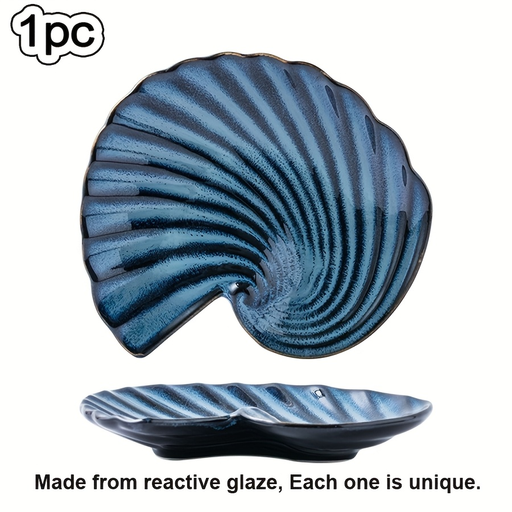
Why it suits this profile: Its irregular shell shape and reactive glaze add a decorative touch to salads, starters, sushi or side dishes.
The product details clearly state that the plate has an irregular shape. This makes it easier to check whether it will fit your storage space and match your existing crockery before you buy.
High-fired ceramic, a food-safe reactive glaze, and stated suitability for microwave and dishwasher use.
We’ve put together a complete, regularly updated list of products that meet these strict selection criteria and fully comply with the safety regulations in force in the EU.
Ceramic plates stay looking their best for longer if you avoid using hard metal utensils or abrasive cleaners on them. Before first use, wash them according to the manufacturer’s instructions. Use soft sponges on reactive glazes and hand-painted details. Plates with cracks, chips or sharp edges should no longer be used for food.
For restaurants, cafés, hotels and catering businesses, consistent availability of replacements, stackability and having enough plates are also important. A single decorative plate may be suitable for presentation, while a plate set can make day-to-day operations easier to organise.
It depends on the individual model. The manufacturer must state that it’s suitable for microwave use. Plates with metal decorations or glazes that aren’t specifically labelled as microwave-safe shouldn’t be used in the microwave. Avoid sudden temperature changes, even with approved models.
There’s no single answer. It depends on the material, glaze, how the plate is used and stacked, and how often it’s exposed to temperature changes. Cracks, chips and sharp edges are signs that it’s time to stop using the plate.
A single plate is a good choice if you want to add to your existing crockery or need a particular style, such as a side plate or soup plate. For families, regular entertaining or catering, a set usually offers consistent sizes and makes organising your crockery easier. Before you buy, compare the number of plates, their diameter and the care instructions.