
Lieferung heute & morgen

Qualitätsgarantie

Willkommens-Angebote freischalten: KOSTENLOSE Lieferung | Bis zu 80 % RABATT | Kostenlose 30-Tage-JoyPlus-Testphase
App herunterladen
Ceramic tableware combines a robust material feel with a wide variety of shapes, colours and uses. Whether it's a ceramic mug for coffee at the office, tea cups for the afternoon or ceramic bowls for soup, ramen and cereal – the choice is vast. However, this is precisely where typical buying problems lie. Product images and marketing claims don't always show whether a piece of tableware is actually practical in daily life.
This buying guide will help you check the important details and choose ceramic cups, coffee mugs and bowls that suit your needs.
A cup with 250 ml is suitable for cappuccino or smaller coffee portions, for example. If you prefer a large milky coffee or tea, you'll need something closer to 325 to 390 ml. For particularly large drinks or a filling soup, 450 to 500 ml can be a sensible choice.
So don't just focus on the look – pay attention to the capacity in millilitres. A very large vessel can be impractical on small saucers and will take up more space in your cupboard. Small cups quickly look out of place with large drinks.
Microwave-safe tableware is not automatically suitable for the oven. Conversely, a ceramic mug labelled as oven-safe should not be used on a hob, an induction plate or an open flame.
Check the manufacturer's information for each individual item. For the STAUB Ceramic Cup in Lemon, for example, microwave and oven use up to 300 °C are specified. The YumiPLUS Blue Trapezoidal Cup is described as suitable for microwave and dishwasher, but not for the oven. Such differences are important for your buying decision.
Ceramic can break on impact. A rapid change from very cold to very hot can also cause thermal shock. So don't put a frozen or cold mug straight into the microwave, and don't place a hot vessel directly onto a very cold surface.
Avoid using abrasive scouring pads or metal cleaners on matt glazes. Even if a product is labelled as dishwasher-safe tableware, it's worth checking the maximum temperature and the instructions for placing it in the machine.
The following guidelines can help you choose coffee mugs and tea cups:
Diameter and height are also important. Wide, shallow vessels are often easier to place under coffee machines. Deep soup bowls or large bowls are better for broth and noodle soups, but they need more storage space.
Ceramic, stoneware and porcelain differ in weight, surface and heat retention. For daily use, a smooth, densely glazed surface is most important, as food residue and drink stains are easier to remove from it.
For coloured or matt surfaces, follow the care instructions. Details such as "lead-free and cadmium-free glaze" or confirmation of compliance with EU Regulation (EC) No. 1935/2004 for materials in contact with food provide extra guidance. Such information should be clearly stated in the product description.
If you have little time for hand washing, look specifically for dishwasher-safe tableware. For work or a family home, stackable tableware can also make a practical difference. Look out for:
"Stackable" doesn't mean that all models should be piled on top of each other indiscriminately. Stability can be limited, especially with differently shaped ceramic cups.
The following products cover different requirements. Information on material, volume and features is based on the respective product descriptions.
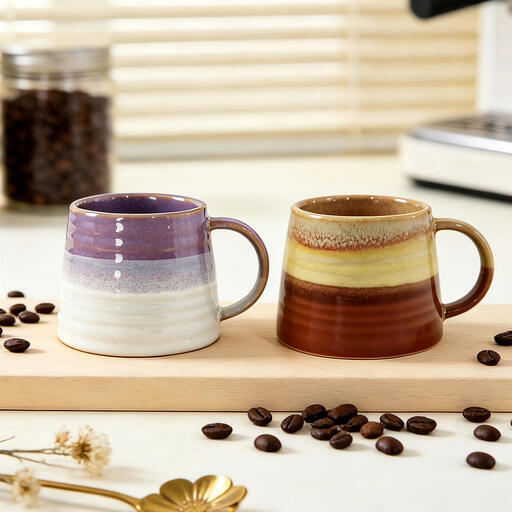
Why this product fits the profile: This mug holds approximately 282 ml and is suitable for coffee, hot chocolate or milk tea. Its ergonomic shape is designed for the kitchen, office and breakfast table.
The stated volume prevents you from choosing the cup based on its shape alone. Microwave and dishwasher suitability are explicitly mentioned; oven use is not intended according to the description.
Approx. 282 ml capacity, integrated handle and a smooth, glazed ceramic surface.
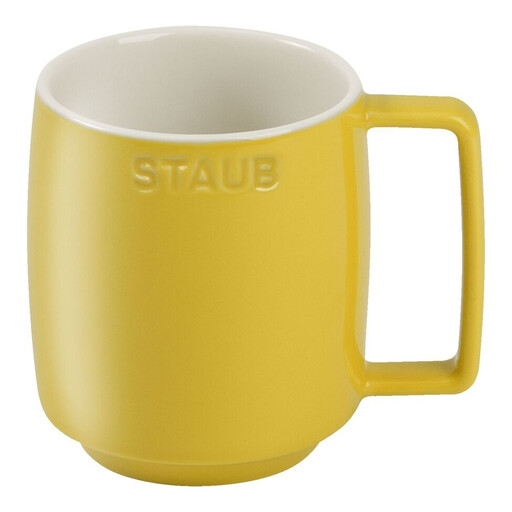
Why this product fits the profile: This 350 ml mug combines a stackable shape with several clearly stated uses for the home and coffee break.
The product details specify concrete temperature limits up to 300 °C and suitability for oven, microwave, freezer and dishwasher. Direct heat sources remain excluded.
350 ml volume, ergonomic handle and stackable design; suitable for hot drinks and small oven dishes.
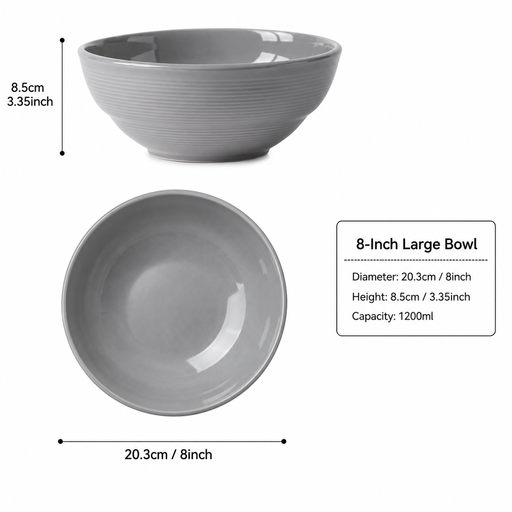
Why this product fits the profile: This bowl holds approximately 1,200 ml and has a 20.3 cm diameter, making it ideal for ramen, noodle soups, pasta, salads and large breakfast portions.
The diameter, height and capacity make it easier to assess the actual use before buying. The details also state that it is suitable for the dishwasher, microwave and fridge.
Large capacity, glossy glaze and versatile use for main courses, soups and breakfast.
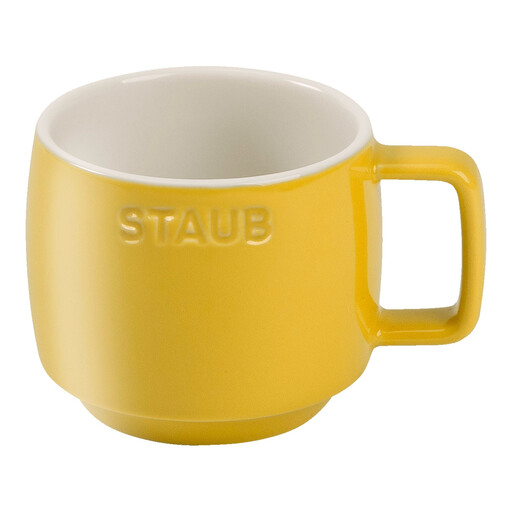
Why this product fits the profile: The compact size is ideal for cappuccino, latte and smaller hot drinks in the kitchen or office.
The clearly stated volume of 250 ml reduces the risk of buying the wrong size for small coffee portions. Suitability for oven, microwave and dishwasher is confirmed.
250 ml capacity, ergonomic handle and temperature resistance up to 300 °C according to the product details.
We've put together a full, regularly updated list of products that fully meet these strict selection criteria and the safety regulations in force in the EU.
That depends on the specific product. A relevant note must be included in the product description or on the packaging. Be especially careful with cups that have a gold rim, metal decorations or an unknown glaze. After heating, the vessel itself can become hot; use a heat-resistant glove if needed.
The lifespan depends on the material, glaze, use and care. Knocks, abrasive cleaners and thermal shock can damage the surface or cause cracks. Dishwasher-safe tableware can reduce cleaning effort, but it won't protect against breakage from being dropped.
Ceramic cups are often more compact and suit smaller coffee portions. Ceramic mugs usually offer more capacity and are ideal for tea, hot chocolate or large drinks. What matters most are volume, handle, base stability, cleaning instructions and storage space. Fans of Japanese tableware will also find bowls and mugs with minimalist shapes and decorative glazes for a coordinated table setting.