
Lieferung heute & morgen

Qualitätsgarantie

Willkommens-Angebote freischalten: KOSTENLOSE Lieferung | Bis zu 80 % RABATT | Kostenlose 30-Tage-JoyPlus-Testphase
App herunterladen
A carefully chosen ceramic vase can transform a room. It not only serves as a container for flowers but is also a strong design element in its own right. However, the market is flooded with products whose appearance promises more than their function delivers. Before you make a decision, it's helpful to know the typical pitfalls that often only become apparent after the purchase.
This guide will help you identify the crucial features to find a decorative vase that is both aesthetically pleasing and practical for everyday use.
Many buyers focus on the design and overlook fundamental functional aspects. This often leads to disappointment and unnecessary expense.
To avoid a bad purchase, you should check three central criteria. These provide insight into the quality and longevity of your future flower vase.
Ceramic is a general term for various materials that differ in firing temperature and density.
Always check the product description: Look for terms like "waterproof," "suitable for fresh flowers," or "internally glazed." If this information is missing, assume the vase is intended only for decorative purposes or dried arrangements.
The shape determines not only the style but also the stability. A good table vase or a large floor vase should have a low centre of gravity.
Instead of making a blanket recommendation, we have matched products to different needs and style preferences.

Why this model works: This matte white vase embodies the core of minimalist design with its clean shape and subtle vertical texture. It blends seamlessly into modern or Scandinavian-inspired interiors without being obtrusive.
The wide, round base ensures high stability, even when used as a vase for pampas grass. The manufacturer also provides clear instructions on its water resistance.
Crafted from high-temperature fired ceramic, which promises high material density and durability. The matte surface is also more resistant to fingerprints.
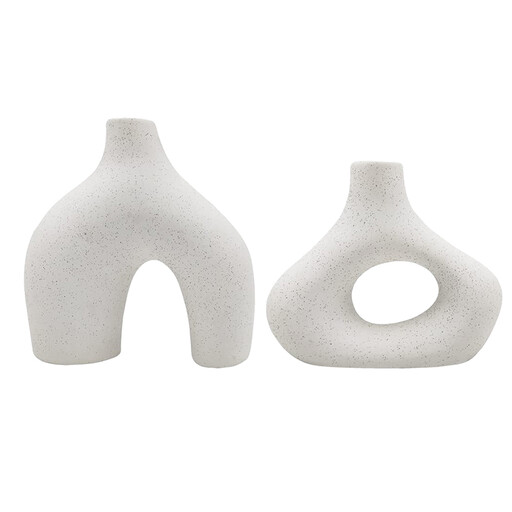
Why this model works: This vase set breaks with classic shapes and becomes a work of art with its hollow, asymmetrical design. It is the ideal complement for interiors with a Boho decor style, which thrives on individuality and natural forms.
According to the manufacturer, the vases are treated with a waterproof coating. This directly addresses the porosity issue, allowing them to be used for fresh flowers.
The set offers flexible decorating options with its two different yet coordinated shapes. The handcrafted quality ensures a unique character.
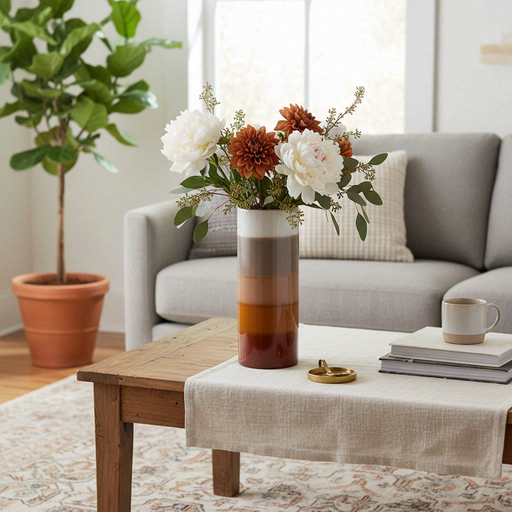
Why this model works: At 40 cm tall and featuring a striking, multicoloured stripe pattern, this large vase is a guaranteed eye-catcher. It is perfect for adding a bold, rustic accent to an otherwise simple room.
The 100% clay material and the cylindrical profile with a 15 cm diameter give the vase substantial weight, ensuring good stability and minimising the risk of tipping at this height.
The hand-milled surface and the muted yet varied colours make each piece a unique item with a characterful, rustic appeal.
A particularly high-quality and durable form of ceramic is porcelain. It is fired at very high temperatures, making it completely waterproof and extremely robust.
We have compiled a comprehensive, up-to-date list of products that meet these strict selection criteria and quality standards.
Matte surfaces, such as on a matte black vase or white vase, are more sensitive to scratches and harsh cleaners. Use a soft, damp cloth, with a drop of mild dish soap if necessary. Avoid abrasive cleaners or hard brushes, as they can damage the texture.
No. As described above, water resistance depends on the material and any internal glazing. Porous materials like terracotta can absorb water without a protective layer and transfer it to the surface they stand on. Always check the manufacturer's product description for a corresponding note.
The main difference lies in the raw materials (especially the high proportion of kaolin) and the higher firing temperature (over 1,300 °C). This causes the material to fuse into a dense, non-porous structure, a process known as sintering. This makes porcelain harder, more resilient, and already waterproof even in its unglazed state.