
Lieferung heute & morgen

Qualitätsgarantie

Willkommens-Angebote freischalten: KOSTENLOSE Lieferung | Bis zu 80 % RABATT | Kostenlose 30-Tage-JoyPlus-Testphase
App herunterladen
A ceramic vase can be used to arrange flowers or as a standalone decorative feature. However, colour and shape are not the only factors to consider when buying one. Unclear measurements, an unsuitable neck diameter or unconfirmed water resistance can often lead to disappointing purchases. This guide explains what to look for when choosing a decorative vase for your living room, bedroom, office or dining room.
A vase measuring 20 cm in height may be slender and space-saving, or its wide body may require considerable surface space. Always check the height, width and depth. A small vase with a compact base is ideal for a small shelf. A large vase, on the other hand, needs a stable, level position and sufficient clearance from walkways.
With ceramic vases, the interior coating determines whether water can be left inside for extended periods. Some models are specifically designed for fresh flowers, while others are mainly marketed as vases for pampas grass or dried flowers. If the product description does not confirm that the vase is suitable for water, you should only use dry arrangements or a suitable insert.
Ridges, embossed details and unusual silhouettes can collect dust and make cleaning more difficult. A very narrow opening can also limit your choice of flowers. Before buying, consider whether you intend to use the ceramic vase as an everyday home accessory, as a flower vase with water or only for special occasions.
Ceramic, porcelain, dolomite and terracotta differ in weight, finish and appearance. A matt glaze has a subtle look and often complements a minimalist vase or Scandinavian interior. Ribbed surfaces create more texture but require careful cleaning.
Look out for specific details such as:
A coating alone is not sufficient proof that a vase is suitable for every type of use. If you are unsure, contact the retailer to confirm whether it is waterproof.
A narrow opening is useful for individual stems, eucalyptus or pampas grass, as it keeps the stems together. A wider neck is better suited to voluminous bouquets. A rounded shape looks more stable, while a tall, slender vase takes up less depth on furniture but must be positioned securely to prevent it from tipping over.
A white vase usually blends neutrally into modern, classic or bright rooms. A black vase creates a strong contrast and suits pared-back interiors. A beige vase or terracotta version feels warmer and works well with wood, linen and natural tones. For a boho vase, matt finishes, organic shapes and neutral colours are typical features to look for.
If you have several decorative objects, a ceramic vase set can create a coordinated arrangement. Check whether the individual vases have different heights and whether they can be used together or separately.
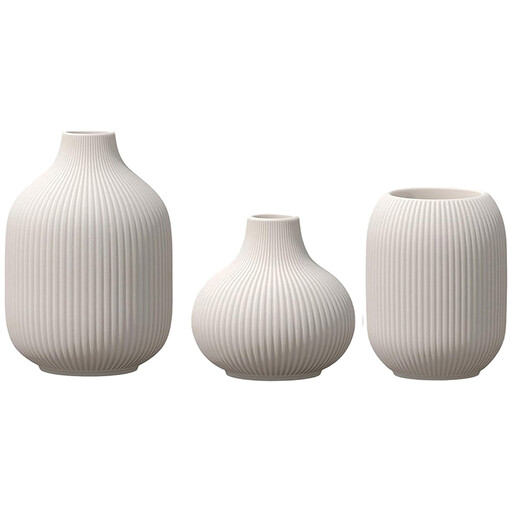
Why this product suits this profile: The three-piece set includes three different-sized vases for shelves, desks or side tables. The beige colour and ribbed design work well with modern, classic and homely interiors.
The stated 15 cm height makes it easier to plan small surfaces. With three individual vases, you do not need to buy one oversized vase for different arrangements.
Three ceramic vases with a ribbed finish that can be displayed together or separately.
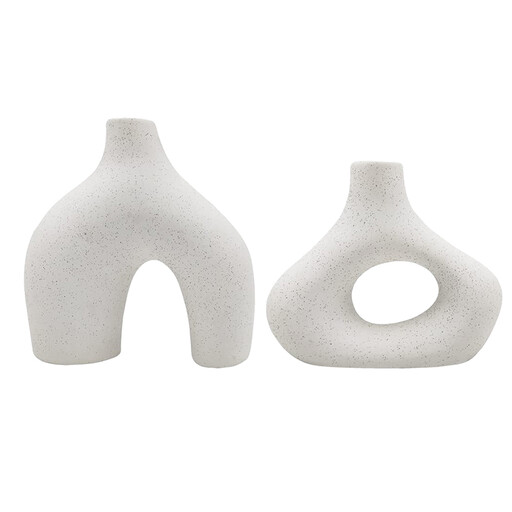
Why this product suits this profile: The two white vases combine different heights with an irregular, hollow shape. According to the product information, they are designed for fresh and dried arrangements.
The product description states that the vases have a water-suitable coating. Nevertheless, check before first use that both vases are fully coated on the inside.
Two-piece set, sizes of approximately 14 and 19 cm, and white ceramic with a distinctive shape.

Why this product suits this profile: The slender shape is designed for dried stems, pampas grass and individual branches. At approximately 20.5 cm tall, it is suitable for sideboards, desks or chests of drawers.
The product information recommends decorative use and advises checking whether it is suitable for water before filling it. This helps avoid the common confusion between using a vase for dried flowers and using it for fresh flowers.
High-temperature-fired ceramic, a white finish and slender dimensions for dry arrangements.
Place every ceramic vase on a level, stable surface. Particularly tall models should not be placed near an edge or within reach of small children and pets. Use a soft cloth for cleaning; abrasive products are unsuitable for matt or textured surfaces. If you use the vase with water, empty it regularly and dry the inside. This helps reduce leftover water, deposits and unpleasant odours.
We have put together a complete, regularly updated list of products that fully meet these strict selection criteria and the safety regulations applicable in the EU.
No. The key factors are the interior coating and the manufacturer’s express statement that the vase is suitable for water. If this information is missing, use the vase as a precaution only for dried flowers, pampas grass or artificial branches.
A vase for pampas grass should be sufficiently tall and stable. A narrow neck keeps the stems together, while a heavy or wide base makes tipping less likely. Also check that the opening is wide enough for the number of stems you want to display.
With normal use, ceramic can last for many years. Its actual lifespan depends on the material thickness, workmanship, location and how it is handled. Impacts, frost, significant temperature fluctuations and abrasive cleaning products can damage the surface or rim.