
Lieferung heute & morgen

Qualitätsgarantie

Willkommens-Angebote freischalten: KOSTENLOSE Lieferung | Bis zu 80 % RABATT | Kostenlose 30-Tage-JoyPlus-Testphase
App herunterladen
A ceramic vase can make a striking focal point on a table, shelf or windowsill. Before you buy, though, it’s worth checking the dimensions, opening and material carefully. Product photos can give a misleading impression of size, and a decorative finish doesn’t necessarily mean a vase is suitable for water.
This buying guide will help you choose a small vase, a decorative vase for dried flowers or a matching vase set using clear, practical criteria.
Vases can look larger or smaller in product photos than they are in real life. Height and diameter are key if you’re choosing a vase for a shelf or small side table. A compact vase around 10 cm wide takes up considerably less space than one with a 15 cm diameter.
Before you buy, check:
Not every ceramic vase is suitable for fresh flowers. Check whether the inside is glazed and whether the product description says it can hold water. This matters less if you’re choosing a vase for dried flowers or pampas grass.
If the details aren’t clear, use the vase for dried flowers or artificial branches, or place a separate waterproof insert inside. This helps protect wooden surfaces, delicate tabletops and shelves from moisture.
A narrow opening keeps single flowers and thin branches upright. It’s less suitable for large bouquets or several thick stems. For pampas grass, eucalyptus and dried flowers, a small opening can be an advantage as it keeps the stems together.
Ceramic, stoneware and porcelain vary in density, finish and weight. A consistently made ceramic vase can feel sturdy enough for everyday use, but this doesn’t replace checking details about its durability or suitability for water.
Look out for the following:
On models with a handmade look, variations in colour and texture may be part of the design. If you’re looking for a uniform appearance, check the product photos and description for details of any colour variations.
A small vase works well on bedside tables, desks, bathroom shelves and narrow bookcases. A taller vase with a wider base may be better proportioned on a larger dining table or console table.
As a general guide:
A wide, low vase has a low centre of gravity. Tall, narrow designs should be placed on a flat, stable surface and kept out of reach of children and pets.
A modern vase with clean lines suits minimalist and Scandinavian interiors. A boho vase or one with a terracotta look complements natural materials, baskets and textiles. For farmhouse décor, look for matt finishes, muted colours and rustic shapes.
As well as complementing your room, your vase should suit what you plan to put in it:
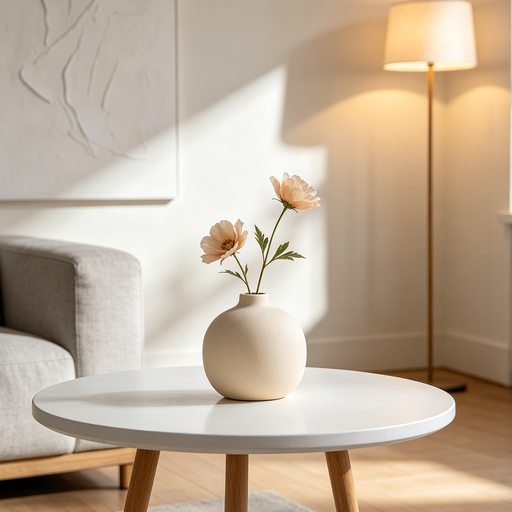
Why it suits this shopper: According to the product description, this compact, rounded vase is around 10 cm wide and 9.5 cm tall. It’s a good fit for small tables, bedside tables, desks and shelves.
The listed dimensions make it easier to work out how much space you’ll need before buying. The narrow opening is designed for single flowers, dried flowers and thin branches.
Ceramic body, neutral beige colour and, according to the product description, a fully sealed interior to hold water without leaks.
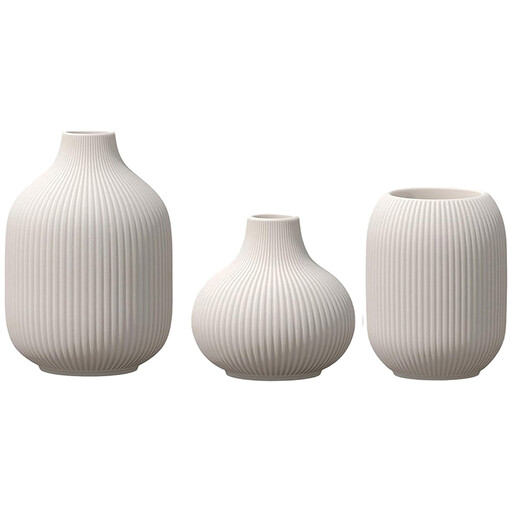
Why it suits this shopper: This vase set includes three different sizes, each with a ribbed finish. Display them together as an arrangement or use them individually in the living room, bedroom or office.
The product description gives the dimensions of all three vases and notes their ribbed ceramic finish. This makes it easier to arrange them to suit different spaces, rather than choosing based on a single photo.
Three vases in neutral beige shades, with a textured finish; designed to be displayed together or separately.

Why it suits this shopper: According to the description, this 15 cm vase is suitable for fresh flowers in water, as well as artificial and dried arrangements. It complements modern, minimalist and rustic interiors.
The description specifically states that the vase can hold water and has a water-resistant finish. Hand-washing with a mild detergent is recommended for care.
15 cm tall, with a frosted finish; suitable for fresh flowers, dried flowers, pampas grass and artificial arrangements.
We’ve put together a comprehensive, regularly updated list of products that meet these rigorous selection criteria and the safety regulations in force across the EU.
Ceramic surfaces can usually be cleaned with a soft cloth. Abrasive cleaners may alter matt glazes, colours or textured finishes. If you use the vase for water, empty it regularly and dry the inside.
Place each table vase on a flat, sturdy surface. Tall designs and heavy branches need a stable base. If you have children or pets at home, choose a spot out of their reach.
A vase with a stable base and a fairly narrow opening is a practical choice for pampas grass. Its height should suit the volume of the stems. A small vase is fine for a light dried arrangement, while larger stems need a taller, heavier design.
No. Check whether the product description mentions a glazed or sealed interior and confirms that the vase is suitable for water. If this information is missing, using it for dried flowers or artificial branches is the lower-risk option.
How long it lasts depends on the material, craftsmanship, where it’s placed and how it’s handled. Ceramic can last for years as part of your home décor, but it can be damaged by knocks or falls. Placing it securely, cleaning it gently and avoiding overloading it can help reduce the risk of common damage.