
Lieferung heute & morgen

Qualitätsgarantie

Willkommens-Angebote freischalten: KOSTENLOSE Lieferung | Bis zu 80 % RABATT | Kostenlose 30-Tage-JoyPlus-Testphase
App herunterladen
A ceramic vase can hold fresh flowers, dried flowers or artificial flowers, while also serving as a decorative feature in its own right. But looks aren’t the only thing to consider when buying one. Unclear dimensions, a delicate finish or an unsuitable opening can mean that a vase gets little use in everyday life.
This guide explains which details to check before you buy and which styles suit different homes.
A vase can look much larger or smaller in photos than it will in your home. Always check the height, diameter and opening size. A 15 cm-high table vase is well suited to a sideboard or small dining table, while a large ceramic vase measuring 30 to 40 cm high needs more space and a stable position.
Textured glazes, matt finishes and coloured stripes can make a decorative vase stand out. However, they may be more sensitive to abrasive cleaning products or collect dust in recessed areas. Take care to follow instructions such as ‘clean with a soft cloth’. This is especially important for vases with relief, grooves or handcrafted details.
Water resistance matters less in a vase intended for dried flowers. For fresh flowers, however, the product description should specifically say that it can be used with water. Some products don’t give details of the inner coating. In that case, it’s best to use the vase for dried or artificial flowers, or with a separate waterproof liner.
Ceramic, earthenware, dolomite, porcelain and terracotta differ in their material structure and finish. The product description should clearly state what the vase is made from. For example, the Premier Housewares Sorrell Small Ceramic Vase is listed as 95% clay and 5% glaze. According to the product information, it should be cleaned with a soft cloth; abrasive cleaners are not recommended.
A rustic vase made from terracotta suits country, boho or farmhouse interiors. A smooth, single-colour finish tends to look more understated and can be used as a modern vase in a range of room styles.
For a table vase, width and base size are particularly important. A tall, narrow shape needs a stable surface and shouldn’t be placed near an edge. If you have children or pets, choose a position that’s out of their reach.
For taller styles, consider the weight of the flowers too. A wide base is an advantage if you’re arranging heavy branches or a large bouquet. Not all products state a maximum load, so avoid overfilling a vase with heavy arrangements.
The opening determines which flower arrangements will work well. A smaller opening groups individual branches or slim dried flowers together. A wider opening suits full bouquets, but can look less tidy with just a few stems.
Before you buy, think about whether you’ll mainly use the flower vase for:
A vase that doesn’t need water can be particularly easy to use in an office, bedroom or hallway.

Why this product suits this profile: At around 15.3 cm high and wide, this vase is well suited to small tables, shelves or a compact display in the living room.
The exact dimensions make it easier to plan where to put it. Care instructions recommend a soft cloth and mild soap; abrasive cleaners are not advised.
Terracotta construction, no assembly required and a rustic boho style for a table, shelf or mantelpiece.
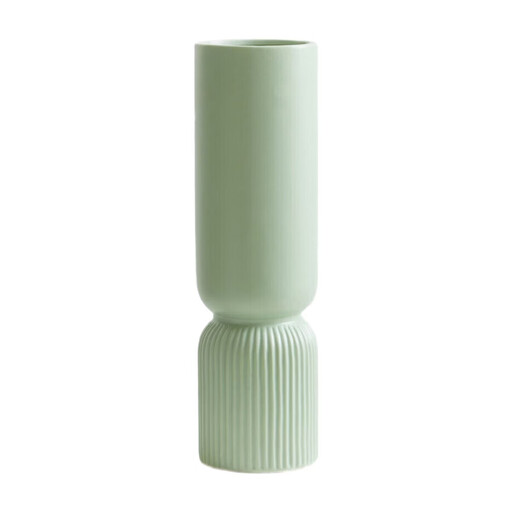
Why this product suits this profile: At 35 cm high, this vase combines a smooth upper section with a ridged base. It makes a striking feature in a modern living room, office or hallway.
The product details give the height and base dimensions as 10 × 10 cm, so you can check how much space you’ll need in advance.
Made from 100% dolomite according to the product information, with a capacity of 4,100 ml. Clean with a soft, damp cloth.

Why this product suits this profile: The understated beige colour and matt finish complement modern, minimalist or Scandinavian interiors. This vase is designed for fresh flowers, artificial flowers and dried flowers.
The product description confirms that it can be used with water and hand-washed with mild soap, making it clearer that it’s suitable for fresh flowers.
Made from porcelain according to the product information, with a matt glaze and versatile styling on a table, mantelpiece or sideboard.
We’ve put together a complete, regularly updated list of products that meet these strict selection criteria and fully comply with the safety regulations in force in the EU.
Place your ceramic vase on a flat, stable surface. Tall or narrow styles should be kept somewhere they’re less likely to be knocked. A soft cloth is often all you need to clean a vase. Don’t use abrasive cleaners if the product description advises against them.
If you use the vase with water, empty it regularly and dry the inside. This helps prevent deposits from building up. Dried flowers only need the occasional dusting. Also make sure dry grasses are kept away from naked flames and hot lights.
No. Check whether the manufacturer says it can be used with water or has a waterproof inner surface. If this information isn’t available, it’s safer to use the vase with dried or artificial flowers, or a waterproof liner.
It depends on where you’ll put it and what you’ll arrange in it. Around 15 cm is often easier to place on a coffee table, shelf or small side table. A large ceramic vase measuring 30 to 40 cm high is better suited to the floor, a console table or a large sideboard. Measure the available space before you buy.
A soft, damp cloth is usually enough. For tougher marks, you can use mild soap if the product description allows it. Abrasive cleaners, hard-bristled brushes and harsh chemicals can damage the glaze or texture.