
Lieferung heute & morgen

Qualitätsgarantie

Willkommens-Angebote freischalten: KOSTENLOSE Lieferung | Bis zu 80 % RABATT | Kostenlose 30-Tage-JoyPlus-Testphase
App herunterladen
A ceramic bowl set can cover breakfast, soup, pasta and side dishes – provided the size, material and care instructions suit your household. Many disappointing purchases are not caused by the design, but by unclear capacity specifications, impractical shapes or a lack of information about microwave and dishwasher use.
A bowl with a capacity of 1,200 ml may look generously sized on paper. However, filling it right to the brim can make serving hot soup or ramen impractical. For main meals, you should therefore distinguish between the stated total capacity and the amount that can actually be filled comfortably.
For pasta, salad and large portions, wide pasta bowl sets holding around 1,000 to 1,200 ml are worth considering. For cereal, rice or side dishes, 500 to 700 ml is often sufficient. A soup bowl set should also be deep enough to prevent liquids from easily spilling over when carried.
Ceramic is a broad term. Porcelain, classic ceramic tableware and stoneware bowls differ in weight, wall thickness, surface finish and appearance. Stoneware is fired at a high temperature and many sets are designed for everyday use. Even so, you should check the specific information on scratch resistance, glaze and care requirements.
Decorative reactive glazes may have slight variations in colour and texture. This is not a defect if the product description identifies it as a characteristic feature. If you prefer a completely uniform dinner service, look for simple glazes and clear colour specifications instead.
Microwave-safe bowls must be explicitly labelled as microwave-safe. You should also take care with ceramic bowls featuring metal rims or metallic decorative elements. Dishwasher-safe bowls are convenient for cleaning, but matt glazes, raised details and delicate decorations may require gentler treatment.
Thermal shock remains a relevant risk: a cold bowl should not be exposed immediately to very hot contents or high microwave power. Bowls that are damaged, cracked or chipped should no longer be used.
A ramen bowl is usually taller and holds broth together with noodles and toppings. By contrast, wide Japanese bowls are often also suitable for pasta, curry, rice dishes and salad. Small serving bowls are intended for dips, side dishes or snacks and do not replace a full-sized soup or pasta bowl.
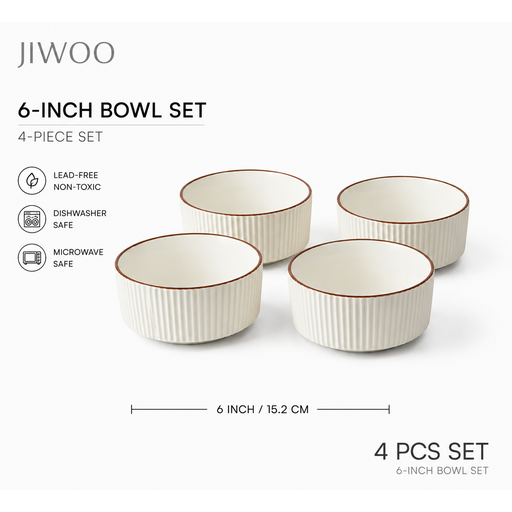
Why this product suits this profile: This 4-piece set, with bowls measuring around 15 cm in diameter, is suitable for rice, soup, cereal, fruit, desserts and side dishes. The size covers typical everyday uses without taking up much storage space.
The product description clearly states the set size, diameter and suitable dishes. This makes it easier to assess its practicality for everyday use than descriptions focused solely on design.
4 bowls with a vertical design, listed as microwave- and dishwasher-safe.
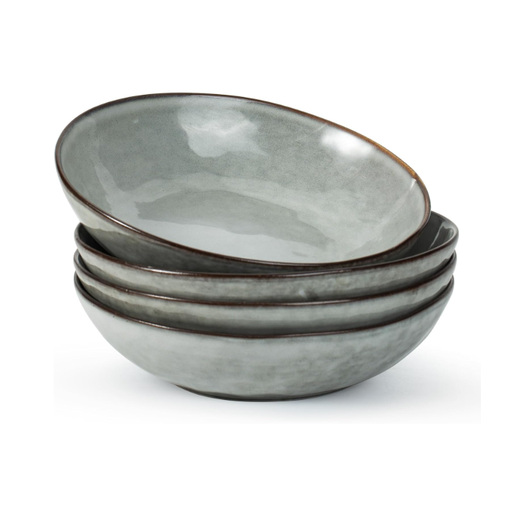
Why this product suits this profile: The four stoneware bowls measure 21.5 cm in diameter and are described as suitable for pasta, salads, noodles, rice, soup and desserts. The reactive grey glaze creates individual colour variations.
The manufacturer points out that the glaze may vary. If you are looking for a handcrafted appearance, you can take these variations into account before buying.
Stoneware, stackable and listed as suitable for microwave and dishwasher use.
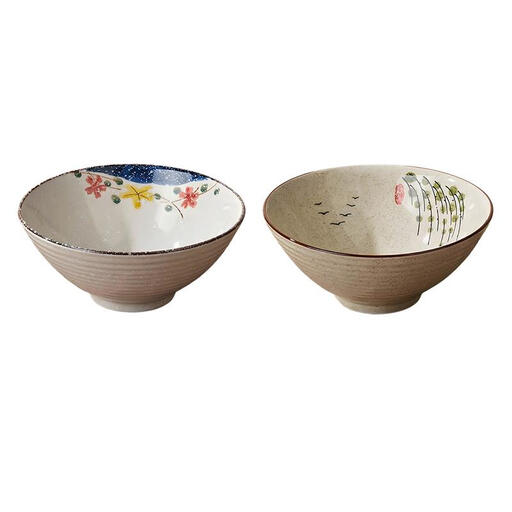
Why this product suits this profile: These two large Japanese ceramic bowls, each with a capacity of 1,200 ml, are designed for ramen, soup, pasta, salad and rice dishes. They are particularly well suited to couples or households that serve generous portions.
The capacity is clearly stated as 1,200 ml per bowl. It is also specified that the bowls are not intended for use on a hob or in an oven.
Large capacity, underglaze decoration and listed as microwave-safe.
We have put together a complete, regularly updated list of products that fully meet these strict selection criteria and the safety regulations applicable in the EU.
Not automatically. The specific manufacturer’s information is what matters. Bowls with decorations containing metal should not be used in a microwave. It is also advisable to heat food in short intervals so that the tableware does not become unnecessarily hot.
For ramen, udon and large pasta dishes, around 1,000 to 1,200 ml is practical. A wide shape makes mixing and serving easier, while a taller ramen bowl can hold more broth. A smaller capacity is usually sufficient for cereal, rice and desserts.
Its lifespan depends on the material, wall thickness, glaze, cleaning method and how it is handled. With proper use, stoneware and ceramic bowls can serve you well for many years. Impacts, sudden temperature changes and abrasive cleaning, on the other hand, increase the risk of scratches, cracks and chips.