
Lieferung heute & morgen

Qualitätsgarantie

Willkommens-Angebote freischalten: KOSTENLOSE Lieferung | Bis zu 80 % RABATT | Kostenlose 30-Tage-JoyPlus-Testphase
App herunterladen
A ceramic frying pan can be a practical alternative to conventional cookware for frying, sautéing and slow cooking. Many households are looking for a non-stick frying pan with even heat distribution, easy cleaning and clear information about its material composition. However, product descriptions in shops are not always self-explanatory.
Before buying a non-stick frying pan or cookware set, you should therefore check exactly what coating is used, whether the pan is suitable for your hob and how it needs to be cared for. The following criteria will help you distinguish marketing claims from verifiable product data.
A ceramic frying pan often consists of an aluminium body with a ceramic or ceramic-containing non-stick coating. The term therefore does not automatically describe a pan made entirely from ceramic. The key details are the information about the base material, coating and care instructions.
Some products explicitly state that they are a PFAS-free frying pan or feature a coating without PFOA, PFOS and PTFE. Such claims should relate to the specific product information. A general description such as “healthy” or “free from harmful substances” is not a substitute for detailed material information.
Not every ceramic frying pan is suitable for induction. Gas, electric and ceramic hobs place different demands on the base of the pan than an induction hob. Look for the wording “suitable for all hob types” or an explicit reference to induction.
A glass lid is not automatically suitable for use in the oven either. Information about oven safety, dishwasher use and maximum temperature should be included in the product description or instruction manual.
Even a coated frying pan can be damaged by overheating, metal turners or scouring sponges. Common mistakes include:
A damaged coating should no longer be used, particularly if it is peeling or visibly scratched.
Cast aluminium frying pans, or pans made from cast aluminium, combine relatively low weight with good thermal conductivity. The material usually heats up more quickly than traditional cast iron. However, actual frying performance also depends on the thickness of the base, the coating and contact with the hob.
For a ceramic coating, the following details are particularly relevant:
For the models listed below, the material and coating information comes from the respective product details. It should not be understood as a general statement about all ceramic frying pans.
For one or two people, a smaller model with a capacity of around 1.9 Quart is often sufficient. For family meals, one-pan dishes or slow-cooking several portions, diameters of 24 to 28 centimetres are more practical. A deep sauté pan can be more versatile than a shallow frying pan.
You should also check:
A frying pan with a lid is suitable not only for frying, but also for steaming, slow cooking and keeping food warm. A transparent glass lid lets you monitor the cooking process without having to lift it.
For everyday usability, it is also important to know whether the pan:
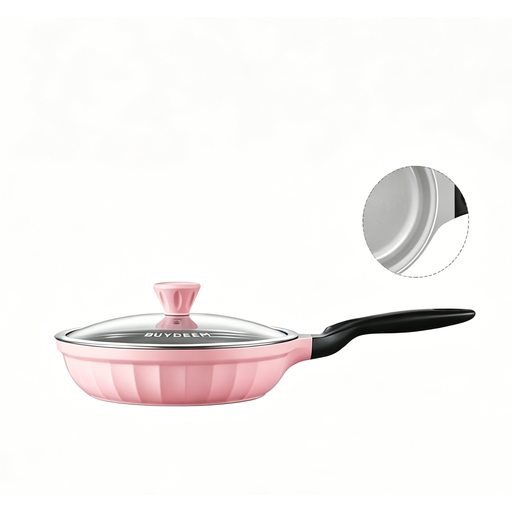
Why this product suits the profile: This model combines a 26 cm diameter with a glass lid and compatibility with gas, electric, ceramic and induction hobs, as stated by the supplier. This makes it suitable for everyday dishes serving around three to four people.
The product details explicitly state that the ceramic coating is free from PFAS, PFOS and PFOA. Hand washing and soft cleaning utensils are also recommended, making the care requirements clear.
Cast aluminium, 2.4-litre capacity, glass lid and suitability for all the hob types listed, according to the product description.
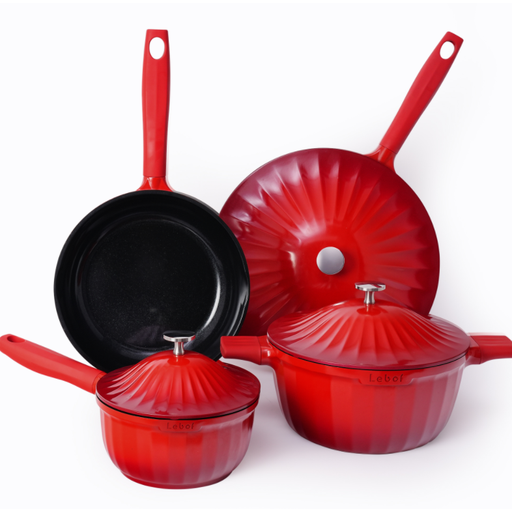
Why this product suits the profile: The set includes two frying pans, two saucepans and a casserole with lids. It is aimed at households looking for several cooking vessels with a matching coating and induction compatibility.
The product description states that the coating is free from PFAS, PFOA and PTFE, and confirms compatibility with all hob types, including induction. However, it is not designed for use in the oven.
Seven pieces, Ti-ceramic coating according to the manufacturer, glass lids and dishwasher suitability according to the product information.
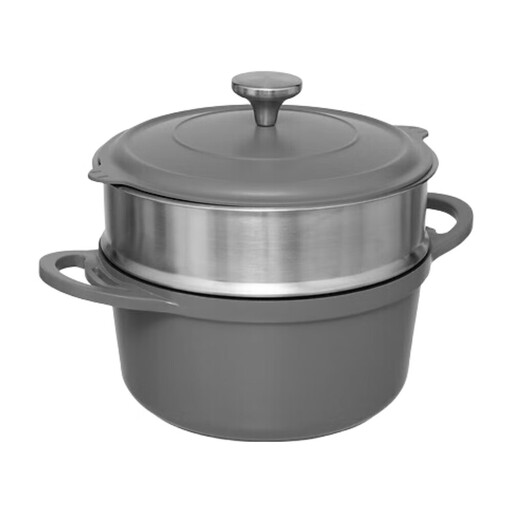
Why this product suits the profile: This set is ideal for households that want to steam vegetables, fish or pasta as well as fry and slow-cook food. It includes a pot with lid, a steamer insert and a wooden spoon.
The specific contents make it clear that this is more than just a casserole pan. The product details also point to even heat distribution and the need for gentle cleaning.
24 cm diameter, lid, steamer insert and wooden spoon; suitable for slow cooking, steaming and cooking on the hob according to the product description.
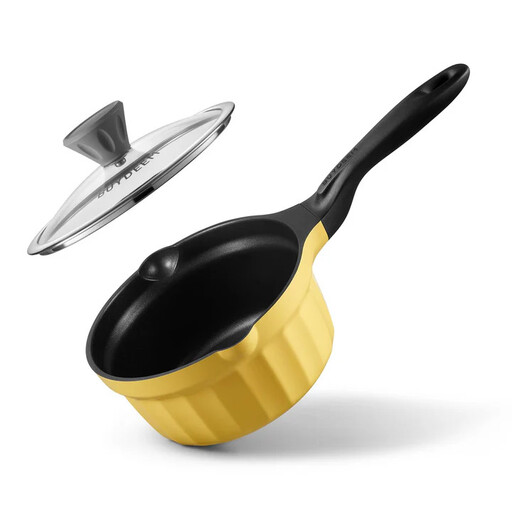
Why this product suits the profile: Its compact capacity is designed for smaller portions. This saucepan is suitable for sauces, pasta, soups and simple meals for one or two people.
The details specify a three-layer ILAG non-stick coating without PFOS, PFOA, lead or cadmium. Hand washing is also recommended, making the limits of convenient cleaning clear.
Cast aluminium, integrated pouring spout, 1.9 Quart capacity and suitability for all hob types according to the product details.
Use low to medium heat unless the recipe calls for a higher temperature. Wooden, silicone or plastic turners help reduce the risk of scratches. Allow the pan to cool before cleaning and use a mild washing-up liquid with a soft sponge.
Even if a pan is advertised as dishwasher-safe, hand washing can help protect the coating. The relevant manufacturer’s instructions are decisive. A ceramic frying pan should also be stored dry so that no moisture remains around the handle connections or on the base of the pan.
We have put together a complete, regularly updated list of products that fully meet these strict selection criteria and the safety regulations applicable in the EU.
Only if the manufacturer explicitly states this. The product details should say “induction-compatible” or “suitable for all hob types including induction”. An aluminium body alone is not proof that the pan is induction-compatible.
Its lifespan depends on the type of coating, how it is used, the temperature and cleaning. There is no reliable one-size-fits-all time frame. Gentle heating, suitable kitchen utensils and hand washing can help keep the coating functional for longer. The pan should be replaced if the coating is flaking or shows significant wear.
No. “PFAS-free” refers to a specific group of substances and should not be taken as a blanket statement about all materials. You should therefore check the full product description, the manufacturer’s information and the instructions for use. Terms such as PFAS-free, PFOA-free or PTFE-free should always be linked to the specific model.