Households that regularly stock up
If several people take bars with them or eat them at home, the number of bars, the weight of each one and the total pack weight can help you work out how much you need.


For a regular family stock-up, choose a bar count that matches the number of portions you need; the total weight also shows how much product is in the pack. Before buying, check the ingredients and allergen information for the specific variety. If sugar or protein content matters to your choice, compare the nutritional information per 100 g and per portion rather than relying on the product name alone.
If several people take bars with them or eat them at home, the number of bars, the weight of each one and the total pack weight can help you work out how much you need.
If anyone needs to avoid certain ingredients, check the labelling for each specific variety. Bars with similar names can have different ingredients and allergen information.
If you pay particular attention to sugar or protein when choosing a variety, compare the nutritional information per 100 g and the portion size.
First, estimate how many bars your household gets through. Then check which varieties are suitable for the people who will eat them, and whether the pack size and storage requirements work for your stock-up.
| Criterion | What to check when buying | Who it matters most to |
|---|---|---|
| Amount to stock up on | Consider the number of bars, the weight of each bar and the total weight together. | If several people in my household eat bars regularly, I want to be able to plan how many we need. For around 33% of consumers, this need to stock up is the main consideration when choosing. |
| Ingredients and allergens | Read the ingredients list, highlighted allergens and any warnings about possible traces on the specific pack. | If anyone in my household needs to avoid certain ingredients, I only decide after checking the labelling. For around 27% of consumers, this check takes priority. |
| Nutritional information | Compare sugar and protein per 100 g; for a single portion, also check the weight of each bar. | If I’m particularly interested in the sugar or protein profile, I want to compare the information for that specific variety. This is the most important selection criterion for around 20% of consumers. |
| Consumption and storage | Match the number of bars to how many you plan to eat; check the best-before date and storage instructions. | I only want to stock up on varieties that my household will eat and can store appropriately. Around 20% of consumers give this planning the highest priority. |
The number of bars alone doesn’t tell you how much product is in a pack: the weight of each bar also varies between the formats considered here.
Compare the number of bars with the total weight, and think about what portion size suits your household.
The Corny Schoko, Schoko-light and Protein varieties considered here differ in their ingredients and nutritional information.
Read the information for the variety you’ve chosen rather than assuming it’s the same as another one.
Depending on the variety, the bars considered here list ingredients including peanuts, milk or cereals containing gluten; some also carry warnings about possible traces.
Before buying a larger quantity, check the specific pack for everyone who will be eating the bars.
A large stock-up only makes sense if your household is likely to eat the bars before their best-before date and can follow the storage instructions.
Check the date and storage information on the pack before deciding how much to buy.
Bars that go uneaten or are affected by unsuitable storage can lead to food waste.
The Corny varieties considered here include classic cereal bars and options with different nutritional profiles.
The peanut variety is one example of a cereal bar multipack from this own-label brand.
EDEKA24 stocks, among other products, organic crispy bars in smaller multipacks.
This selection includes larger multipacks of different types of bars for household cupboards. Sandwich, cereal, biscuit and oat bars are different product types, so compare the specific variety as well as the pack format.
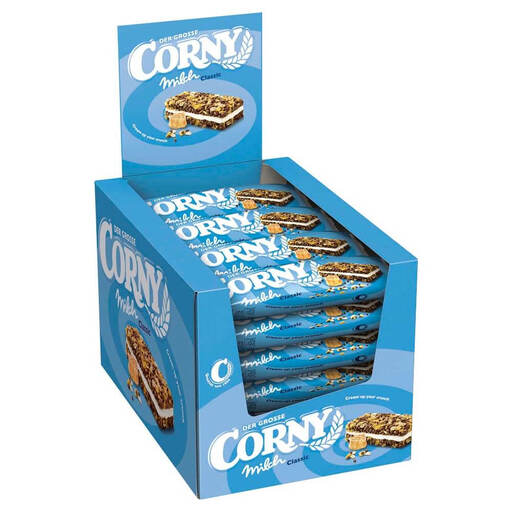 No image available
For households planning plenty of individual portions of the same variety. The pack contains 24 bars at 40 g each, weighing 960 g in total. Check the ingredients and allergen information on the specific pack before buying.
 No image available
Another option for a stock-up of 24 individual bars. At 40 g each, the pack contains 960 g in total; check the ingredients and any allergen information for this variety.
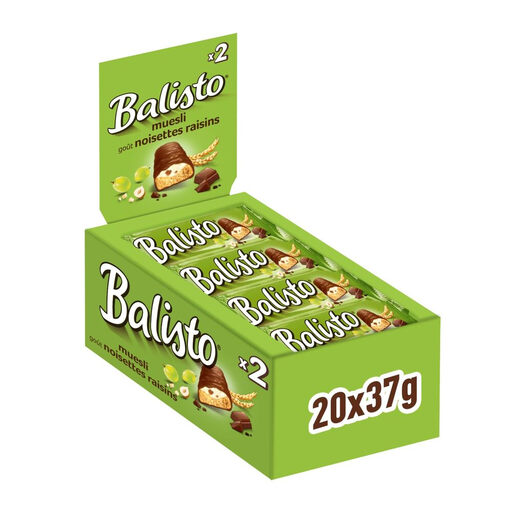 No image available
For households looking for a multipack of this biscuit bar variety. The pack contains 20 bars at 37 g each, weighing 740 g in total. Check the ingredients and allergen information on the specific pack.
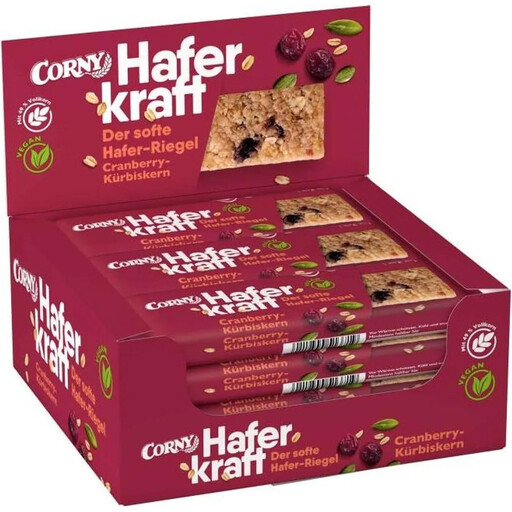 No image available
For a stock-up of twelve larger individual portions of this variety. Each bar weighs 50 g, making 600 g per pack in total. Check the ingredients and allergen information when choosing.
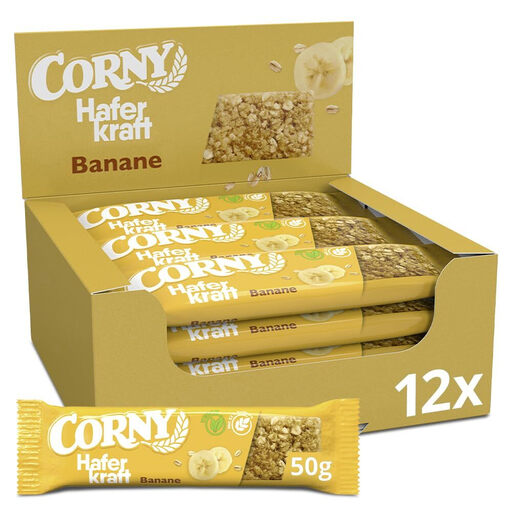 No image available
A different flavour in a pack of twelve bars at 50 g each, weighing 600 g in total. If you’re comparing nutritional information by portion, you can refer to the figures per bar and per 100 g on the pack.
No. The weight of each bar and the total weight also matter when planning your stock-up. A pack with more bars won’t necessarily have the portion size that best suits your household.
Yes. If anyone in your household needs to avoid certain ingredients, the labelling on the specific pack is essential. The Federal Office of Consumer Protection and Food Safety explains that important allergens must be listed in the ingredients; also check for any warnings about possible traces.
No. Sugar content describes only part of the nutritional profile. ALDI SÜD lists 1.5 g of sugar and 42 g of polyols per 100 g for Corny Schoko light. So also compare the ingredients, portion size and other nutritional information for the specific variety.
Choose a quantity based on how much you’re likely to use and the information on the pack. The Corny product information considered here recommends storing the bars in a cool, dry place or protecting them from heat; also check the best-before date on the pack you buy.