People who plan the office snack supply
If you regularly top up a snack drawer, you can match the number of bars, weight per bar and best-before date to how quickly they’re usually eaten at the office.


For the office, a multipack is a good fit when the number of bars, portion size and best-before date match how quickly you’ll get through them. If snacks are shared, check the ingredients and allergen information for the specific variety before considering pack size. Nutritional values can only be assessed by looking at the information for each recipe.
If you regularly top up a snack drawer, you can match the number of bars, weight per bar and best-before date to how quickly they’re usually eaten at the office.
If colleagues need to avoid certain ingredients or watch out for allergens, check the label for each variety – even when the bars are part of the same multipack range.
If you’re providing bars for several people, you could start with smaller quantities of different varieties and see which ones actually get eaten.
First, work out how many portions the office is likely to get through. Then check the ingredients in each specific variety and decide whether one variety for everyone or a selection of flavours would work best.
| What matters | What to check before buying | Who it matters to |
|---|---|---|
| Portions and stock | Match the number of bars, grams per bar and best-before date to how quickly you expect to get through them. | I regularly top up the snack drawer and don’t want to leave a pack sitting around if we won’t use it in time. Around 33% of consumers make this kind of stock planning their priority. |
| Ingredients and allergens | Read the ingredients list, as well as the allergen and may-contain information for the exact variety. | When several people help themselves, I need to know which bars are suitable for colleagues with specific ingredient requirements. This is the main concern for around 27% of consumers. |
| Nutritional information | Compare the figures per 100 g and per portion, particularly for sugar and, where relevant, polyols. | I want to understand how the recipes differ for the portions we’re considering, rather than assuming the nutritional values from a variety’s name. This is the main consideration for around 27% of consumers. |
| Choice of varieties | Check the available flavours and how each pack is portioned. | Not everyone in our team likes the same variety, so I want to find out which bars get eaten before buying a larger supply. Around 13% of consumers prioritise this choice. |
An individually wrapped bar can still contain ingredients or traces that matter to some people in the team. For example, the ja! peanut variety listed by REWE states that it may contain traces of tree nuts, soya and sesame.
If anyone has a known allergy, check the label for the specific variety and keep the outer packaging with the ingredients information while you’re handing out bars from it.
Recipes can vary considerably. For a Corny Schoko-light variety, ALDI SÜD lists 1.5 g of sugar and 42 g of polyols per 100 g. These figures don’t apply to other Corny varieties.
Compare the full nutritional information and ingredients lists for the varieties you’re considering for the office.
If bars are left in the shared area, you may end up with more in stock than the team can get through.
Start with a manageable quantity, check the best-before date and follow the storage instructions on the pack.
Uneaten bars take up space in the office kitchen or snack drawer until they’re used.
REWE stocks Corny cereal bars in several varieties and multipack formats, including 6 × 25 g, 4 × 30 g and 4 × 35 g.
ALDI SÜD sells cereal bars under the GOLDEN BRIDGE brand, including an 8 × 25 g format.
REWE lists a ja! peanut cereal bar in an 8 × 25 g format.
EDEKA describes its chocolate and banana variety as individually wrapped cereal bars in an 8 × 25 g format.
This selection includes Corny cereal bars in several varieties and a Balisto biscuit bar. For office supplies, you can compare the number of bars, portion weight and flavour you want. Bear in mind that a biscuit bar isn’t the same as a cereal bar.
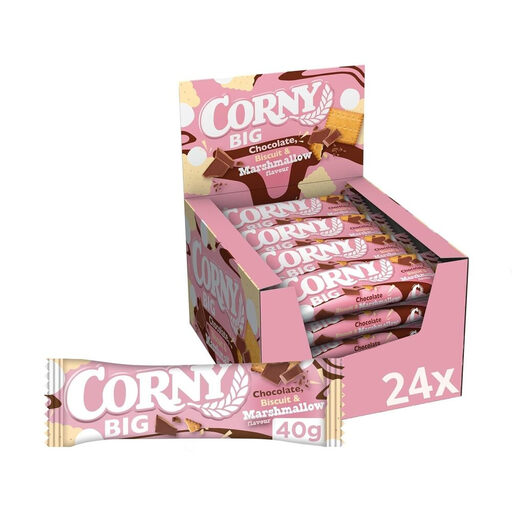 No image available
A larger supply for teams that like this variety.
24 bars at 40 g each. Check the ingredients and allergen information on the pack before sharing them with the team.
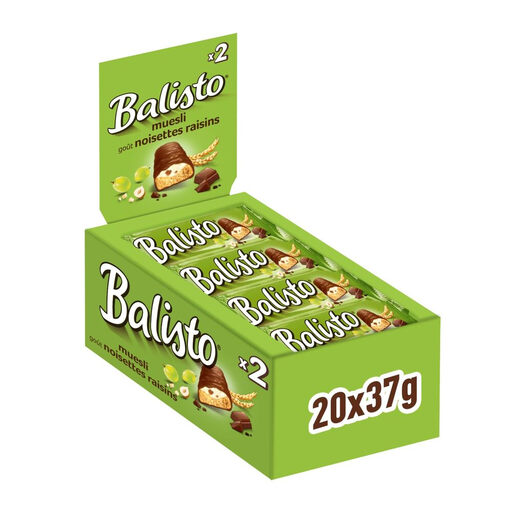 No image available
A biscuit bar option for teams looking to offer something different alongside cereal bars.
20 bars at 37 g each. Compare the ingredients in this variety with those in the cereal bars you’re considering.
 No image available
For teams specifically considering the Peanut Butter variety and checking the ingredients before sharing.
12 bars at 50 g each. The name “Zero” alone doesn’t tell you the nutritional values, so check the information on the pack.
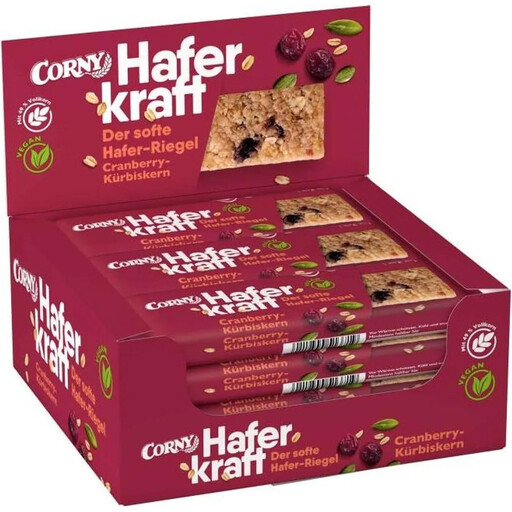 No image available
A cranberry variety for the office, if that’s a flavour the team enjoys.
12 bars at 50 g each. Check the ingredients, allergens and nutritional information for this specific variety.
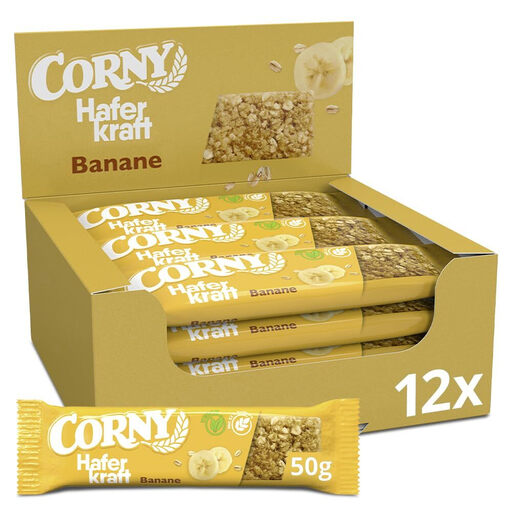 No image available
A banana variety for teams choosing office snacks by flavour.
12 bars at 50 g each. Check the pack information against your team’s ingredient requirements.
Compare the number of bars and weight per bar with how quickly you expect to get through them. Then check the best-before date and storage instructions, and make sure the portions are practical for sharing with the team.
Yes. Individual wrapping doesn’t change the ingredients in a particular variety. Germany’s Federal Ministry of Agriculture, Food and Home Affairs explains the labelling requirements for the 14 most common causes of allergies and intolerances in Germany. If anyone has a known allergy, the information on the specific pack is what matters.
No. These terms don’t replace the full nutritional information and ingredients list for the specific variety. Compare the figures per 100 g and per portion if sugar or polyols, for example, matter to your choice.
Follow the storage instructions on the pack. For the ja! peanut bar listed by REWE, the advice is to store it in a dry place and protect it from heat. The best-before date applies when it’s stored as directed.