For sharing over coffee
When several people will be helping themselves, knowing how many individually wrapped bars are in the pack makes planning easier. For example, EDEKA, REWE and ALDI SÜD sell packs of eight bars weighing 25 g each.


When choosing a cereal bar multipack, start by checking how many bars you’ll actually be handing out or planning to enjoy over several days. Eight individually wrapped 25-g bars work differently from packs of four or six bars, or a pack of twin bars. Then compare the ingredients, sugar content and allergen information for each variety on the current packaging; the pack size won’t tell you any of that.
When several people will be helping themselves, knowing how many individually wrapped bars are in the pack makes planning easier. For example, EDEKA, REWE and ALDI SÜD sell packs of eight bars weighing 25 g each.
If you’re packing bars for several days, consider both the number of bars and the weight of each one. EDEKA specifically describes its individual cereal bars as wrapped; it’s also important to check the allergen information for your chosen variety before packing them for other people.
If you want to compare sugar and ingredients, check the information for each variety rather than relying on terms such as oats or wholegrain. The North Rhine-Westphalia Consumer Advice Centre recommends checking the ingredients list and nutrition table.
When buying cereal bar multipacks for a coffee break, first consider how many individually wrapped bars you need; then check the details for the specific variety. The percentages refer to consumers for whom the stated factor is the main reason for buying.
| Criteria | What to check | Who it matters most to |
|---|---|---|
| Bars to share | Number of bars, individual wrapping and weight per bar; for twin bars, also check the number of packs. | If I’m planning bars for several people or lunchboxes, I want to know how many can be taken individually. Around 31% of consumers put this ease of sharing first. |
| Sugar and ingredients | Sugar per 100 g and per planned serving, as well as the ingredients list for the specific variety. | For a sweet coffee break, I want to compare varieties by their actual ingredients, not the name on the pack. Around 31% of consumers prioritise this comparison. |
| Allergens when sharing | Declared allergens and possible traces on the current packaging. | Before offering bars to others, I need to take their individual allergen information into account. Around 23% of consumers put this check first. |
| Portion format | Weight per bar, twin-bar format and preferred texture. | For my break, it makes a difference whether I want a small individual bar or a pack containing two bars. This format is the most important selection criterion for around 15% of consumers. |
A pack of eight individually wrapped bars is different to five twin-bar packs, each containing two bars. The total weight alone doesn’t tell you how many individual portions there are.
Check the number of bars, weight per bar and what “twin bar” means before planning for guests or lunchboxes.
The name of a grain ingredient doesn’t determine the sugar content. EDEKA lists 26.9 g of sugar per 100 g for a chocolate cereal bar; the varieties in REWE’s Nature Valley Variety Pack are each listed at 26.8 g per 100 g.
Compare the nutrition information for your chosen varieties per 100 g, and also take the weight of each bar into account.
Depending on the variety, peanuts, milk or gluten-containing cereals may be relevant ingredients. A warning about possible traces may also matter to some people sharing the bars.
Keep the current packaging to hand when offering bars, so everyone can check the ingredients and allergen information for themselves.
EDEKA notes that product information may differ from the packaging. ALDI SÜD says that a GOLDEN BRIDGE peanut bar may come from different suppliers and advises checking the product itself for exact nutrition information.
If particular ingredients, allergens or nutritional values will influence your choice, check the packaging of the variety you actually buy.
These examples show different pack and bar formats; ingredients and nutritional values apply only to the specific variety in question.
REWE stocks Corny cereal bars in a range of formats, including 6 × 25 g, 6 × 20 g, 4 × 30 g and 4 × 35 g.
REWE lists a ja! peanut cereal bar in an 8 × 25 g pack.
EDEKA sells individually wrapped cereal bars, including chocolate and peanut varieties, in packs of 8 × 25 g.
ALDI SÜD lists GOLDEN BRIDGE cereal bars in several flavours in an 8 × 25 g format.
The Variety Pack listed by REWE contains five twin-bar packs in three flavours.
This selection includes Corny bars in different pack sizes and individual weights, as well as a Balisto wholegrain cereal biscuit bar in a different format. The key is finding a number and size of bars that work for your coffee break or lunchbox plans.
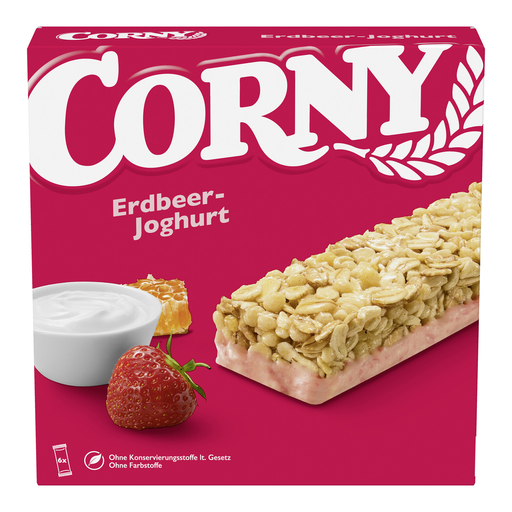 No image available
Six bars weighing 25 g each can be set aside for several coffee breaks. Before sharing, check the current packaging for information about gluten-containing cereals, milk and possible traces.
 No image available
Six bars weighing 20 g each are an option if you’re planning for smaller individual portions. Compare the nutritional information and ingredients on the current packaging when making your choice; for this variety, it’s also worth checking the information about maltitol and allergens.
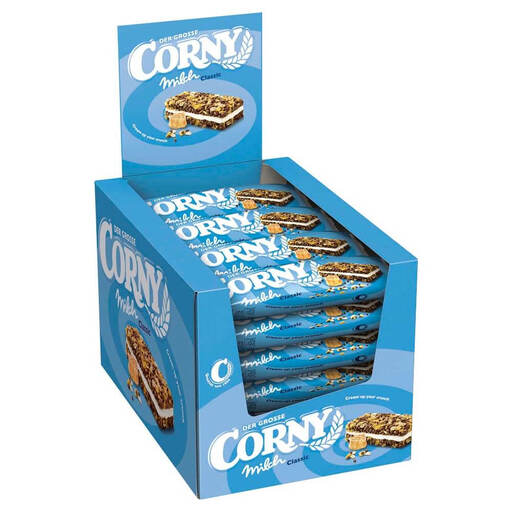 No image available
A pack of 24 bars weighing 40 g each could be a good choice if you’re planning for a larger group or lots of breaks. Bear the individual weight in mind if you’re looking for smaller bars, and check the current packaging for information about milk and gluten-containing cereals before sharing.
 No image available
Twelve oat bars weighing 50 g each work well for planning regular breaks, if that’s the portion size you want. Check the information on the specific pack for peanuts, gluten-containing oats, possible traces and maltitol.
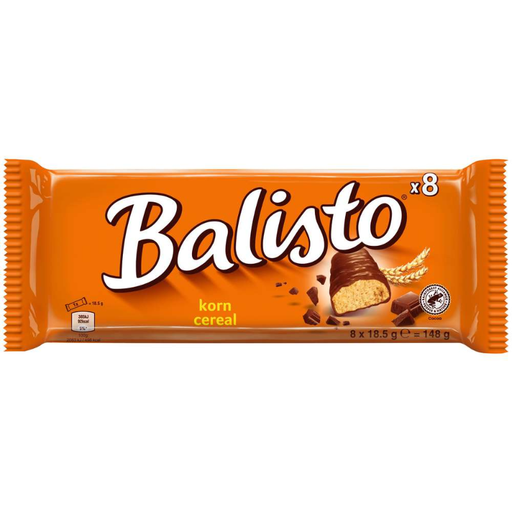 No image available
Eight bars weighing 18,5 g each make it easy to count out portions for several breaks. These are cereal biscuit bars rather than classic cereal bars; check the allergen information on the current packaging before sharing.
Plan around the number of people and breaks, not just the total weight: an 8 × 25 g pack contains eight bars, while the Nature Valley Variety Pack listed by REWE contains five packs, each with two bars. When packing or sharing, check which portion you actually want to hand out.
No. Oats or wholegrain alone don’t determine the sugar content. EDEKA lists 26.9 g of sugar per 100 g for its chocolate cereal bar; each variety in the Nature Valley Variety Pack listed by REWE is stated to contain 26.8 g per 100 g. Compare the specific variety using its nutritional information.
Check the ingredients and allergen information for each variety you’re offering on the current packaging. For example, the ja! peanut variety listed by REWE contains peanuts, milk ingredients and gluten-containing cereals; other varieties may have different ingredients.
No. A warning about possible traces is different from an ingredient listed in the ingredients list. If you’re choosing bars for someone with a relevant allergy, check both details on the specific pack and discuss any individual requirements with them.