People organising the office snack supply
If you’re filling a shared biscuit tin, you’ll need a clearly stated number of bars and suitable individual portions to plan how they’ll be shared and when to restock.


For a shared office biscuit tin, cereal bar multipacks with a clearly stated number of bars are practical, and individually wrapped bars can be taken out one at a time. The weight of each bar, the ingredients and allergen information for your team, and the nutritional values per 100 g and per serving are also important. Before transferring the bars to the tin, check the storage instructions on the pack.
If you’re filling a shared biscuit tin, you’ll need a clearly stated number of bars and suitable individual portions to plan how they’ll be shared and when to restock.
If allergies are a concern for your team, check the information on the specific pack you’re buying. Any ‘may contain’ warnings should also remain visible before you fill the tin.
When choosing between different bars, you can compare sugar and other nutritional values per 100 g and per bar. If a variety contains sweeteners, check the ingredients list too.
For an office biscuit tin, start by checking the number of bars and the weight of each portion, then check the ingredients, allergens and nutritional values on the specific pack. The concerns in the table reflect what matters most to consumers when making this choice.
| What matters | What to check when buying | Who it matters most to |
|---|---|---|
| Number of bars and portions | Compare the number of bars and the weight of each one; check whether they’re individually wrapped. | If several people regularly help themselves, I want to fill the tin with a countable number of bars and plan when to restock. This is the main concern for around 42% of consumers. |
| Ingredients and allergens | Check the ingredients list, highlighted allergens and any ‘may contain’ warnings on the current pack. | When I’m providing bars for a team, I need to know whether the specific variety is suitable for any allergies within the group. Around 33% of consumers prioritise this. |
| Sugar and sweeteners | Compare the nutritional values per 100 g and per bar, and check the ingredients list for sweeteners. | I want to assess the sweetness of an individual portion rather than relying solely on a claim on the front of the pack. This is the most important consideration for around 25% of consumers. |
For a shared tin, it makes a difference whether the contents are split into six, seven or eight bars. The total weight alone doesn’t tell you how many individual portions you can take out.
Compare the number of bars and the weight of each one; if you’re sharing them, also check whether they’re individually wrapped.
‘No added sugar’ doesn’t mean ‘sugar-free’. For Corny Free Schoko, REWE lists 0.3 g of sugar as well as 8.4 g of polyols per 20-g bar; Corny Schoko +1 Gratis contains 8.5 g of sugar per 25-g bar.
Read the nutritional values per 100 g and per serving alongside the ingredients list before comparing varieties.
For GUT&GÜNSTIG Müsliriegel Schoko, EDEKA lists cereals containing gluten, milk and peanuts, as well as possible traces of soya, sesame and nuts. This information matters to anyone choosing a bar from a shared tin.
Keep the labelling from the specific pack somewhere accessible. If anyone has a known allergy, check the selection with them.
For Corny Müsliriegel Schoko +1 Gratis, REWE specifically advises storing the bars in a cool, dry place and protecting them from heat. Putting them in an office biscuit tin doesn’t change these requirements.
Choose a spot that follows the storage instructions and keep the best-before date from the outer pack.
REWE lists CORNY cereal bars in packs including 6 × 20 g, 6 × 25 g and 7 × 25 g.
EDEKA describes its Müsliriegel Schoko as a pack of eight individually wrapped 25 g bars.
ALDI SÜD lists a GOLDEN BRIDGE peanut cereal bar in an 8 × 25 g pack.
These packs offer different numbers of bars and portion sizes for an office biscuit tin. If you’re sharing the bars, check the labelling of your chosen variety and, if needed, whether each bar is individually wrapped.
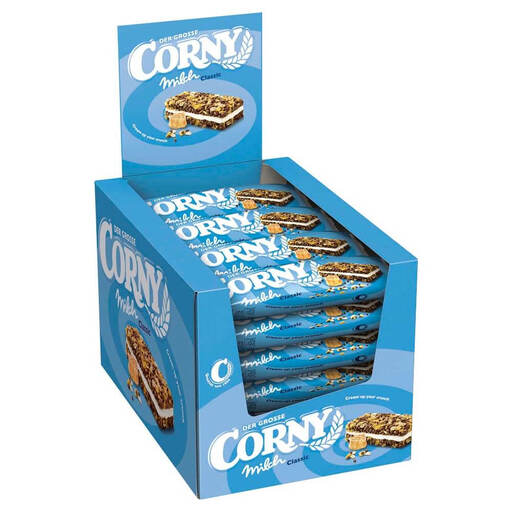 Image unavailable
This pack of 24 bars, each weighing 40 g, is worth considering if you need a larger, countable quantity for the office tin. Before sharing them with your team, check the pack for ingredients, allergens and whether the bars are individually wrapped.
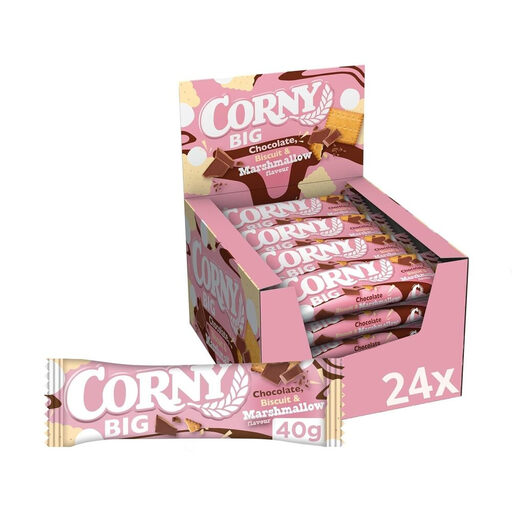 Image unavailable
With 24 bars weighing 40 g each, this variety is a good fit for a tin shared by several people. Check the specific pack to decide whether the portion size, ingredients and allergen information are right for your team.
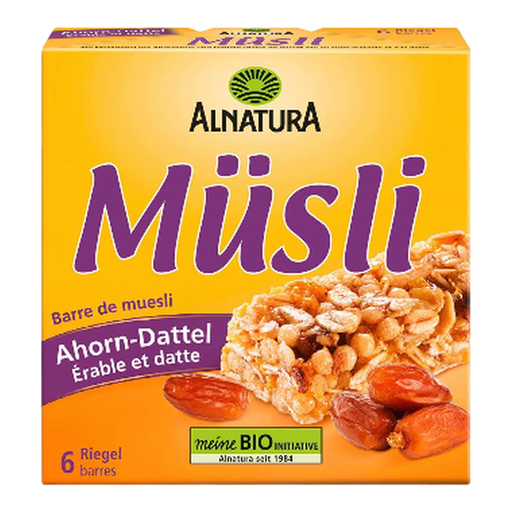 Image unavailable
Six bars weighing 25 g each make up a smaller, clearly portioned quantity for the office tin. Before sharing them, check the ingredients and allergen information on the pack you choose.
 Image unavailable
The twelve 50 g bars give you a countable quantity, with larger individual portions than the 20 g and 25 g varieties listed here. As this variety contains peanuts, checking the ingredients and allergen information is especially important before sharing. Also check the nutritional values and sweeteners on the pack.
 Image unavailable
Six bars weighing 20 g each are a good option if you prefer smaller individual portions. Compare the sugar and sweetener information on the pack; if you’re putting them in a shared tin, also check whether each bar is individually wrapped.
Yes, especially if several people will be choosing from the tin. Under EU food labelling rules, allergens present must be highlighted in the ingredients list. Also check for any ‘may contain’ warnings on the specific pack and make sure the information is accessible to your team.
No, the two claims don’t mean the same thing. For Corny Free Schoko, REWE lists 0.3 g of sugar and 8.4 g of polyols per 20-g bar. When choosing, it’s important to check both the nutritional values and the ingredients list for the specific variety.
Follow the storage instructions on the relevant pack. For Corny Müsliriegel Schoko +1 Gratis, REWE advises protecting the bars from heat and storing them in a cool, dry place. Keep the best-before date after transferring the bars too; according to Lebensmittelverband Deutschland, this is a quality date, not a general use-by date.