Anyone stocking up on snacks
You want to have a few bars ready for short breaks while working from home. The number of bars and the weight of each one tell you how many portions are in the pack.


Choose a cereal bar multipack to keep in the cupboard for short breaks, or as part of a planned lunch—not just because of a promise on the packaging. For lunch, the German Federal Centre for Nutrition recommends including a variety of food groups. When choosing a bar, check the portion size, nutrition information, ingredients and allergen advice.
You want to have a few bars ready for short breaks while working from home. The number of bars and the weight of each one tell you how many portions are in the pack.
You’re planning a midday meal and want to include a bar as one part of it, rather than automatically treating it as a complete meal. Compare the ingredients, sugar and fibre information on the pack.
You need to check whether a particular variety is suitable for you before buying. Read the current ingredients list and, where relevant, the precautionary allergen advice on the pack.
First, decide whether you want a bar for a short break or as part of your lunch. Then compare the portion format, nutrition information and ingredients for the specific variety.
| What to consider | What to check | Who it matters to |
|---|---|---|
| Snack or part of lunch | Decide what role the bar will play in your lunch. Add other food groups if needed. | At lunchtime, I want to include a bar without treating it as a complete meal. This is likely to be the main consideration for around 28% of consumers. |
| Individual portions | Compare the number of bars and the grams per bar with the amount you want for your breaks. | Between meetings, I want to be able to quickly take a suitable portion from the cupboard. Around 28% of consumers are likely to focus mainly on portion format. |
| Nutrition information | Check sugar, fat, protein and fibre per 100 g, and take the weight of each bar into account too. | When comparing varieties, I want to assess their nutritional values rather than rely on the wording on the front of the pack. This is likely to be the main reason for buying for around 22% of consumers. |
| Ingredients and allergens | Check the ingredients list on the current pack and, if relevant to you, its precautionary allergen advice. | If I have an allergy, I need to know which ingredients and warnings are listed on the specific pack before buying. Ingredients and allergens are likely to be the priority for around 22% of consumers. |
A claim like this doesn’t tell you whether one bar can make up the planned midday meal. The German Federal Centre for Nutrition advises including a variety of food groups in main meals.
Decide whether you’re looking for a snack or something to add to lunch, then plan other foods accordingly.
A multipack with lots of small bars may contain a different total weight from a pack with fewer, larger portions.
As well as the number of bars, check the weight of each bar and the total pack weight. For example, ALDI SÜD sells a format with 8 × 25 g; other packs contain different numbers of bars and portion sizes.
A prominent claim such as ‘protein’ or ‘less sugar’ doesn’t tell you about the variety’s other nutritional values. The consumer advice centre also recommends looking at the nutrition labelling as a whole.
Compare the information per 100 g, then check the weight of an individual bar.
Ingredients vary by variety. For Alnatura Müsli-Riegel Ahorn-Dattel, EDEKA24 lists ingredients including oats and wheat flour.
Check the ingredients list on the specific pack before every purchase, and take precautionary allergen advice into account if it’s relevant to how you manage your allergies.
CORNY offers cereal bars across several product ranges and pack formats.
The cereal bars stocked by ALDI SÜD include a multipack with 8 × 25 g.
EDEKA24’s range includes EDEKA Bio bars alongside bars from other brands.
These multipacks contain cereal bars in different portion sizes for short breaks while working from home. If you want a bar as part of your lunch, plan the other parts of the meal separately.
 Image unavailable
A 12-bar pack, with each bar weighing 50 g. For this peanut butter variety, check the ingredients and allergens on the current pack; ‘Zero’ in the name doesn’t mean you can skip the nutrition information.
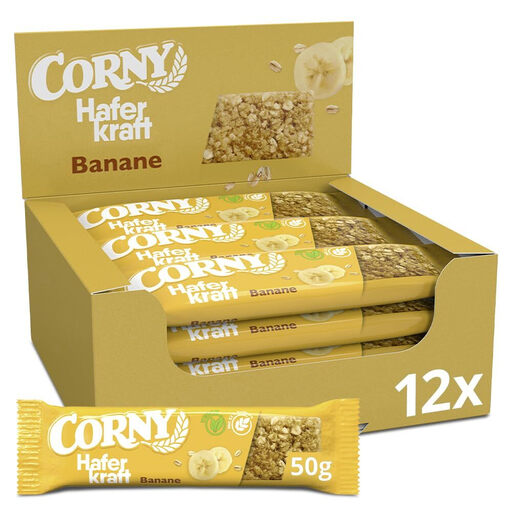 Image unavailable
If you’re after oat and banana flavours for your breaks, this multipack contains twelve bars, each weighing 50 g. Compare the nutrition information for this variety with other bars rather than guessing the sugar content from the flavour.
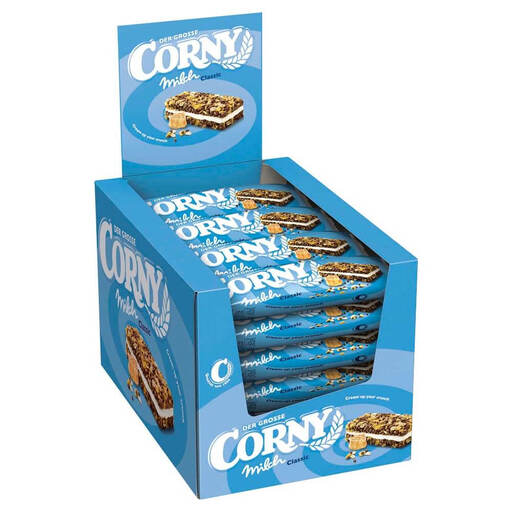 Image unavailable
For a bigger stash of bars, the pack contains 24, each weighing 40 g. If milk or cereal ingredients matter to you, check the ingredients list on the specific pack before buying.
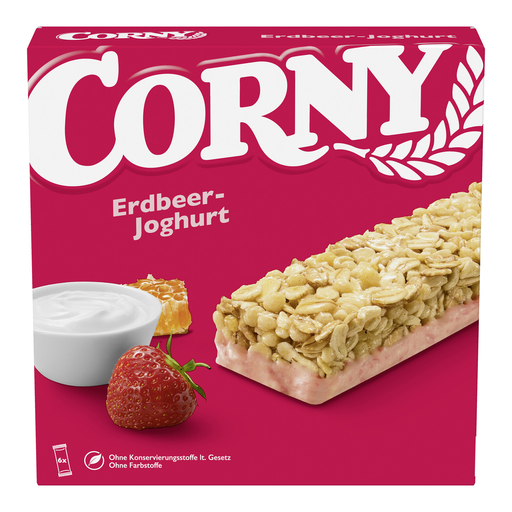 Image unavailable
If you prefer smaller portions for short breaks, this pack contains six bars, each weighing 25 g. For the strawberry and yoghurt variety, check the ingredients list and nutrition information on the current pack.
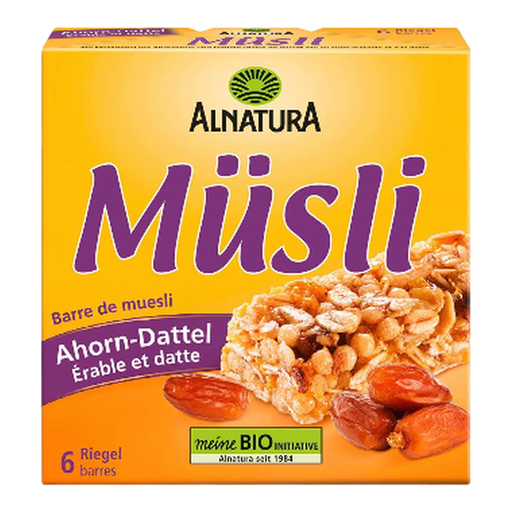 Image unavailable
This pack contains six bars, each weighing 25 g, for small portions with a maple and date flavour. EDEKA24 lists 23 g of sugar per 100 g for Alnatura Müsli-Riegel Ahorn-Dattel, with oats and wheat flour among the ingredients. Check the information on the current pack.
A single cereal bar is better suited to a snack or as part of lunch than as a complete meal. The German Federal Centre for Nutrition recommends including a variety of food groups in a main meal, including fruit or vegetables and a protein-rich food.
Compare the number of bars, the weight of each bar and the total pack weight together. This helps you see whether a pack contains lots of small portions or fewer, larger bars for your breaks.
Take precautionary allergen advice into account if it’s relevant to how you manage your allergies. Also check the ingredients list and allergen information on the current pack, even if you’ve bought the same variety before.
No. A single claim on the front of the pack isn’t a substitute for comparing the nutrition information. The consumer advice centre recommends looking critically at the labelling as a whole. In particular, compare values per 100 g and take portion size into account.