People who train and want a small snack
You’re looking for a bar to eat before training and want to keep an eye on its fat content. Compare the figures per 100 g and per bar: a small portion alone doesn’t tell you how the bar is composed.


If you’re looking for a lower-fat cereal bar before training, compare fat and carbohydrates both per 100 g and per bar. Labels such as “protein” or “no added sugar” don’t answer this question. According to the German Nutrition Society, the right amount of carbohydrates for your activity depends, among other things, on your body weight and training volume. Ingredients and how well you tolerate them also matter when choosing a bar.
You’re looking for a bar to eat before training and want to keep an eye on its fat content. Compare the figures per 100 g and per bar: a small portion alone doesn’t tell you how the bar is composed.
You want to work out how many carbohydrates the bar contributes to your activity. According to the German Nutrition Society, the right amount of carbohydrates depends, among other things, on your body weight and the level of physical activity. A single bar isn’t a one-size-fits-all serving recommendation.
If you need to avoid peanuts, tree nuts, sesame, milk or cereals containing gluten, for example, the specific variety matters. Check the ingredients and precautionary allergen information on the current packaging before eating it.
First, compare fat and carbohydrates using the same basis. Then check the actual bar size and the ingredients in the variety you want to buy.
| Criterion | What to check when buying | Who it matters most to |
|---|---|---|
| Fat content | Fat per 100 g to compare varieties, and fat per bar for the portion you’ve chosen. | I want to choose a lower-fat bar before training without being swayed by the packaging. Around 31% of shoppers put comparing fat content first when making this choice. |
| Carbohydrates | Carbohydrates per bar and portion size; take your training volume into account. | If I choose a snack for its carbohydrates, the portion needs to suit my activity. For around 31% of shoppers, carbohydrates are the main consideration here. |
| Ingredients and allergens | The ingredients list, highlighted allergens and precautionary allergen information on the current packaging. | I need to avoid certain ingredients or want to check how well I tolerate the recipe; the specific variety makes the difference. For around 23% of shoppers, checking this comes first. |
| Protein claim | Compare protein, fat and carbohydrates per 100 g; don’t assume “protein” means lower fat. | I’m interested in a bar with a higher protein figure, but I don’t want to overlook the other nutritional values. For around 15% of shoppers, the protein positioning is the main selection criterion. |
The label doesn’t tell you whether a bar is lower in fat: ALDI SÜD lists 20 g of fat and 34 g of protein per 100 g for its Filled Protein Riegel Strawberry Yogurt.
Compare protein bars and cereal bars using their fat, carbohydrate and protein figures on the same basis.
Nut or seed ingredients are no substitute for checking the nutritional information. EDEKA lists 32 g and 33.5 g of fat per 100 g for its Bio-Knusperriegel Sesam and Nussmix respectively. These crunchy bars also aren’t directly comparable with every cereal bar.
If lower fat is your main priority, compare the figures per 100 g first, then check the portion size.
Different varieties from the same brand may have different ingredients and precautionary allergen information. For bars containing cereals, nuts or seeds in particular, it’s the recipe of the specific product that matters.
Before eating, check the ingredients list, highlighted allergens and precautionary allergen information on the current packaging.
Corny has several bar ranges, including Haferkraft, Free, Nussvoll and Protein. REWE and EDEKA24 stock examples from these ranges.
The ja! Müsli-Riegel Schoko ohne Zuckerzusatz listed by REWE is a useful example to compare if you’re looking for a bar with a lower declared fat content.
The range includes sesame and nut mix crunchy bars. When comparing them with cereal bars, bear in mind their product category and recipe.
Golden Bridge is an ALDI SÜD range that includes a peanut variety of its cereal bar.
The Filled Protein Riegel Strawberry Yogurt is a protein bar, so compare it as one rather than as a cereal bar.
These Corny bars come in different portion sizes and recipes, making them options to consider as a snack before training. For each variety, check the current nutritional information and decide separately how important fat content and carbohydrates are to you.
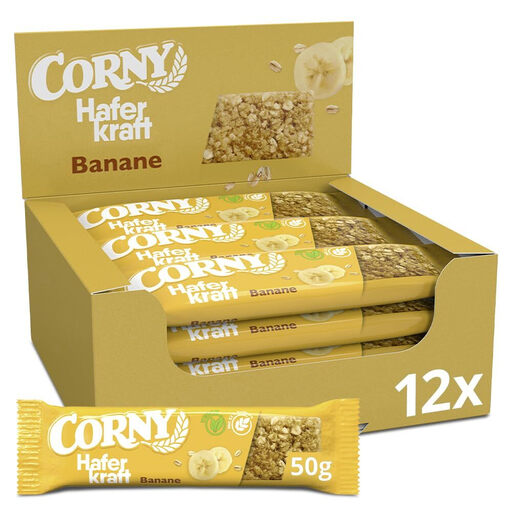 Image unavailable
If you’re looking for an individually portioned oat bar with banana to take on the go, this pack size is one option to compare. The product name lists twelve bars, each weighing 50 g; check the fat and carbohydrates per bar on the current packaging.
 Image unavailable
If you’re considering a small cereal bar as a snack before training, you can compare this 20 g portion with larger bars. The product name says the pack contains six bars; “No Added Sugar” doesn’t tell you anything about their fat content.
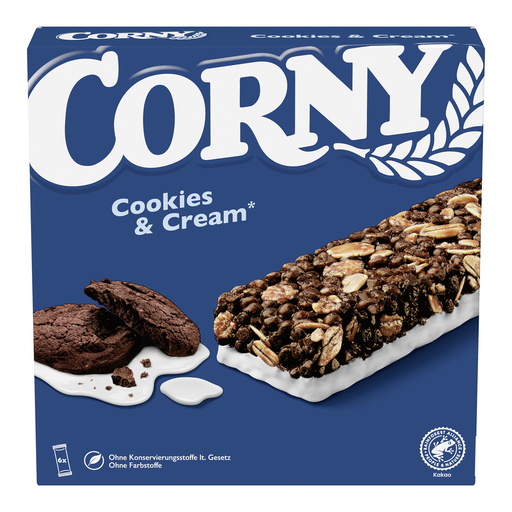 Image unavailable
If you prefer a smaller portion, you can assess this cereal sandwich bar based on the pack information: six bars weighing 23 g each. For a snack before training, check the fat and carbohydrates per bar rather than assuming you can tell the nutritional values from the portion size.
 Image unavailable
If you want to compare a Haferkraft bar with cocoa before training, pay particular attention to the portion size: the title says 4 × 35 g, while the description gives a different bar weight. Check the weight on the packaging before comparing nutritional values per bar.
No. A protein claim doesn’t automatically mean a bar is lower in fat or a better choice for everyone as a pre-training snack. ALDI SÜD lists 34 g of protein and 20 g of fat per 100 g for its Filled Protein Riegel Strawberry Yogurt, so compare the nutritional values with what matters most to you.
No. It doesn’t answer questions about fat and carbohydrates or tell you about the ingredients. For the ja! Müsli-Riegel Schoko ohne Zuckerzusatz, REWE lists 7.6 g of fat and 70.8 g of carbohydrates per 100 g. Check the current ingredients list as well.
There’s no one-size-fits-all amount for a single bar. The German Nutrition Society says that the right amount of carbohydrates depends, among other things, on your body weight and level of physical activity. The figure per bar can help you assess the portion you’ve chosen.
Before eating it, check the ingredients list, highlighted allergens and precautionary allergen information on the current packaging for the specific variety. The recipes compared here include ingredients such as cereals, milk, peanuts, almonds and sesame. You can’t work out what’s in a product from the brand name alone.