If you’re looking for a small portion before a workout
If you want something to eat before a short or moderate session, the energy in each bar is a more useful guide to portion size than the figure per 100 g alone.


If you’re looking for a cereal bar as a pre-workout snack, compare the calories and carbohydrates for the amount you actually plan to eat – rather than relying on claims such as ‘light’ or ‘no added sugar’. The amount of carbohydrate may matter more during longer or more intense sessions, whereas a bar isn’t essential before a short, gentle workout. Check the ingredients and allergen information separately for every variety.
If you want something to eat before a short or moderate session, the energy in each bar is a more useful guide to portion size than the figure per 100 g alone.
If you’re choosing a bar for a longer or more intense workout, pay attention to the carbohydrates per portion. According to the German Nutrition Society, the amount you need depends, among other things, on your body weight and how much activity you do.
If you need to check for allergens or a gluten-free claim, look at the ingredients and ‘may contain’ information on the specific pack. One claim alone won’t answer every question about what’s in the product.
Start with the portion you actually plan to eat. Then check the carbohydrates against your workout plans, followed by any ingredients that matter to you.
| Criterion | What to check | Who it matters to |
|---|---|---|
| Calories per portion | Compare calories per bar, bar weight and calories per 100 g; if you eat more than one bar, count the total amount you’ve eaten. | If I only want a small snack before a workout, the portion needs to match the amount I plan to eat. For around 42% of consumers, this portion comparison is the main consideration. |
| Carbohydrates | Check the carbohydrates per bar and take the duration and intensity of your planned workout into account. | Before a longer or more intense session, I want to plan my carbohydrate intake rather than choosing solely on the basis of the fewest calories. Around 33% of consumers prioritise this. |
| Ingredients and allergens | Read the current ingredients list, highlighted allergens and ‘may contain’ information; check any specific claims for the exact variety. | If I need to avoid certain ingredients, what’s in the specific bar is what matters. Around 25% of consumers prioritise this. |
A claim on the pack doesn’t replace checking the portion: ALDI SÜD lists 339 kcal per 100 g for CORNY Schoko light. How much you get from one bar also depends on its weight.
Compare the calories per bar and per 100 g, and factor in the amount you’ll actually eat. The same applies to products labelled ‘no added sugar’.
Protein bars are a different product category from cereal bars. The Consumer Advice Centre says most people don’t need extra protein, and the claim on the pack doesn’t tell you how many calories are in a portion.
Choose a high-protein bar only if that’s the type of product you specifically want, and compare the portion, nutritional information and ingredients in the same way.
REWE’s gluten-free and vegan REWE frei von Bio Haferriegel contains almonds and sesame. These two claims don’t cover all allergens.
If you have allergies, check the current ingredients list and ‘may contain’ information for the specific product.
Knack & Back describes its range as fresh dough and bake-at-home products. That means you’ll need to prepare them before having one on your way to a workout, unlike a ready-to-eat cereal bar.
Compare bake-at-home products separately if you’re planning to make time to prepare them at home.
Cereal bars in classic, Free, Haferkraft and protein varieties.
Own-label ranges with different oat and cereal bar varieties.
Own-label ranges with different types of bars and recipes.
Ranges that include cereal bars as well as separate protein bars.
Crownfield is Lidl’s cereal brand.
Fresh dough and bake-at-home products rather than ready-to-eat cereal bars.
This selection includes small CORNY bar portions and Haferkraft varieties for a pre-workout snack. Pack sizes vary, so for a calorie comparison, focus on the nutritional information for the portion you plan to eat.
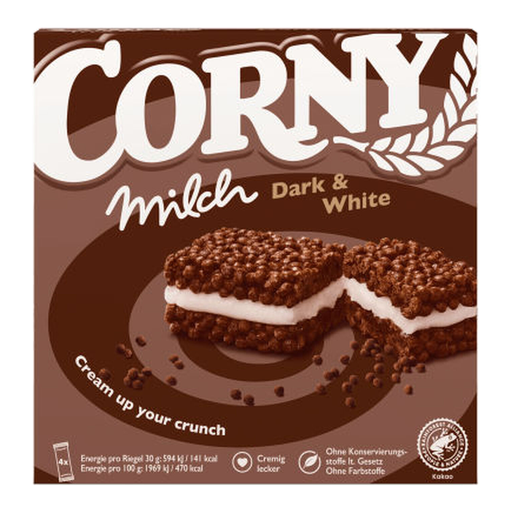 No image available
If you’d like an individually portioned bar before a workout, this pack contains four bars of 30 g each. Compare the nutritional information for one bar with the amount you plan to have as a snack.
 No image available
The pack contains six bars of 20 g each, making it an option if you’re planning a small portion. ‘No added sugar’ doesn’t replace checking the calories and carbohydrates on the current pack.
 No image available
If you prefer an oat bar, this variety comes in a pack of four bars of 35 g each. Check the calories, carbohydrates and ingredients for your portion; the word ‘Zero’ alone won’t tell you its energy content.
 No image available
At 50 g each, these bars are a different portion size from the smaller varieties in this selection. When comparing calories or carbohydrates per snack, factor in the weight of a whole bar and check the ingredients in the peanut variety.
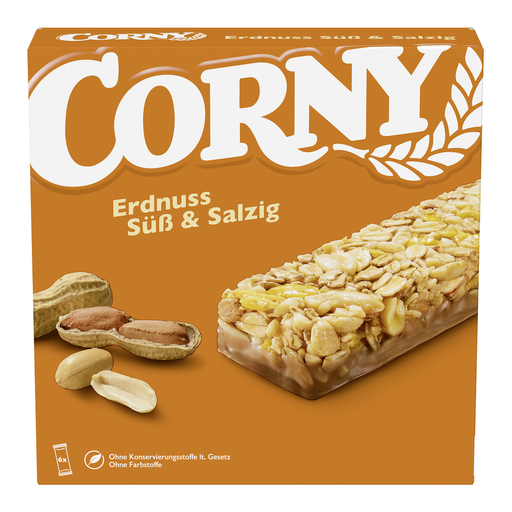 No image available
If you’re looking for a smaller individual portion to take with you, the product name specifies six bars of 25 g each. Check the bar weight and nutritional information on the current pack before comparing the calories per portion with other varieties.
Compare both the calories per 100 g and the calories for the amount you’ll eat. The per-100-g figure lets you compare products of different sizes; for your snack, it’s also important to check the calories per bar or for the whole portion you’ll eat. ‘Light’ or ‘no added sugar’ doesn’t replace this information.
Focus on energy and carbohydrates per 100 g and, if listed, per bar; the nutrition table also shows sugar, fat, protein and salt. Food Federation Germany explains this information for food labelling. Also check the ingredients if they’re important to your choice.
No. A protein bar isn’t a better choice just because it contains protein. The Consumer Advice Centre says most people don’t need extra protein. When choosing a snack for a particular workout, compare the portion size, calories, carbohydrates and ingredients of the products in question.
No, the ‘gluten-free’ claim doesn’t cover all allergens. For example, REWE’s gluten-free REWE frei von Bio Haferriegel contains almonds and sesame. If you have an allergy, read the current ingredients list and ‘may contain’ information on the specific pack.
No, a cereal bar isn’t essential before every workout. According to the German Nutrition Society, carbohydrate requirements depend, among other things, on your body weight and how much activity you do. So whether you have a snack before a short, gentle session or a longer, more intense one shouldn’t depend solely on a claim on the pack.