Cereal bars are suitable for a Boxing Day buffet for guests with specific dietary requirements only if the information for the particular variety meets their needs. A label such as “free”, “vegan” or “gluten-free” is no substitute for checking the ingredients, allergens and may-contain information. Keep these details with each variety on the buffet.
Who needs to take care when choosing?
Hosts with guests who avoid certain allergens
If guests need to avoid peanuts, tree nuts, sesame or milk, for example, check the label of every variety. Germany’s Federal Ministry of Agriculture, Food and Regional Identity explains that certain allergenic ingredients must be listed on food packaging. You should also consider any may-contain information when choosing.
Hosts looking for a gluten-free option
For a gluten-free choice, an explicit “gluten-free” label matters more than the description “oat bar”. You should still check the other ingredients and may-contain information: a gluten-free bar could, for example, contain sesame.
Hosts with vegan or dairy-free guests
Vegan, dairy-free and lactose-free diets have different requirements. Check the relevant claim against the ingredients list: a lactose-free bar might contain honey, for example, which means it isn’t vegan.
What should you look for when buying?
First, find out which ingredients individual guests need to avoid. Then choose varieties with the relevant labels and keep the information accessible at the buffet.
| Requirement |
What to check when buying |
Who it matters most to |
| Avoiding specific allergens |
Check the ingredients, highlighted allergens and may-contain information against the specific substances that need to be avoided. |
If a guest needs to avoid peanuts, sesame or milk, I wouldn’t choose a variety based on its front-of-pack label alone. Around 33% of consumers put avoiding an allergen relevant to them first. |
| Choosing gluten-free |
Look for an explicit “gluten-free” label; check for other allergens separately. |
For a guest who needs to avoid gluten, I need a variety labelled accordingly, rather than simply a bar with “oat” in its name. A gluten-free choice is the main priority for around 27% of consumers. |
| Offering vegan or dairy-free options |
Distinguish between vegan, dairy-free and lactose-free claims; check for ingredients such as honey and milk derivatives. |
If guests avoid animal-derived ingredients or need a dairy-free option, I shouldn’t treat these requirements as the same. This choice takes priority for around 20% of consumers. |
| Considering sugar content |
Check the nutrition information and ingredients for sugars and sweeteners; read any consumption advice. |
If you also want to take the sugar content into account for your guests, you’ll need different information from that used to check allergens. Around 20% of consumers put this first. |
The EU summary on EUR-Lex states that foods labelled “gluten-free” must contain no more than 20 mg of gluten per kg of the finished product. This doesn’t tell you whether the bar meets your guests’ other allergen requirements.
Common selection mistakes
-
Assuming “gluten-free” means “allergen-free”
According to REWE, the gluten-free and vegan REWE frei von Bio Haferriegel Frucht contains sesame and may contain traces of peanuts and tree nuts. Its gluten-free label doesn’t cover these requirements.
Make a list of the ingredients that affected guests need to avoid, then check each specific variety against it.
-
Overlooking may-contain information
Listing allergenic ingredients and warning that traces may be present answer different questions. If someone needs to avoid traces of particular allergens, they can’t rely on the ingredients list alone.
Before choosing, find out which may-contain information is relevant to your guests, and keep the packaging information with the bars.
-
Treating “vegan”, “dairy-free” and “lactose-free” as interchangeable
A lactose-free bar may contain honey, which means it isn’t vegan. A vegan label on its own also says nothing about sesame or possible traces of tree nuts.
Check the dietary claim and ingredients separately. If someone avoids milk, “lactose-free” on its own isn’t enough.
-
Overlooking consumption advice for bars containing sweeteners
ALDI SÜD warns that excessive consumption of an ALDI SPORTS Lower Carb Protein bar may have a laxative effect. This is a product-specific warning, not a feature of all cereal bars.
Read the ingredients and consumption advice for your chosen variety before serving it at the buffet.
Relevant brands and product ranges
CORNY
As well as classic cereal bars, the range includes CORNY free. The word “free” alone doesn’t tell you which allergens a variety contains.
- Schwartau Professional provides specific allergen information for CORNY free Schoko.
- According to Schwartau Professional, CORNY free Schoko contains milk and peanuts. This doesn’t make it a suitable choice for guests who avoid these ingredients.
REWE frei von
The range includes products for different dietary requirements; the label for each specific variety is what matters.
- REWE describes its Bio Haferriegel Frucht as a gluten-free, vegan option.
- According to REWE, the bar contains sesame and may contain traces of peanuts and tree nuts.
EDEKA Bio
The EDEKA Bio Knusperriegel Sesam is an example of how different dietary claims don’t mean the same thing.
- EDEKA describes this variety as gluten-free and lactose-free.
- The bar contains sesame and honey, so it isn’t a vegan option.
GOLDEN BRIDGE
ALDI SÜD sells several bar varieties under the GOLDEN BRIDGE brand, including an oat bar labelled vegan.
- The different varieties let you choose according to the dietary information provided for each one.
- A vegan label doesn’t remove the need to check the ingredients, allergens and may-contain information on the variety you buy.
Cereal bars at Joybuy
These cereal bars come in different varieties and pack sizes to suit a buffet. For guests with dietary requirements, what matters is the information on the specific pack you buy, not just the variety name.
 No image available
Corny Haferkraft Zero Peanut Butter Oat, 12 × 50 g
For a buffet with several portions: the product name specifies 12 bars, each weighing 50 g. If guests avoid peanuts, gluten or milk, check the ingredients and may-contain information on the pack against their needs before serving.
View at Joybuy
 No image available
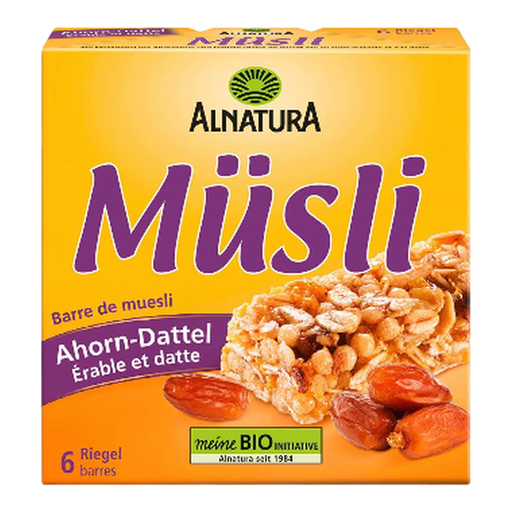
Alnatura Organic Maple & Date cereal bars, 6 × 25 g
For smaller buffet portions: the product name specifies six bars, each weighing 25 g. If you’re looking for a vegan or allergen-aware option, check the information on the specific pack, particularly for gluten-containing cereals and possible traces.
View at Joybuy
 No image available
Corny Haferkraft Zero Cocoa cereal bars, 4 × 35 g
For a smaller selection of oat-based cereal bars: the product name specifies four bars, each weighing 35 g. Check the ingredients and may-contain information on the pack to see whether this variety suits a vegan diet or guests avoiding specific allergens; “oat” alone doesn’t prove that it’s gluten-free.
View at Joybuy
 No image available
Corny Free White Chocolate cereal bars, 6 × 20 g
For guests choosing according to sugar content: the product name specifies six bars, each weighing 20 g. Check the nutrition information per 100 g and the ingredients on the pack; “free” doesn’t tell you whether it’s gluten-free, milk-free or peanut-free.
View at Joybuy
 No image available
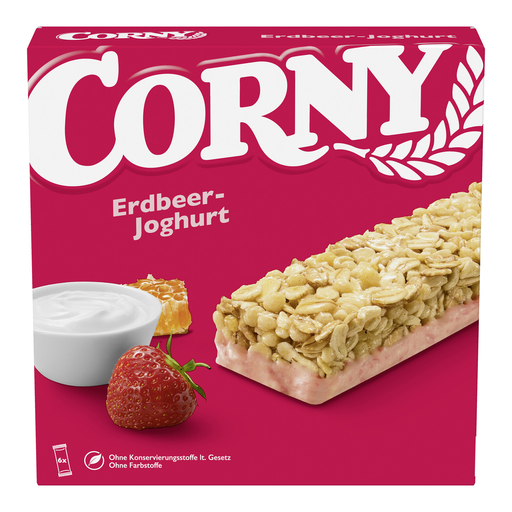
Corny Strawberry & Yoghurt cereal bars, 6 × 25 g
For a buffet with a strawberry and yoghurt option: the product name specifies six bars, each weighing 25 g. If guests avoid gluten or milk, or need to avoid relevant traces of nuts or peanuts, check the current label before choosing this variety for them.
View at Joybuy
Frequently asked questions
Does “free” on a cereal bar mean it’s allergen-free?
No. “Free” on its own doesn’t mean free from all allergens. For example, Schwartau Professional lists milk and peanuts as allergens in CORNY free Schoko, so always check the information for the variety you’ve chosen.
What does “gluten-free” mean on a cereal bar?
According to the EU summary on EUR-Lex, the “gluten-free” label is for products containing no more than 20 mg of gluten per kg of finished product. It doesn’t tell you whether the bar contains other allergens that may be relevant to your guests.
How can you make allergen information clear at a private buffet?
Keep the packaging with each variety or place a clear ingredients and allergen list beside it. Serve varieties with different allergens separately so guests can match the information to the right bars.


